


I. Definition and Business Scope of B2C Cross-Border E-Commerce Stores
A B2C cross-border e-commerce store is an online transaction website through which businesses sell products directly to overseas consumers. Typically accessed through a branded domain name, it supports the full customer journey, including product browsing, specification selection, shopping carts, payment or quotation requests, order notifications, and after-sales information. Unlike a simple brand showcase website, its core objective is to shorten the path from consumer awareness to purchase.
From an operational perspective, a B2C cross-border e-commerce store is both a retail channel and a proprietary asset for businesses to accumulate product data, user behavior data, and brand content. Through on-site product structures, campaign pages, and customer service entry points, combined with search, advertising, and social media channels, businesses can reduce their reliance on the traffic rules of a single third-party platform.
During implementation, the store's target markets, currencies, languages, tax displays, delivery commitments, and return and exchange policies should be clearly defined. For categories with high average order values, customization requirements, or extensive regulatory requirements, stores can also combine direct payment with inquiries and demo appointments to accommodate longer decision-making cycles.
II. Technical Principles and Basic Architecture of E-Commerce Stores
An operational B2C cross-border e-commerce store generally consists of front-end pages, product content management, shopping cart and order modules, payment or inquiry interfaces, data analytics, and server security capabilities. The front end is responsible for display and interaction, while the back end manages products, inventory, orders, and content. Both need to provide a consistent experience across mobile and desktop devices.
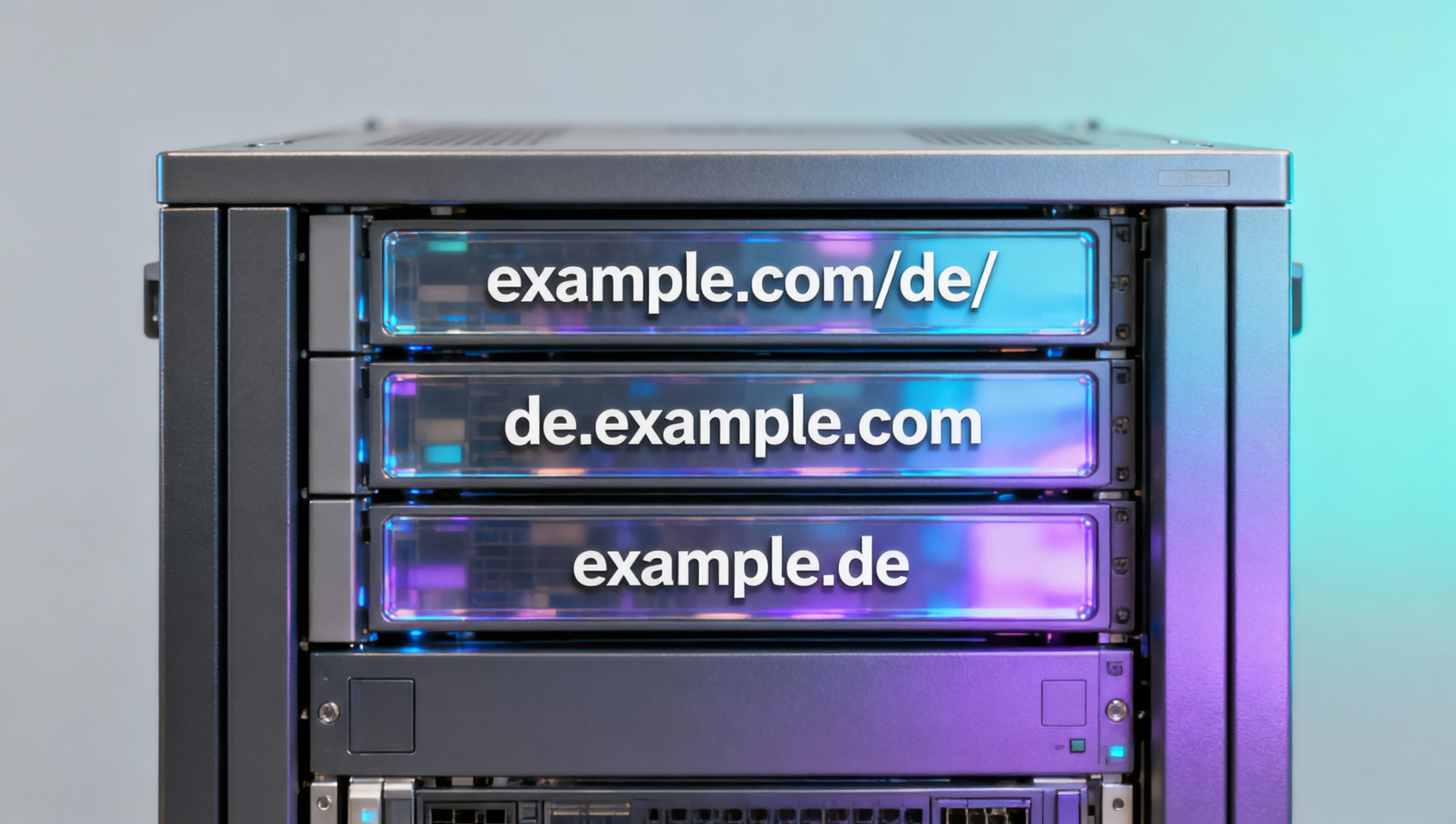
Search visibility depends on crawlable category pages, product pages, and content page structures. Clear page titles, descriptions, canonical links, sitemaps, internal links, and structured product information help search engines understand page topics. Multilingual websites should also configure language paths and their corresponding relationships to prevent pages in different languages from being confused with one another.
Performance and security directly affect transaction trust. Image compression, caching, content delivery networks, SSL certificates, and stable global node deployment are fundamental to cross-regional access. Yiyingbao provides responsive website building and multi-cloud node support, but businesses should still test loading, payment redirects, and form delivery based on their primary customer regions.
III. Main Types and Applicable Businesses
By business model, B2C cross-border e-commerce stores can be divided into brand-direct models, best-selling product retail models, subscription and repeat-purchase models, customized inquiry models, and factory-to-brand transformation models. Direct models emphasize brand storytelling and repeat purchases; best-selling product models focus on landing pages and advertising efficiency; customized models need to place parameter descriptions, case studies, and communication entry points before the purchase action.
Applicable businesses include cross-border sellers, DTC brands, manufacturers with their own product lines, and foreign trade enterprises seeking to establish overseas retail channels. Standardized products such as furniture, consumer electronics accessories, outdoor products, beauty and personal care products, and household goods are more suitable for direct ordering. Machinery and medical-related products should incorporate compliance information and inquiry processes according to target market requirements.
For businesses operating both wholesale and retail, B2B inquiry websites and B2C cross-border e-commerce stores can be developed in separate layers to avoid confusion in pricing systems and customer journeys. Yiyingbao's multilingual independent website capabilities can support parallel configurations for product displays, retail ordering, and quotation request pages, making it easier to organize different landing pages by market and channel.
IV. Selection Criteria and Go-Live Implementation Process
Selection should not focus solely on template appearance or initial quotations. It should also assess product specification management, content editing efficiency, payment and logistics compatibility, data export, permission allocation, multilingual maintenance, and future marketing expansion capabilities. For projects with many products and complex attributes, it is especially necessary to verify whether batch maintenance and category filtering can meet daily operational needs.
Implementation typically begins with market positioning and keyword research, followed by organizing brand information, product categories, pricing rules, and fulfillment policies. This is followed by completing visual pages, product details, payment testing, tracking implementation, and official launch. Before launch, real devices should be used to simulate registration, adding products to the cart, checkout, email notifications, and customer service access to identify any breakpoints.
Yiyingbao's AI-powered website building system is suitable for businesses without technical teams, shortening website preparation time through component-based pages, responsive layouts, and content-assisted generation. For projects involving sales in multiple countries, it is recommended to first validate conversions in key countries and languages, then expand catalogues and regional pages in a planned manner.
V. SEO Customer Acquisition and Multilingual Content Operations
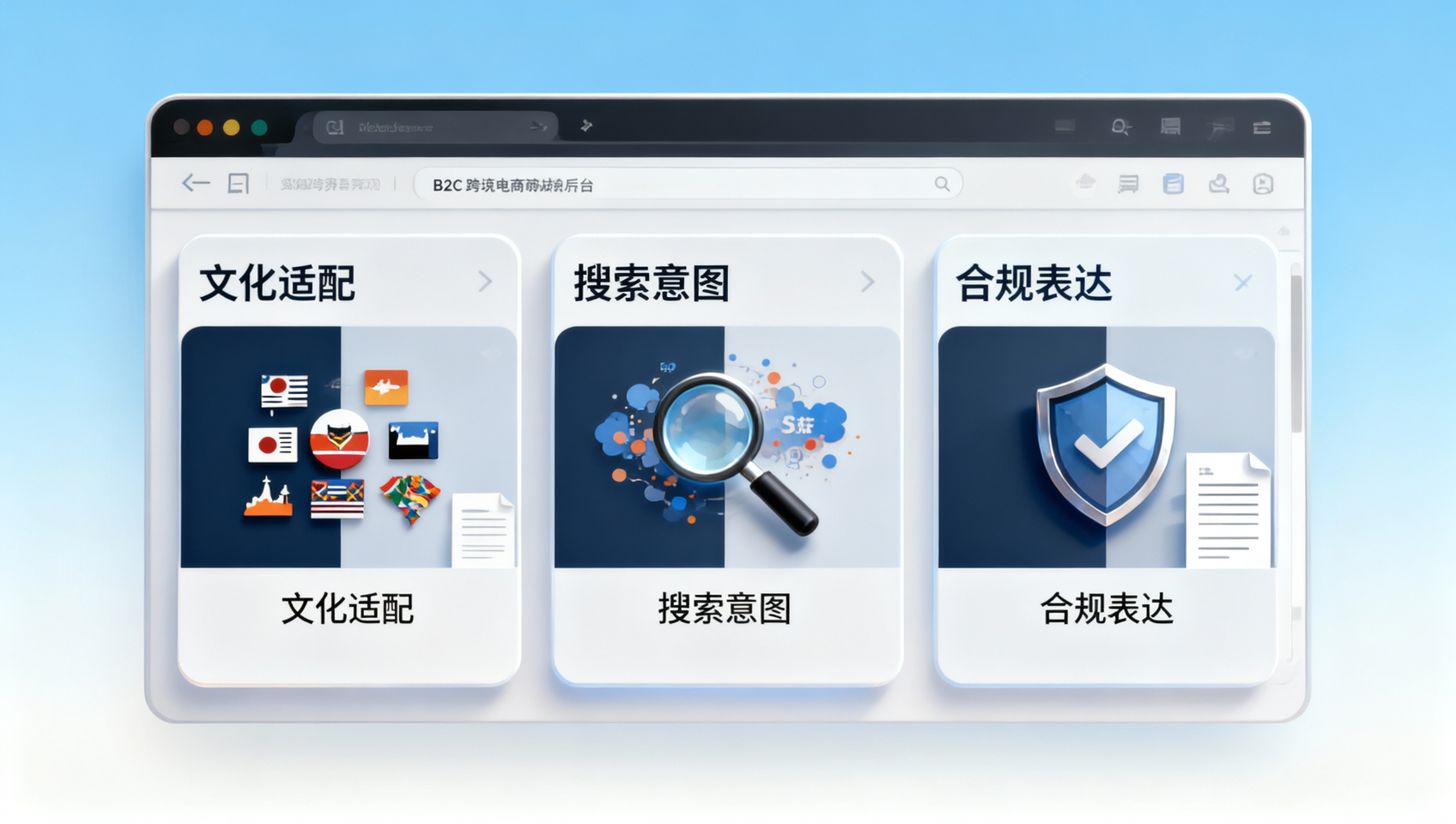
Organic customer acquisition for B2C cross-border e-commerce stores should organize content around user search intent: category pages cover category needs, product pages answer questions about specifications, materials, dimensions, use cases, and delivery, while guide pages address comparisons, purchasing decisions, installation, and maintenance. Each type of page serves a different purpose and cannot rely solely on short product descriptions.
Translating an entire website does not equal localization. Measurement units, purchasing concerns, search habits, and compliance wording may differ across countries. It is recommended to rewrite titles, selling points, and frequently asked questions for core markets. Language versions should have independent and accessible URL structures, while avoiding duplicate content or semantic deviations caused by mechanical copying.
Yiyingbao can provide keyword expansion, page title and description optimization, AI-assisted content generation, and foundational multilingual SEO configuration. During operations, businesses should continuously monitor indexing, organic traffic, key page rankings, and non-branded keyword traffic, while incorporating advertising search terms, customer service inquiries, and return reasons into content updates.
VI. Conversion Optimization, Data Monitoring, and Channel Coordination
Conversion optimization should first eliminate purchase friction. Product pages should clearly present prices, specifications, inventory or lead times, delivery coverage, payment methods, return and exchange policies, reviews, and contact channels. Complex products should also provide specification sheets, user instructions, and comparison content. Images, buttons, and checkout steps on mobile devices need to remain simple and easy to use.
Data monitoring should at least cover key behaviors such as traffic sources, page views, on-site searches, add-to-cart actions, checkout initiation, successful payments, form submissions, and customer service clicks. If tracking is incomplete, businesses will find it difficult to determine whether issues stem from advertising targeting, page information, shipping thresholds, or payment processes, and they will also be unable to reliably calculate channel contribution.
Google Ads, social media content, and short videos can quickly drive traffic for new products or priority markets, but landing pages must align with advertising promises. Yiyingbao covers advertising placement, overseas social media operations, and website conversion analysis, making it suitable for teams that need unified management of traffic acquisition, content updates, and e-commerce store conversion.
VII. Total Cost of Ownership, Iteration Pace, and Future Trends
The total cost of ownership for a B2C cross-border e-commerce store includes domain names, servers and acceleration, security certificates, system subscriptions or development, design and content, payment processing fees, logistics integration, advertising budgets, and ongoing operational personnel. When purchasing, businesses should distinguish between one-time launch costs and annual operating costs, rather than assessing project investment based only on website development prices.
Return on investment should be evaluated comprehensively based on qualified orders, gross profit, customer acquisition cost, repeat purchase rate, and customer lifetime value, rather than traffic alone. New websites can initially concentrate resources on validating a small number of high-potential categories and countries, then adjust product pages, channel budgets, and content themes through monthly reviews, gradually expanding verified growth units.
Future competition will shift from “whether a website can go live” to “whether it can continue to be discovered and trusted.” In addition to search and social media, Q&A content for generative search, brand entity information, and structured knowledge development will receive greater attention. Yiyingbao already provides GEO-related operational guidance, enabling businesses to plan ahead while keeping content authentic and verifiable.
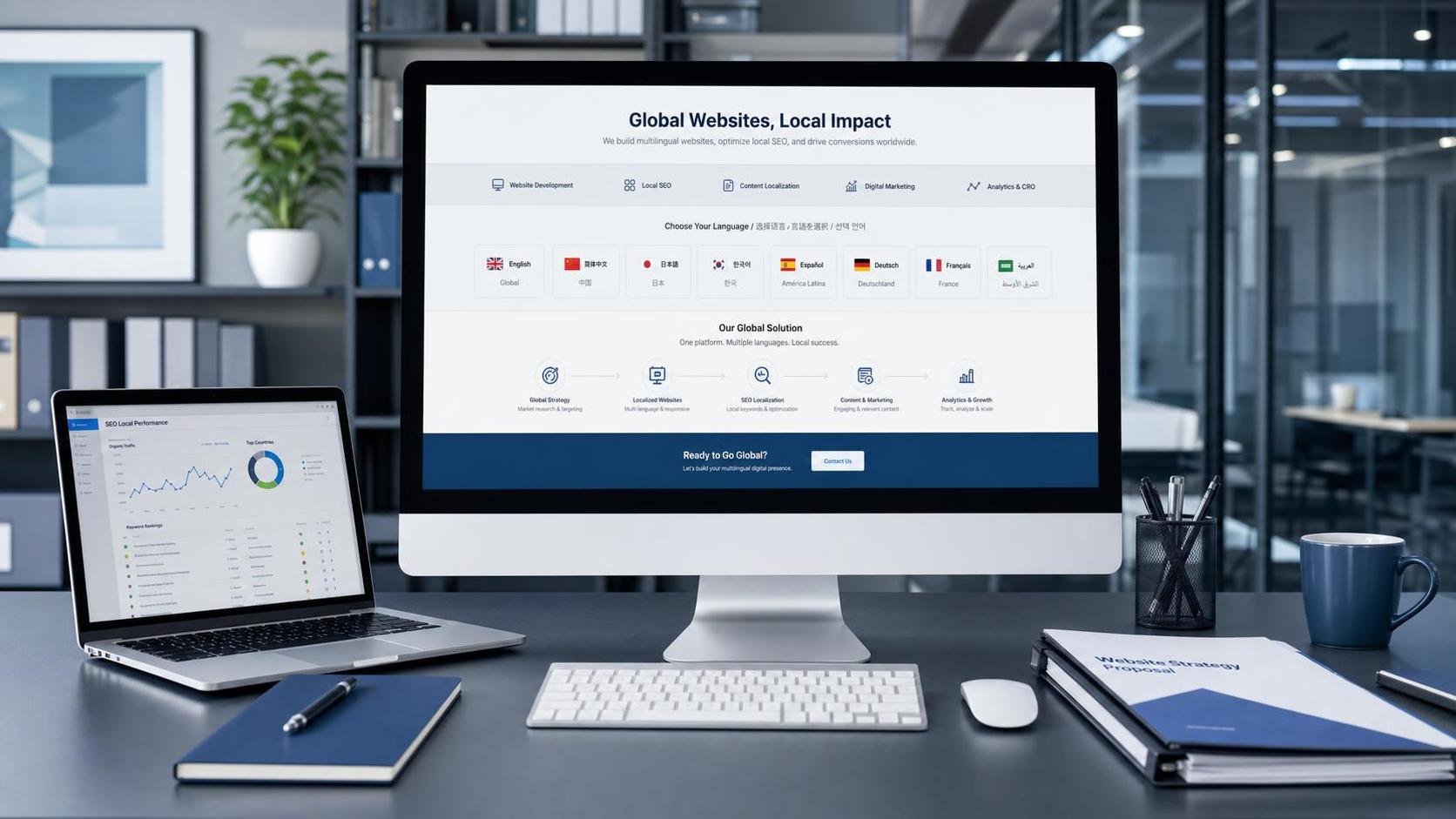
 How to Build a Localized Structure for CMS Multilingual WebsitesHow to Build a Localized Structure for CMS Multilingual Websites? This article analyzes how multilingual websites can balance SEO indexing and overseas inquiry growth from URL hierarchy, hreflang tags, and content templates to conversion paths, making it suitable for companies expanding into international markets to implement quickly.
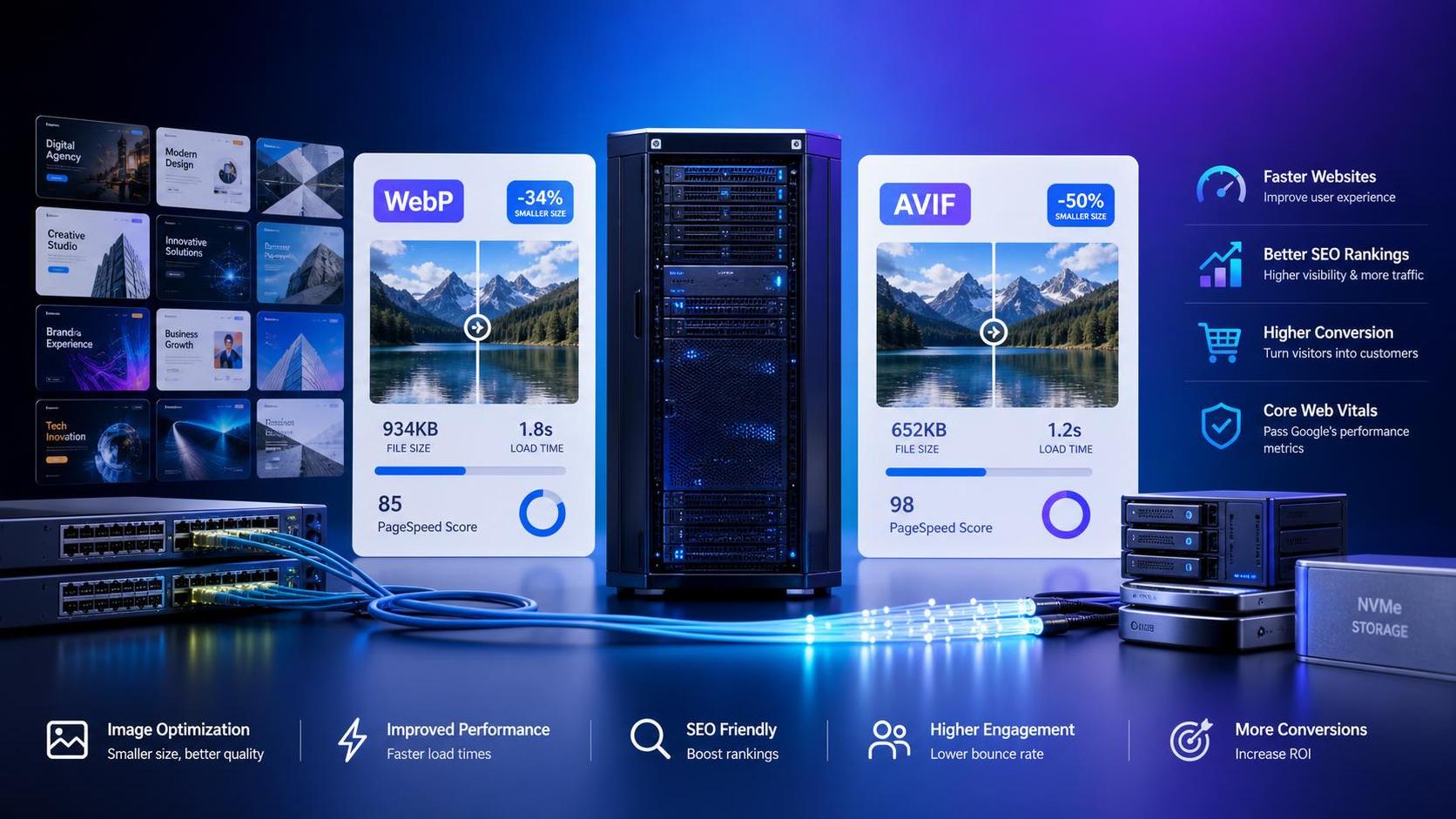
 For website speed optimization, should images use WebP or AVIF?Should WebP or AVIF be used for image compression in website speed optimization? This article analyzes the differences between the two in terms of compression ratio, compatibility, SEO performance, and conversion results, helping you quickly determine which format to choose for different website scenarios to improve loading speed and marketing performance.
 What free tools can be used for website speed optimization?What free tools can be used for website speed optimization? This article reviews practical tools such as PageSpeed Insights, GTmetrix, and WebPageTest to help businesses quickly diagnose loading issues on corporate websites, foreign trade independent sites, and landing pages, improving SEO indexing, user experience, and conversion performance.
 How to Evaluate the Pricing of Yiyingbao Cross-Border E-Commerce Standalone Website ServicesHow should you evaluate the pricing of Yiyingbao cross-border e-commerce standalone website services? Instead of focusing only on whether the quoted price is high or low, you should break down the costs of the website-building system, multilingual support, SEO, advertising, and ongoing operations to quickly determine whether the solution is truly cost-effective and suitable for long-term customer acquisition and growth.
 How long does it generally take for an international trade website to officially go live?How long does it generally take for an international trade website to go live? It usually takes 7–30 working days, while complex projects take approximately 4–8 weeks. The launch speed is affected by functionality, languages, content, and SEO configuration. Planning ahead can help the website go live sooner and improve inquiry conversion.
 Is it necessary to install an SSL certificate? What happens if you don't?Is it necessary to install an SSL certificate? What happens if you don't? For corporate websites, B2B foreign trade websites, and marketing landing pages, not having an SSL certificate may cause browsers to display security warnings, affect SEO indexing and advertising conversions. This article explains the risks, applicable scenarios, and deployment essentials to help you launch securely and build customer trust.
 How to Choose the Right Mobile Adaptation Testing Tool for Technical EvaluationHow to Choose the Right Mobile Adaptation Testing Tool: Recommended Options for Technical Evaluation. This article helps you quickly determine whether a tool is truly suitable for optimizing multilingual websites, international trade websites, and advertising landing pages based on compatibility, performance, automation, and conversion scenarios.
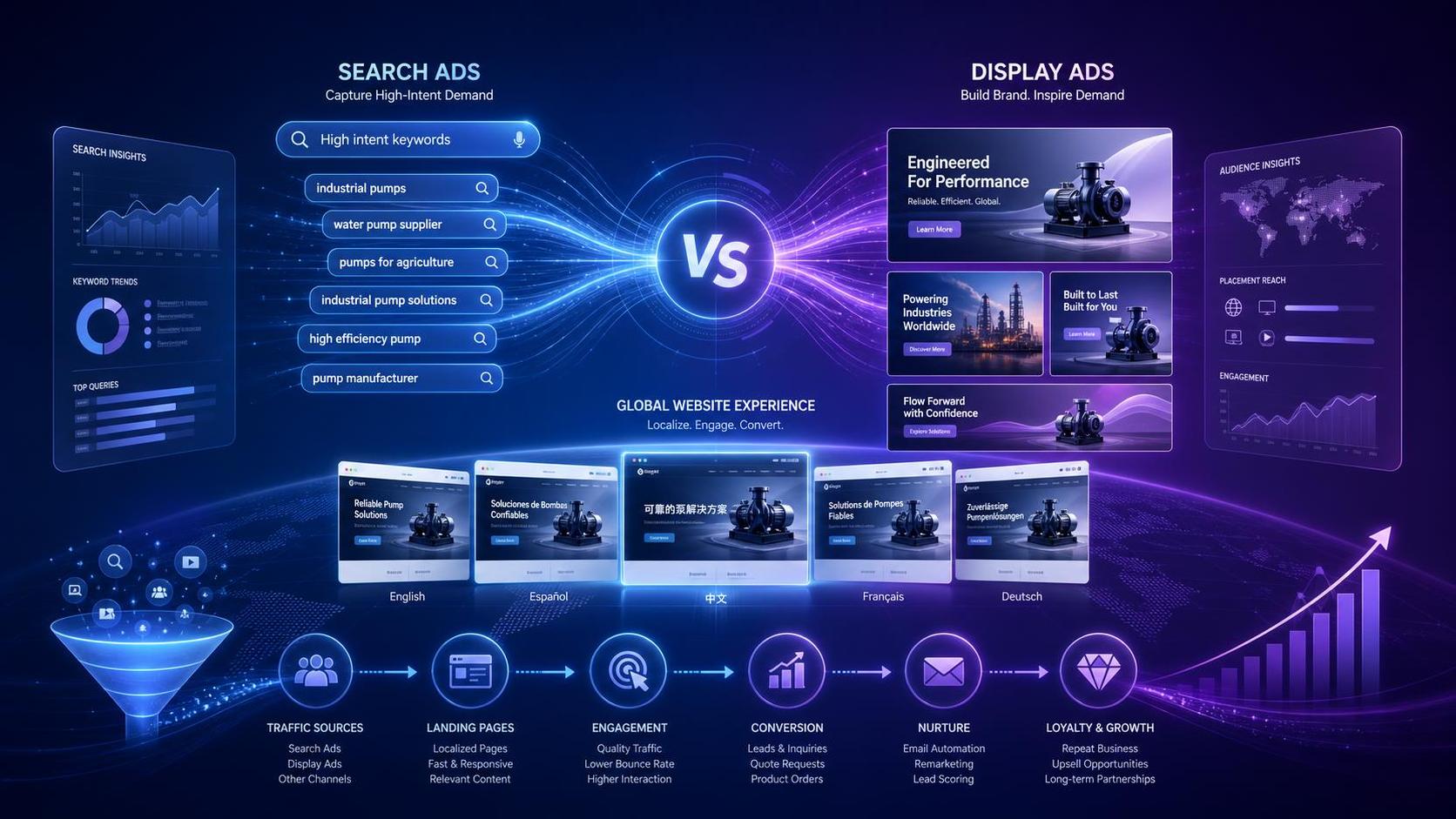
 How to Choose Between Google Ads Search and Display Ads?How to Choose Between Google Ads Search and Display Ads? This article analyzes the differences and applicable scenarios of the two types of ads based on the company’s development stage, budget allocation, website experience, and conversion journey, helping you quickly develop a more efficient overseas customer acquisition advertising strategy.