









What Is B2C Cross-Border E-Commerce Store Development? — Definition, Essence, and Core Categories
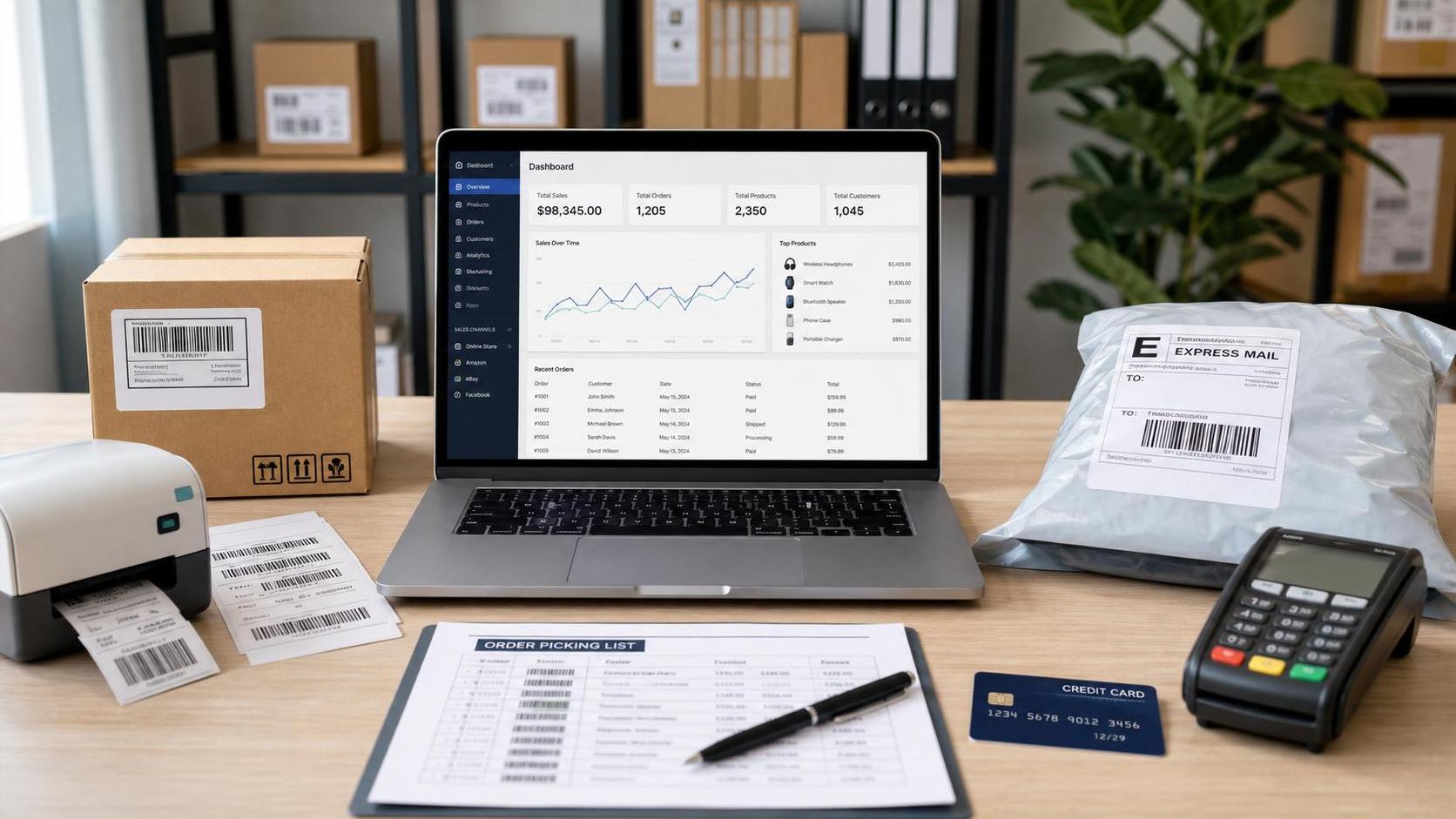
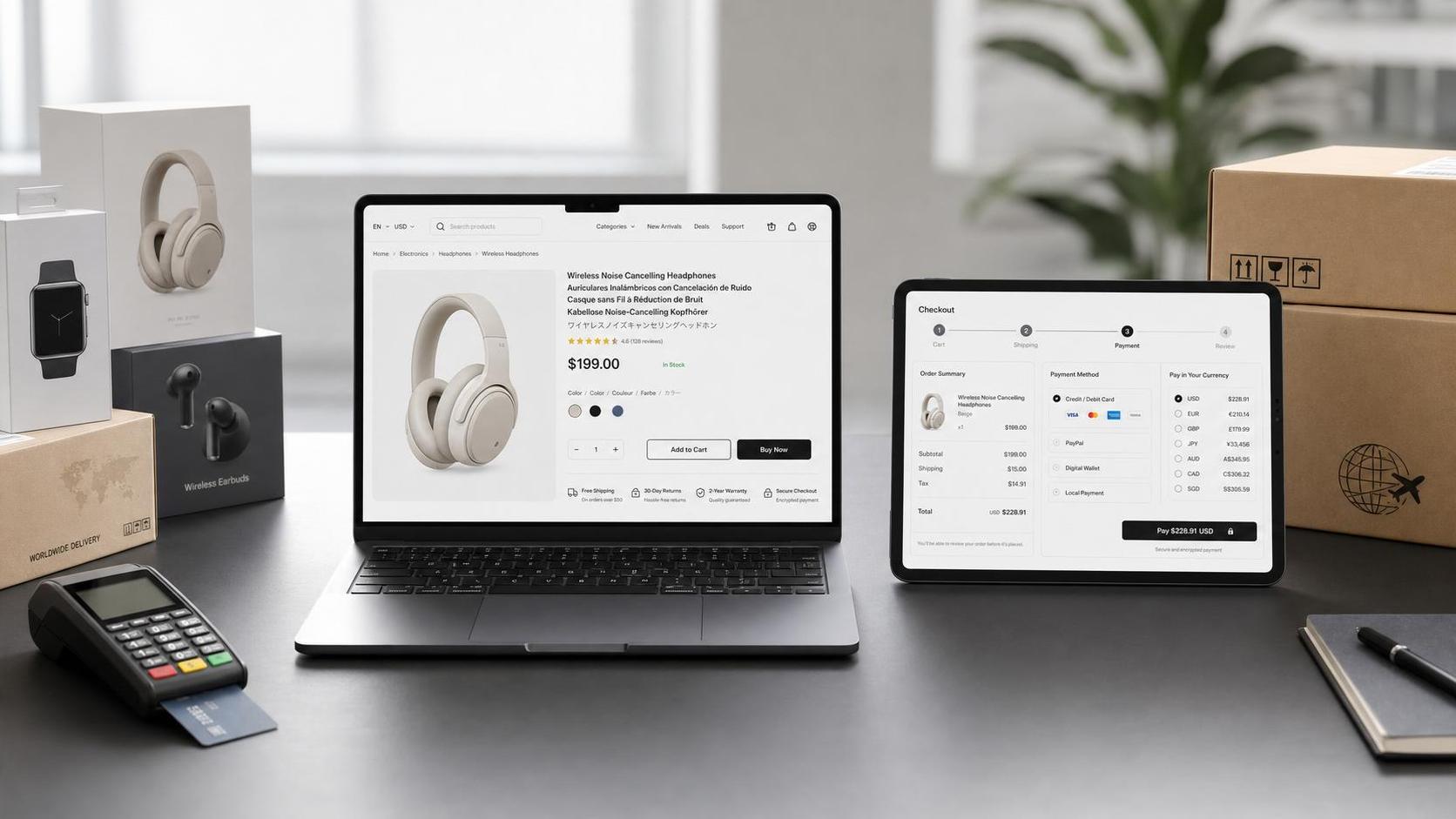
B2C cross-border e-commerce store development is not simply about building a website with a shopping cart; it is the construction of a digital brand presence for global end consumers. Its functional components include multilingual product management, localized pricing and currency switching, compliant payment gateways (such as Stripe, PayPal, and local wallets), cross-border logistics API integration, GDPR/CCPA data compliance frameworks, and AI-driven personalized recommendation engines.
Based on business objectives, it can be divided into three categories: lightweight brand showcase stores (primarily focused on inquiry conversion), full-featured e-commerce stores (supporting direct purchase and checkout), and platform alternative stores (capturing traffic overflow from Amazon/Temu). These three types differ significantly in modules such as inventory synchronization, tax calculation, and return processes, and should be implemented in tiers according to the maturity of the company's supply chain and overseas operational capabilities.
Yiyingbao incorporates B2C cross-border e-commerce store development into its four-dimensional integrated service system of “AI intelligent website building + multilingual independent websites + overseas marketing customer acquisition + website operation and growth.” Through a SaaS-based architecture, it enables end-to-end control from website building to conversion, avoiding the technology black-box and subsequent operations and maintenance gaps common in traditional outsourcing models.
Why Must an Integrated Website + Marketing Service Solution Be Adopted?
Traditional B2C cross-border e-commerce store development often falls into the misconception that “delivery ends once the website is completed”: after pages go live, there is no SEO optimization, ad landing pages are poorly matched, social media content cannot generate traffic, and the semantics of multilingual pages become distorted. Data shows that more than 68% of independent websites receive fewer than 50 organic visits in their first month, mainly because technical website building is disconnected from marketing strategy.
Yiyingbao differentiates itself by breaking down the functional boundaries between website building and marketing. Its AI intelligent website-building system has a built-in GEO generation engine and multilingual SEO structure, ensuring that store pages are inherently compatible with Google AI Overviews and ChatGPT Q&A scenarios; its SEM intelligent advertising system automatically feeds advertising keywords back into product-page TDK optimization; and its social media content generation module can convert viral TikTok scripts into selling-point copy for product detail pages with one click, creating a positive cycle of “ready to use upon launch and effective once used.”
This integrated model significantly reduces a company's total cost of ownership (TCO): there is no need to separately purchase website-building, translation, SEO, and advertising tools; it avoids data silos across service providers; and it consolidates brand assets on a unified platform rather than dispersing them across multiple SaaS accounts.
Who Needs B2C Cross-Border E-Commerce Store Development? In-Depth Profiles of Typical Target Groups
The first group consists of cross-border sellers already established on mainstream platforms but facing growth bottlenecks. When Amazon advertising ACOS continues to rise, Shopee commission rates increase, and Temu price pressure intensifies, B2C cross-border e-commerce store development becomes a key outlet for retaining profits. The second group consists of manufacturing factories with their own product lines, such as laser engraving machine and new-energy storage equipment manufacturers, that urgently need to bypass intermediaries and establish channels to reach end users directly.
The third group consists of DTC companies accelerating brand development, particularly in home furnishings, beauty products, and pet supplies, which rely on independent websites to accumulate user data, repeat-purchase behavior, and LTV value. The fourth group consists of internet service providers seeking global expansion, such as SaaS tool companies expanding overseas, which need to present subscription plans and localized case studies through multilingual stores to support high-ticket sales cycles.
Clients served by Yiyingbao, including Haier, Aokema, and China National Heavy Duty Truck Group, demonstrate that the value of B2C cross-border e-commerce store development lies not only in transactions, but also in building a measurable, iterative, and defensible digital brand moat.
Core Application Scenarios and Global Market Access Practices for B2C Cross-Border E-Commerce Store Development
In the EU market, B2C cross-border e-commerce store development must preconfigure VAT number validation, GDPR Cookie Consent pop-ups, and dynamic privacy policy generation modules; in the Middle East, it must support Arabic right-to-left layouts, local payment methods (such as STC Pay and Mada), and embedded halal certification marks; the Japanese market requires JIS-coded product attribute fields, Furigana pronunciation annotations, and convenience-store cash-on-delivery interfaces.
Yiyingbao's multilingual AI translation center covers 12 languages, including Russian, Japanese, Korean, Arabic, French, German, and Spanish. It not only delivers word-level translation, but also adjusts expression logic through a localized context library—for example, translating “Free Shipping” as “Kostenloser Versand ab 49 €” on German sites, while emphasizing “Frete Grátis para todo o Brasil” on Brazilian sites. This deep localization capability enables B2C cross-border e-commerce store development to truly move beyond language and into the stage of cultural adaptation.
In the multilingual store upgrade project for Shandong Airlines' official website, Yiyingbao launched English, Japanese, and Korean versions simultaneously within three weeks and integrated an IATA-certified ticketing API, enabling a complete closed loop from flight search → price comparison → local payment → electronic invoice, validating the feasibility of complex B2C cross-border e-commerce store development in highly regulated industries.
2026 Industry Trends: From Technical Infrastructure to AI-Native Commercial Entities
In 2026, B2C cross-border e-commerce store development will undergo three major shifts: first, from being “page-centric” to “AI Agent-centric,” allowing consumers to directly communicate with an e-commerce store's AI assistant via WhatsApp or Messenger to complete price comparisons, fitting recommendations, and after-sales tracking; second, from “static multilingual” to “dynamic semantic localization,” with AI analyzing users' IP addresses, device languages, and browsing histories in real time to automatically combine page elements and copy styles; third, from “traffic purchasing” to “trust asset accumulation,” with GEO optimization becoming standard and brands needing to establish authoritative positions in Google AI summaries and Perplexity citation sources.
Yiyingbao's V6.0 cloud intelligent website-building and marketing system has pre-integrated a GEO structured data protocol, supporting the automatic generation of FAQ Schema, Product Schema, and Organization Schema, enabling store content to be frequently cited in AI search. Its AI+SNS system can also automatically break down YouTube review videos into visual and text-based selling points and synchronously update them to product detail pages in the corresponding languages, enabling cross-media content asset reuse.
The industry consensus is that over the next three years, B2C cross-border e-commerce store development solutions without AI-native capabilities will rapidly lose competitiveness. Companies need to assess whether service providers possess full-stack technical depth from the website-building foundation to the AI interaction layer, rather than focusing only on the richness of UI templates.
Review of Typical Failure Cases: Avoid Five Fatal Pitfalls
Pitfall 1: Neglecting mobile performance. After a Shenzhen consumer electronics brand store launched in Southeast Asia, its bounce rate reached as high as 78%, mainly because CDN acceleration and lazy image loading were not enabled, resulting in an average page load time of 5.2 seconds. Yiyingbao's global acceleration network, supported by Alibaba Cloud/AWS/Huawei Cloud nodes, ensures overseas access latency below 100ms and page load speeds 99% ahead of the industry average.
Pitfall 2: “Pseudo-localization” in multiple languages. A furniture brand directly translated Chinese copy for its Russian website, causing “Nordic style” to be translated as “Северная Европа стиль,” thereby losing cultural resonance. Yiyingbao's AI translation center incorporates a regional semantic library to ensure that “Scandinavian Design” is accurately translated as “Скандинавский стиль” in Russian-speaking markets and associated with local home furnishing KOL content.
Pitfall 3: Broken payment flows. An auto parts seller integrated only PayPal on its Mexico website, while 62% of local users preferred cash payments at OXXO convenience stores. Yiyingbao's B2C cross-border e-commerce store development supports rapid plug-in deployment of local payment gateways, completing integrations with OXXO, Mercado Pago, and others within three days.
Pitfall 4: Disconnection between SEO and advertising. A beauty brand ran Facebook ads that directed users to landing pages without H1 headings or structured product data, resulting in a conversion rate below 1.3%. Yiyingbao's AI+SEO dual engine can automatically synchronize high-click advertising terms into product-page TDK content and embed Schema markup, improving organic rankings and ad relevance scores.
TCO Components and ROI Improvement Paths for B2C Cross-Border E-Commerce Store Development
The total cost of ownership (TCO) for B2C cross-border e-commerce store development includes explicit costs (website-building fees, domain SSL, payment channel fees, and CDN traffic charges) and hidden costs (labor for multilingual maintenance, ongoing SEO optimization investment, advertising trial-and-error losses, and lost orders caused by delayed customer service responses). Among these, hidden costs often account for more than 65% of TCO.
Yiyingbao reduces TCO through three major mechanisms: first, AI batch-generates multilingual product pages and SEO articles, reducing content production costs by 80%; second, a unified backend manages Google Ads/Facebook/TikTok advertising accounts, reducing cross-platform operational errors; third, website operation service packages cover monthly traffic analysis, keyword ranking monitoring, and conversion funnel diagnostics, eliminating the need for companies to establish dedicated digital marketing teams.
Empirical data shows that clients adopting Yiyingbao's integrated solution achieve a 3.2-fold increase in organic search traffic within six months, a 41% reduction in advertising CPL, and a 57% lower cost per inquiry on independent websites compared with traditional website-building models. ROI no longer depends on a one-time website-building investment, but comes from the compounding accumulation of digital assets through ongoing operations.
