










I. Definition and Measurement Scope of B2B Conversion Rate
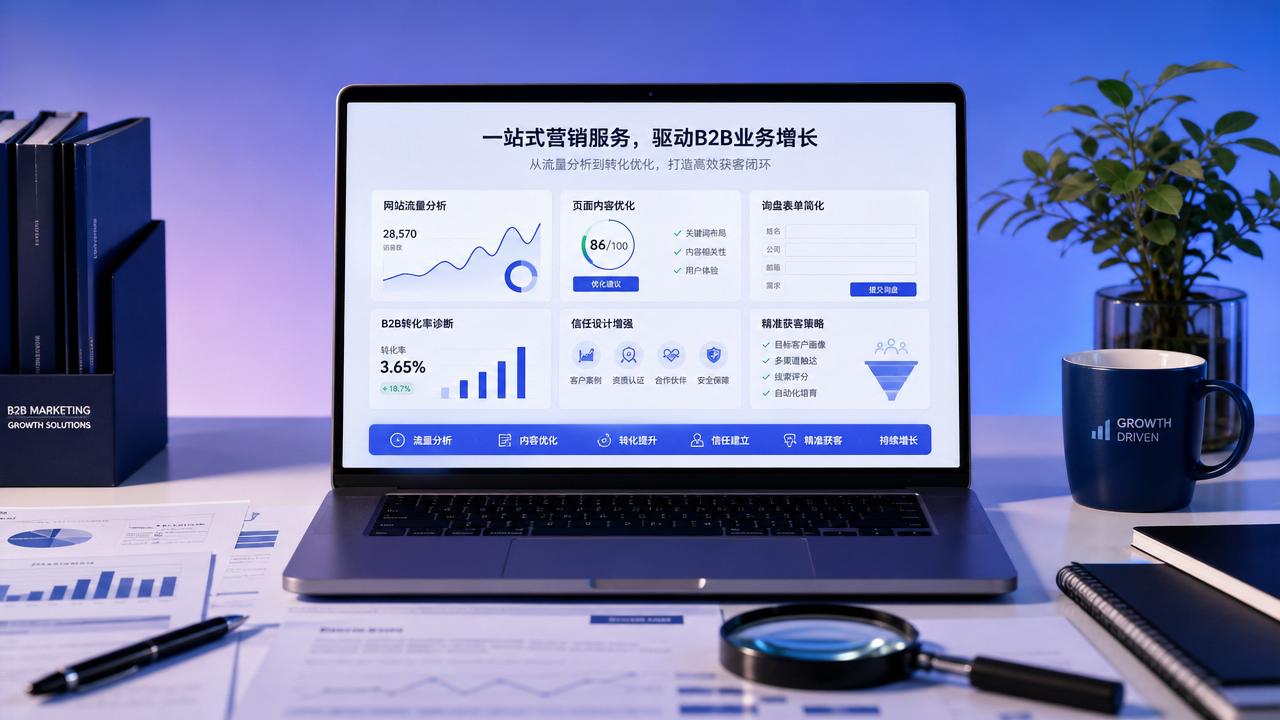
B2B conversion rate refers to the proportion of target visitors who complete predefined commercial actions. Common actions include submitting an inquiry, booking a demo, downloading materials, clicking WhatsApp, making a phone call, and requesting a quote. When calculating it, the denominator should be clearly defined as all sessions, qualified visits, or clicks from a specific channel.
Foreign trade procurement decisions have longer cycles, so companies cannot focus only on the final transaction rate. They should also monitor segmented ratios, such as visits to interactions, interactions to lead capture, lead capture to qualified leads, and qualified leads to quotations and transactions, to avoid using a single figure to conceal the actual issues in the funnel.
For example, if a product page receives high traffic but few form submissions, the issue may lie in the value proposition, trust information, or form friction; if there are many inquiries but they are unqualified, keywords, country targeting, and screening mechanisms should be reviewed instead of simply requiring sales teams to increase follow-up frequency.
II. Marketing Funnel Principles and Core Categories
The marketing funnel is generally divided into four stages: awareness, consideration, conversion, and nurturing. The awareness stage addresses “who can find you,” the consideration stage answers “why you are worth comparing,” the conversion stage lowers the barrier to making contact, and the nurturing stage moves procurement projects into the quotation, sampling, and contract stages.
By source, B2B conversion rates can be categorized into organic search, paid advertising, social media traffic acquisition, direct visits, post-trade-show follow-up visits, and email marketing conversion rates. Visitor intent varies by source, so benchmarks must be set by channel; branded keyword traffic and general industry traffic should not be evaluated together.
By page type, conversion performance can be further differentiated among homepages, product catalog pages, product detail pages, solution pages, and landing pages. High-ticket industrial products generally require first establishing an understanding of the technology and supply capabilities, then guiding customers to request specifications, drawings, or customized solutions.
III. Top of the Funnel: Improving Qualified Traffic Quality
The starting point for improving B2B conversion rates is matching procurement intent. Keywords should cover product names, application scenarios, materials and processes, specifications and parameters, OEM or ODM requirements, and procurement-related questions. Informational search terms and clear quotation-request terms should be distinguished, with content pages and conversion pages configured accordingly.
Advertising campaigns should be continuously segmented by country, industry, product line, and search term, while excluding low-relevance intent such as job seeking, repair, training, and retail. Landing page headlines, advertising promises, and keywords must remain consistent; otherwise, increased clicks may also reduce the quality of subsequent inquiries.
Multilingual pages should not rely solely on literal translation. Different markets have different priorities regarding delivery times, certifications, minimum order quantities, payment methods, and service responsiveness, so content should be supplemented based on local purchasing practices. Language paths, regional targeting, and page themes should also remain clear to facilitate search and user understanding.
IV. Middle of the Funnel: Page Persuasion and Trust Building
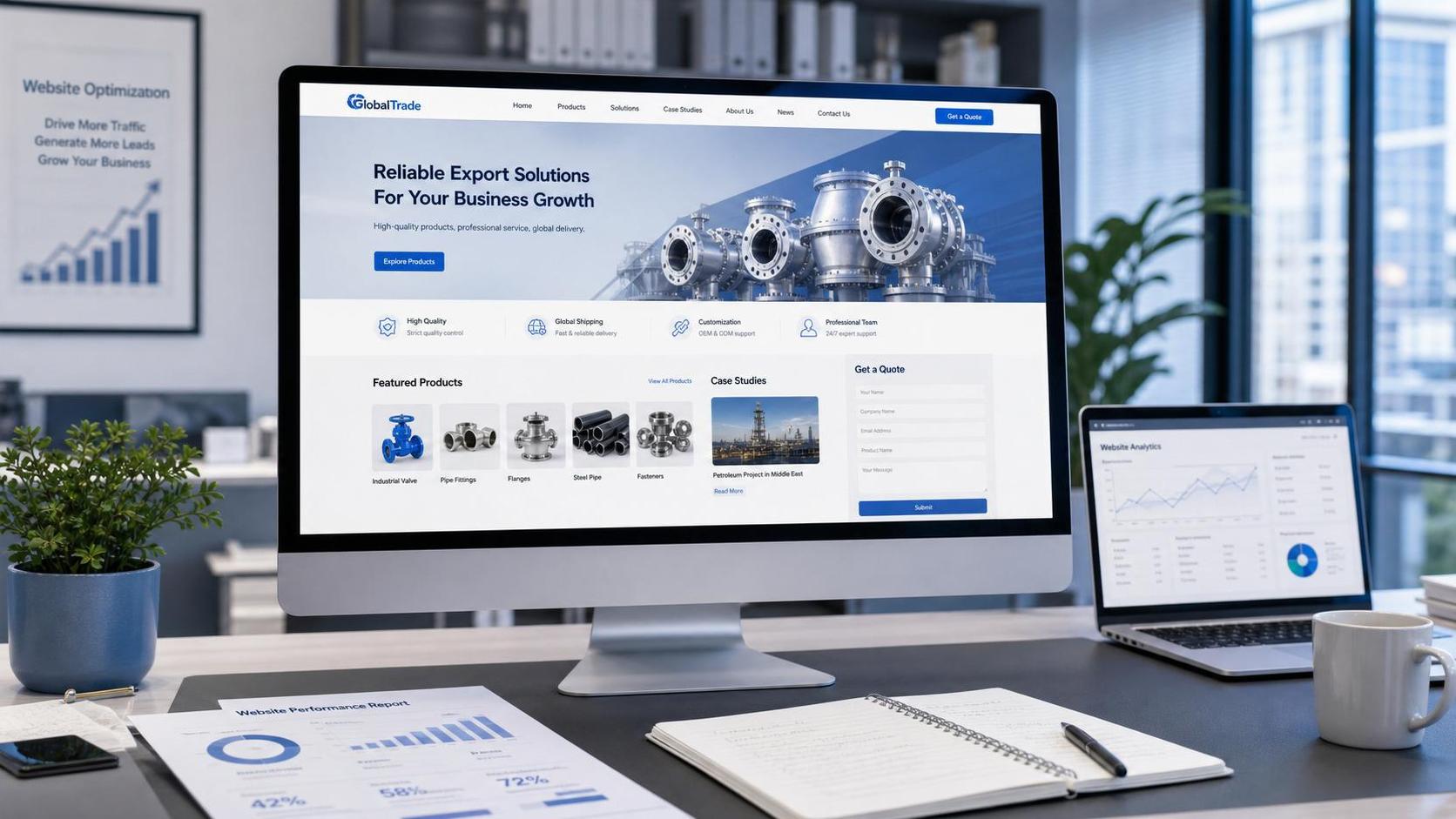
After entering a website, buyers typically first assess whether the supplier is genuine, professional, and suitable for their needs. Pages should prioritize product applications, key specifications, customization capabilities, production processes, quality control, delivery scope, and clear next steps, rather than piling up generic corporate slogans.
Trust information should be verifiable and relevant to procurement decisions, such as factory and equipment displays, team and service processes, project experience, test documentation, packaging and shipping instructions, and FAQs. Certifications or performance data that have not been provided should not be replaced with vague statements, as this may undermine long-term trust.
Page loading speed, mobile readability, and cross-border access stability also affect B2B conversion rates. Yiyingbao uses a responsive architecture and provides global node acceleration configurations, making it suitable for export-oriented companies that need to accommodate both PC search traffic and mobile social media traffic while creating a unified website experience.
V. Bottom of the Funnel: Forms, Communication, and Lead Management
Inquiry entry points should align with the customer’s stage. Visitors who are initially learning about a product can choose to download a catalog or request sample information, while customers with clear needs should proceed directly to a quotation form. Form fields should be limited to the information necessary for qualification; requesting too much information too early increases submission friction.
Email, live chat, WhatsApp, and telephone can be configured in parallel, but every entry point needs to be trackable. Source page, channel, country, product, and submission time should be recorded, and sales feedback should be used to identify high-value leads, avoiding the use of form volume alone to assess marketing performance.
Sales response speed, the relevance of the first reply, and the completeness of quotation materials directly affect whether opportunities generated by the website can continue to progress. It is recommended to establish lead grading and response time limits, and to continuously nurture customers who have not converted through case studies, technical articles, and new product information.
VI. Applicable Businesses, Implementation Standards, and Scenarios
B2B conversion rate optimization is particularly suitable for manufacturing factories, foreign trade companies, machinery and equipment, hardware and building materials, chemicals, new energy, packaging, and agricultural and food businesses. It is also applicable to service providers that need to acquire customers across multiple countries, manage complex project decisions, and rely on inquiries and sample communications.
Before implementation, target markets, target customer roles, priority products, compliance information boundaries, and sales follow-up capabilities should be confirmed. Websites should provide privacy notices, stable and secure access, and clear contact paths; cross-market operations should also verify local requirements for data, advertising, and product market access.
Yiyingbao’s integrated services can connect AI-powered website building, multilingual standalone websites, SEO, advertising, social media operations, and website operations. Its service experience covers industries such as laser engraving machines, steel, chemicals, heavy-duty trucks, and machinery, and can be used to reduce information gaps between website development and promotion activities.
VII. Costs, Iteration Cycles, and Future Trends
When assessing total cost of ownership, in addition to website development costs, companies should also calculate investments in content production, multilingual maintenance, servers and security, advertising tests, data analysis, sales follow-up, and ongoing optimization. Low-cost pages that cannot be edited, tracked, or expanded often result in higher subsequent redevelopment costs.
It is recommended to first establish a data baseline, then review channel quality, key page behavior, form completion rates, and qualified lead rates on a monthly basis. Each iteration should prioritize validating one hypothesis, such as optimizing the specification structure of a product page or shortening form fields, while allowing a sufficient observation period to avoid misjudgments caused by frequent changes.
In the future, AI search, question-and-answer-based retrieval, and multilingual content will change how buyers obtain information. Companies need to continuously accumulate accurate product information, industry knowledge, and structured Q&A. Yiyingbao provides GEO, AI content assistance, and operational services, which can serve as an execution option for companies planning their search, advertising, and long-term content assets.
