









I. Definition and Business Scope of GEO Optimization Services
GEO optimization services refer to generative engine optimization services, with a focus on adapting to generative search and question-answering environments such as ChatGPT, Google AI Overviews, Perplexity, and Gemini. The objective is not simply to compete for web page rankings, but to make brands, products, and professional perspectives easier to identify, understand, cite, and recommend.
Compared with traditional search optimization, GEO places greater emphasis on whether content can directly answer buyers' questions, whether information includes sources, entities, contexts, and evidence, and whether different pages form a consistent knowledge system. It typically works together with website technical optimization, content operations, and conversion support to form growth initiatives.
For B2B companies, the core assets of GEO optimization services include company profiles, product specifications, application solutions, factory capabilities, frequently asked questions, case studies, and after-sales information. Content should serve real decision-making rather than repeatedly stuffing a single keyword, thereby avoiding information conflicts when cited by AI.
II. Technical Principles and Content Requirements of Generative Search
Generative engines synthesize search results, page semantics, entity relationships, content freshness, and external signals to formulate answers rather than merely display links. Therefore, pages need clear headings, Q&A sections, parameter descriptions, and logical hierarchies to reduce the cost of machine parsing, while ensuring that human readers can quickly verify the information.
Effective GEO optimization services typically begin by organizing corporate entities, including the company name, main product categories, service regions, production or delivery capabilities, contact information, and brand narrative. They then standardize key information across the official website, social media, directory pages, and multilingual pages to reduce the risk of inconsistent names, specifications, or positioning.
Content should be designed around purchasing intent, such as how to select materials, what production capacity equipment is suitable for, how delivery time is confirmed, whether customization is supported, and what market access requirements apply in different markets. For data that cannot be confirmed, the conditions and verification path should be explained rather than replacing technical information with vague commitments.
III. Main Service Categories and Applicable Businesses
GEO optimization services on the market can be divided into basic readability optimization, brand entity optimization, Q&A and knowledge base development, multilingual generative search optimization, and ongoing monitoring and operations. The basic stage addresses issues with page crawling, structure, speed, and weak content, while the operational stage continuously adds high-value questions and industry updates.
Export-oriented manufacturing factories, OEM/ODM suppliers, industrial equipment companies, and industries with high decision-making costs, such as new energy and medical devices, are more suitable for priority deployment. These customers often need to explain technical barriers, application boundaries, customization processes, and quality control. Systematic content is more conducive to building trust than short-term traffic.
Cross-border brands and B2C standalone websites can also use GEO for product comparisons, user guides, delivery information, and after-sales Q&A. When operating in multiple countries, content should be organized separately according to language and market intent, rather than mechanically translating Chinese pages for direct use by overseas users.
IV. Selection Criteria and E-Yingbao's Implementation Capabilities
When purchasing GEO optimization services, companies should first confirm whether the provider understands website development, international search, content production, and inquiry conversion at the same time. Delivering only articles without addressing website structure, page conversion support, and data tracking often makes it difficult to evaluate the results of the investment; similarly, adjusting only technical factors without professional materials makes it difficult to create citable content.
E-Yingbao addresses integrated website and marketing needs by providing coordinated services for AI-powered website building, multilingual standalone websites, SEO, advertising, social media, and GEO operations. Its responsive architecture is compatible with mobile and desktop devices and can be combined with global node deployment to improve overseas access experiences, providing a foundation for content distribution and inquiry conversion support.
During selection, a clear delivery list should also be required, such as entity information standards, key page improvements, question libraries, content review mechanisms, language version coverage, monitoring indicators, and monthly review methods. E-Yingbao's AI-assisted content capabilities can improve production efficiency, but content involving specifications, regulations, and case studies should still be confirmed by company business personnel.
V. Implementation Process, Quality Control, and Maintenance Cycle
Implementation usually begins with website diagnostics and business interviews to confirm target markets, core product categories, buyer roles, and conversion paths. A keyword and question map is then established to clearly define the explanatory roles of the homepage, category pages, product pages, solution pages, company pages, and FAQ pages, preventing content from competing with each other for the same topic.
The second stage requires restructuring page information. Product pages should cover specifications, materials, applicable scenarios, customization conditions, packaging and transportation, and inquiry entry points; solution pages should explain the problem, solution logic, and selection basis; company pages should present verifiable information about teams, factories, services, and partnerships to form a complete trust chain.
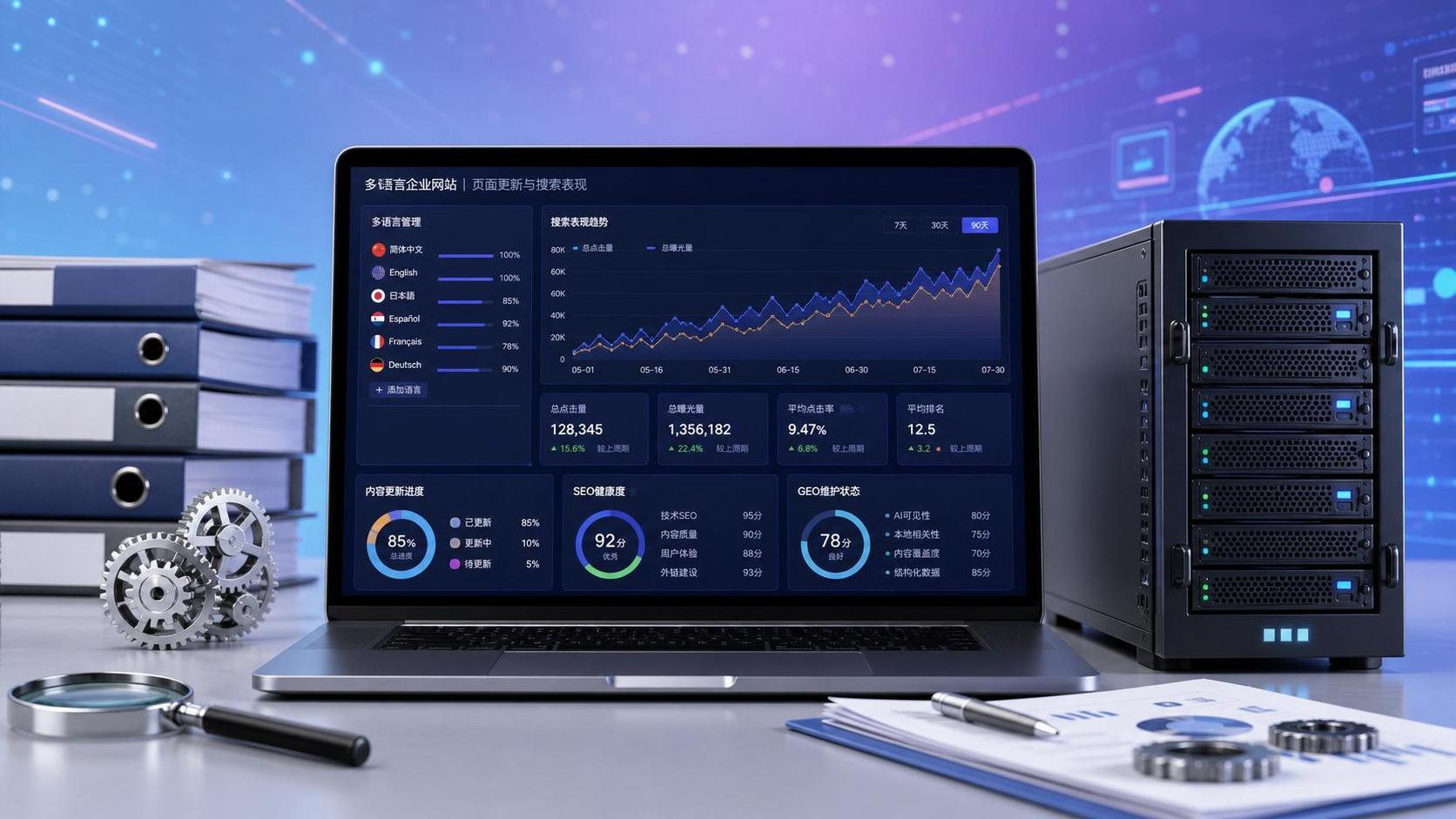
After launch, indexing, traffic sources, cited pages, brand mentions, form quality, and sales feedback should be reviewed monthly. Updates should be made promptly when new products are released, specifications are adjusted, market policies change, or customers raise frequent questions. GEO optimization services are not one-time page beautification, but an ongoing process of maintaining corporate knowledge assets.
VI. Application Scenarios, Case Experience, and Global Customer Acquisition
In industries such as laser engraving machines, steel, chemicals, heavy-duty trucks, machinery, new energy, agriculture, and healthcare, buyers typically raise a series of questions regarding operating conditions, compatibility, delivery, certification documents, and after-sales response. Companies need to consolidate these questions into searchable and verifiable information through topic pages, product pages, and FAQs, rather than only displaying promotional slogans.
E-Yingbao has served website and marketing needs across multiple industries. Public materials mention service cases involving Haier, Aucma, Shandong Airlines, Yuanhe Power Station, Little Duck Group, and China National Heavy Duty Truck Group. For specific projects, actual results still depend on the target market, the foundation of the original website, content supply, competitive intensity, and sales follow-up efficiency.
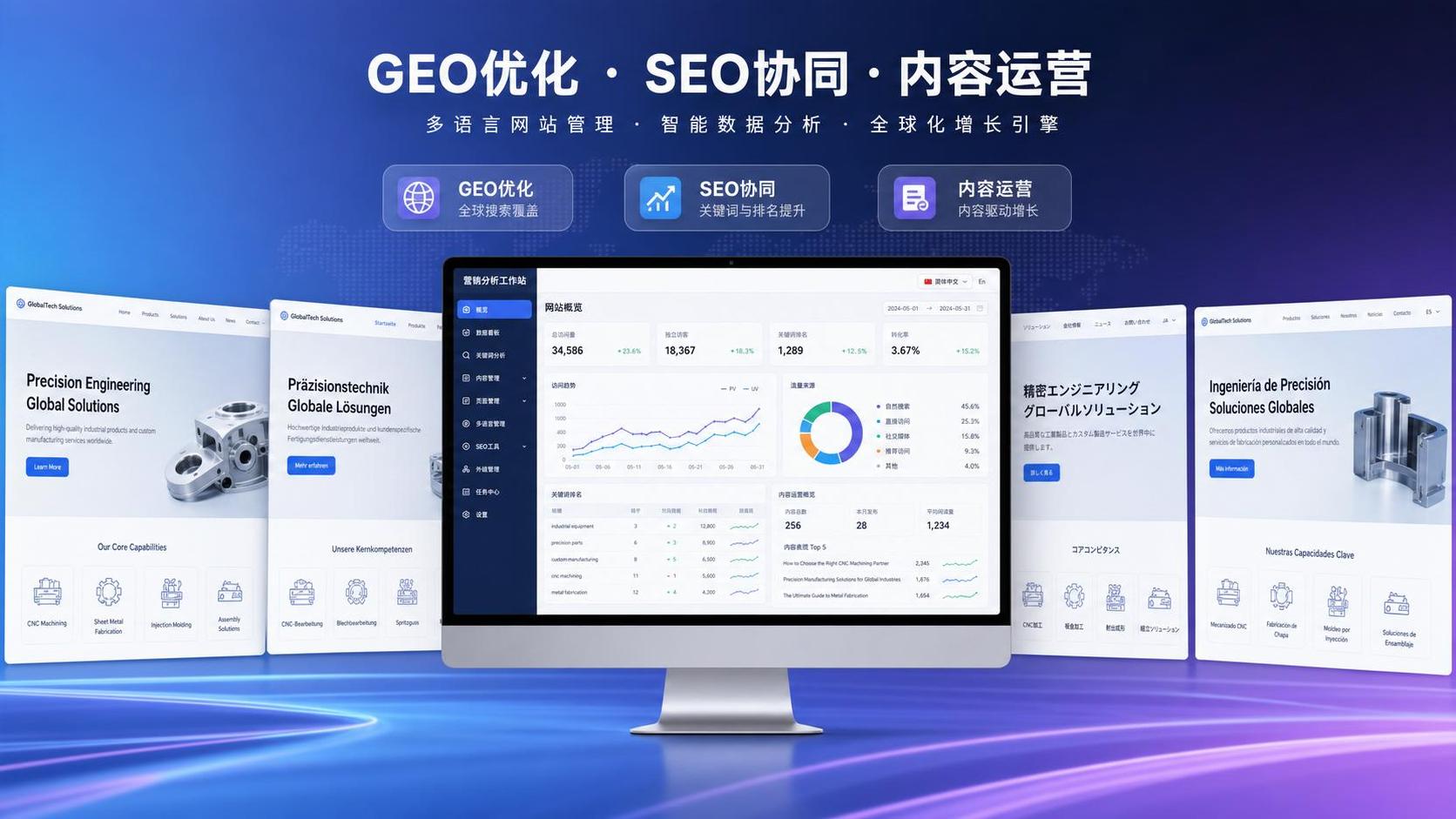
When entering non-English-speaking markets, language expression, regional pages, contact information, delivery terms, and local purchasing practices should all be considered. E-Yingbao supports multilingual development in English, Russian, Japanese, Korean, Arabic, French, German, Spanish, and other languages, enabling coordinated planning of GEO content with Hreflang, language paths, and localized landing pages.
VII. Total Cost of Ownership, Return Evaluation, and Future Trends
The total cost of ownership for GEO optimization services usually consists of website enhancements, multilingual development, content research and writing, professional review, technical maintenance, data tools, and ongoing operations. The number of pages, number of languages, product complexity, and whether advertising and social media coordination are required will all affect the budget. Providers should not be compared solely based on the price of individual pieces of content.
When evaluating returns, it is recommended to consider organic traffic, brand exposure generated by AI search, qualified inquiry rates, sales cycles, customer acquisition costs, and the value of content reuse together. For B2B companies, a more reasonable evaluation period is usually to continuously observe changes in content coverage and lead quality, rather than using short-term rankings or single clicks as the sole conclusion.
In the future, generative search will place greater emphasis on answer credibility, brand entity consistency, multimodal content, and localized service information. Companies should establish an update mechanism jointly driven by their main official website, product knowledge base, multilingual content, social media materials, and sales feedback. Early deployment of GEO optimization services can help existing website assets continuously adapt to new customer acquisition channels.
 How to troubleshoot a decline in GEO optimization service performanceHow to troubleshoot a decline in GEO optimization service performance? Systematically identify the root cause of the decline from data scope,content quality,indexing and crawling,prompt structure to the conversion path,and quickly restore AI search and SEO growth. Suitable for integrated website + marketing service companies as a reference.
 Do GEO Optimization Services Still Need Ongoing Maintenance After LaunchDo GEO optimization services still need ongoing maintenance after launch? The answer is yes. Ongoing maintenance can address changes in AI search and user needs, steadily improving indexing, exposure, and inquiry conversions. Suitable for export trade, cross-border, and multilingual global expansion companies. Click to learn more.
