









I. Industry Definition: What Purchasing Decisions Does a Food Export Website Support?
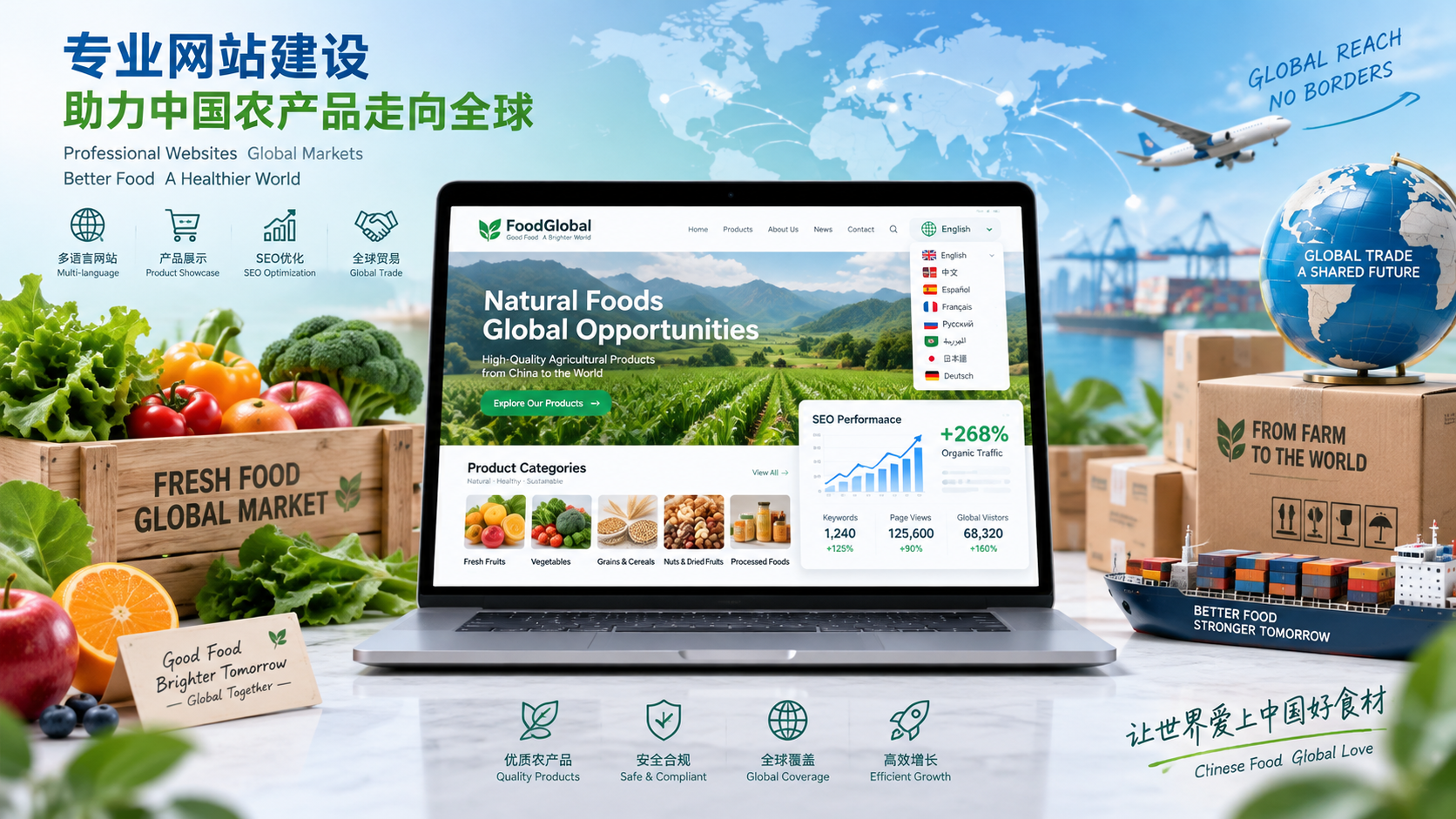
Building a food export website is a digital initiative centered on the overseas purchasing process, organizing product information, supply capabilities, quality documents, and contact channels. The website should help importers determine whether products meet their purchasing requirements and provide a clear path for sample requests, specification confirmation, and bulk quotations.
Typical users include food processors, agricultural exporters, ingredient suppliers, and brand owners. Buyers usually focus on ingredients, allergens, packaging specifications, shelf life, storage conditions, and delivery capabilities. This information should appear on product detail pages rather than only in brochures.
A website’s information architecture can be divided into product catalogs, application solutions, quality management, company profiles, and purchasing guides. Each page type serves a distinct purpose: catalogs help users filter products, detail pages support comparisons, quality pages provide verification information, and inquiry forms collect the details needed for follow-up quotations.
II. Main Website Types: Choose an Approach Based on the Transaction Model
B2B inquiry websites are suitable for bulk food products, ingredients, and contract manufacturing. They should focus on minimum order quantities, packaging options, supply lead times, and customization options. When prices depend on order volume, shipping, and trade terms, provide an inquiry form and explain what information is needed to prepare a quotation.
Brand showcase websites are suitable for businesses seeking distributors or import partners, and should explain product positioning, channel support, and brand authorization terms. B2C stores also require inventory, checkout, delivery, and after-sales capabilities. Before launch, verify the food sales and delivery requirements in the target market.
A multilingual website is an extension of these website types. Initially, prioritize markets where the business already has a foundation, then add other languages. If packaging, sales regions, or product specifications differ by country, create market-specific pages to avoid presenting unsuitable information even after translation.
III. Keyword Planning: Map Purchasing Intent to Pages
Keyword research for a food export website should start with product names, processing methods, application areas, and buyer roles. Use search results in target markets and actual inquiries to identify the terms buyers use, distinguishing supplier and purchasing needs from retail purchases and recipe searches.
Category pages address demand for product categories, detail pages cover specifications and processing attributes, solution pages explain applications, and guide pages answer purchasing questions. Create a keyword-to-page mapping table and assign a core topic to each page to reduce competition between multiple pages targeting the same search intent.
Titles and descriptions should explain the product and its purchasing value, while the body copy should develop the topic naturally through specifications, packaging, and delivery information. Link related products, applications, and purchasing guides across pages. When evaluating keywords, consider inquiry quality as well as search volume rather than using search volume as the sole selection criterion.
IV. Localization and Industry Requirements: Make Information Verifiable
Localization covers terminology, units of measurement, date formats, contact details, and purchasing practices. Ingredient names and allergen information should be reviewed by people familiar with the products and target market requirements. AI translation can assist with drafting, but should not directly replace professional review or regulatory assessment.
Food import requirements vary by country, product category, and intended use. When referencing HACCP, ISO 22000, halal, or organic certification, display only documents the company actually holds and that apply to the relevant products, and specify their scope and validity period. Website content does not replace import approvals or compliance reviews.
Yingyingbao’s multilingual independent websites, AI translation, and content management services can be used to organize product information and inquiry channels for different markets. Companies should provide reviewed specifications and credentials for the service team to configure the pages, then verify translations, documents, and forms against the purchasing scenarios.
V. Technical Principles and Vendor Selection: Ensure Crawling, Accessibility, and Conversion
International SEO depends on crawlable pages, clear language-specific URLs, and accurate page relationships. Each language version should have a separate URL, with canonical links and reciprocal hreflang correctly configured. Sitemaps should list valid pages, and product catalogs and other important content should not be blocked by mistake.
The overseas browsing experience depends on deployment regions, caching, and the load of images and scripts. Responsive layouts should be tested to ensure specification tables and forms work on mobile devices. HTTPS protects data in transit. Performance acceptance testing should cover target countries and real network conditions, rather than relying on a single speed test.
When selecting a service provider, verify its capabilities for language management, URL editing, redirects, data exports, and inquiry tracking. Yingyingbao can integrate website development, SEO, and operations services. The procurement contract should still specify domain ownership, scope of deliverables, data access rights, maintenance responsibilities, and acceptance criteria.
VI. Implementation Process and Costs: From Launch to Qualified Inquiries
Implementation can proceed through market selection, information gathering, page planning, content review, and launch acceptance. Inquiry forms should initially collect the product, quantity, destination country, and contact details. Packaging, trade terms, and delivery requirements can be confirmed at the quotation stage, balancing ease of completion with sales follow-up needs.
Total cost of ownership includes website development or subscriptions, domain registration, translation, content, technical maintenance, and marketing. When comparing plans, verify the number of languages, product entry volume, number of revisions, and renewal terms. Calculate advertising budgets separately from website service fees to avoid underestimating ongoing investment.
Performance evaluation should track qualified inquiries, sample requests, quotations, and deal progress, while filtering out spam leads. Return on investment can be calculated by comparing the gross profit contribution from new orders with marketing costs. When purchasing cycles are long, assess lead quality in stages and avoid equating increased traffic with increased revenue.
VII. 2026 Trends and Maintenance: Build a Credible Content Asset
In 2026, food export websites need to account for how information appears in both traditional search and AI-generated answers. Clear product facts, purchasing FAQs, and verifiable materials can make information easier to understand and cite. Structured data should reflect the actual page content and cannot guarantee rankings or recommendations.
During ongoing operations, check indexing, forms, and abnormal traffic monthly, and review key pages quarterly. Update information promptly when recipes, packaging, certificates, or supply terms change. Indicate who is responsible for reviewing professional content and when it was last updated to reduce the impact of outdated information on purchasing decisions and business communications.
Companies can provide Yingyingbao with target countries, product catalogs, existing websites, and customer acquisition budgets to evaluate multilingual website development and operations plans. Launch core product and market pages first, then expand content based on qualified inquiries, keeping website investment connected to actual business opportunities.
