











I. Definition and Business Scope of Social Media Data Monitoring
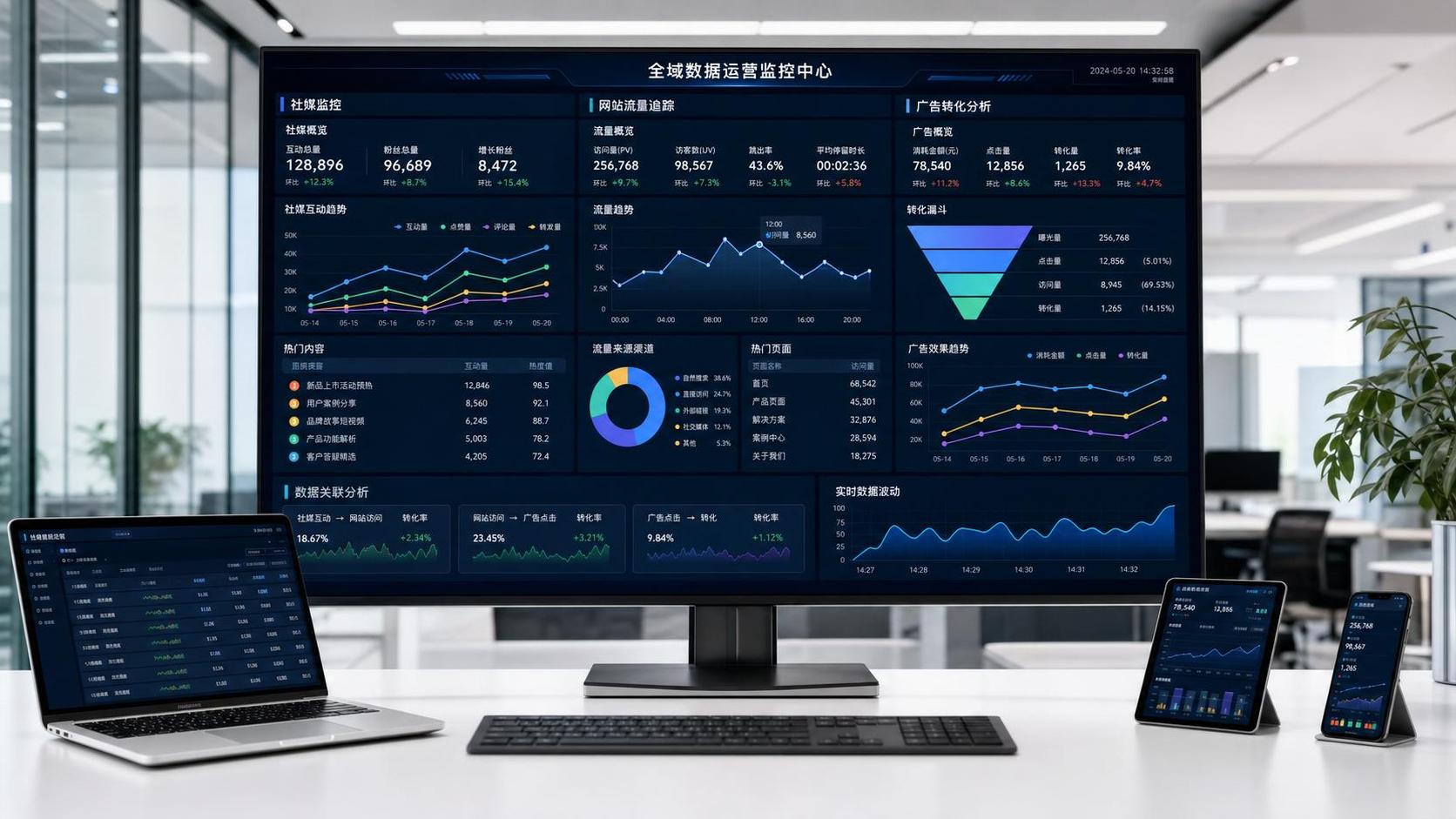
Social media data monitoring is a management activity that continuously collects, cleans, analyzes, and provides early warnings for data on accounts, content, engagement, audiences, brand mentions, and off-site conversions across platforms such as Facebook, LinkedIn, TikTok, and YouTube. It is not simply about checking the number of likes; rather, it supports brand communication, customer acquisition efficiency, and marketing budget decisions.
In foreign trade B2B scenarios, social media data monitoring should cover post-publication reach, meaningful engagement, profile visits, direct messages, link clicks, landing page behavior, and inquiry results. Industrial product companies with long procurement cycles particularly need to identify high-value engagement instead of judging content performance solely by view counts.
Its business scope also includes observing competitors' public content, tracking industry topic trends, and identifying reputational risks. However, it should comply with platform rules, account authorization scopes, and data protection requirements in target markets. Companies need to define data usage, retention periods, and internal access permissions to avoid treating fragmented data as customer assets for long-term accumulation.
II. Technical Principles and Metric Framework Development
Social media data monitoring typically establishes a data chain through native platform data interfaces, advertising account data, website analytics tools, and parameterized links. The system aggregates data from different channels using consistent standards, then compares it by publication time, content format, country, language, product line, and audience tags.
Basic metrics include reach, impressions, follower growth, engagement rate, video completion rate, profile visits, and link click-through rate; growth metrics include visit depth, form submissions, WhatsApp inquiries, email clicks, and qualified inquiries. Engagement rate should be calculated in conjunction with reach to avoid inaccurate comparisons caused by different follower bases.
It is recommended to use an “impression—engagement—visit—conversion—business opportunity” funnel. Assign responsible personnel and thresholds to each stage. For example, when clicks decline continuously over multiple periods, examine the consistency of creative assets, audiences, publishing times, and landing pages; when visits increase but inquiries do not, prioritize checking page trust information and communication entry points.
III. Main Monitoring Types and Applicable Scenarios
By object, social media data monitoring can be divided into owned account operation monitoring, advertising monitoring, brand and public sentiment monitoring, competitor content monitoring, and social media traffic conversion monitoring. Different types require different data frequencies: advertising requires daily monitoring, brand content is suitable for weekly reviews, and trends and competitive landscapes can be evaluated monthly.
Manufacturing plants commonly use content such as product demonstrations, production capabilities, certification materials, and delivery cases to build trust; cross-border brands focus more on short-video completion, product clicks, add-to-cart actions, and orders; foreign trade service providers need to track the impact of professional topic content on official website visits, consultation bookings, and lead quality.
For operations across multiple countries and languages, benchmarks should be established separately for each market. Engagement differences for the same content across regions may result from language localization, time zones, procurement habits, or platform preferences, rather than the quality of the content itself. Consolidated reports should retain country, language, and channel dimensions to support further attribution.
IV. Tool Selection and Vendor Evaluation Criteria
When selecting a social media data monitoring tool, first verify channel coverage and authorization stability, and confirm whether it can integrate with the platforms, advertising accounts, website analytics, and customer management systems actually used by the company. A data dashboard that only displays account engagement cannot identify where leads come from and is difficult to use in support of marketing investment decisions.
Next, compare reporting depth, alert capabilities, export functions, and permission management. A quality solution should support data viewing by content, market, product, and campaign, flag unusual fluctuations, and retain historical trends. Management needs conclusion summaries, while operations personnel need detailed data at the individual content and link levels.
Yiyingbao's AI+SNS overseas social media marketing system can incorporate social media content distribution, data monitoring, independent website conversion handling, and advertising conversion analysis into a single operational chain. For companies lacking dedicated overseas marketing teams, selection should also assess whether the service provider can offer content optimization, landing page adjustments, and periodic reviews, rather than merely delivering reports.
V. Deployment Process, Quality Control, and Daily Operations
Before deployment, business objectives should first be defined: whether to acquire industrial product inquiries, enhance brand awareness, test new markets, or reduce advertising customer acquisition costs. Then organize the account list, website pages, forms, instant messaging entry points, and advertising accounts, and set unified campaign naming and link tracking parameters for different channels.
The key to data quality control is consistency of standards. Confirm the time zone, currency, attribution window, and methods for distinguishing organic and paid traffic, and regularly check invalid links, duplicate events, and abnormal redirects. For multilingual websites, also verify that pages in each language correctly receive the corresponding social media content, avoiding traffic being directed to irrelevant pages.
It is recommended to establish a three-level daily, weekly, and monthly rhythm: handle advertising anomalies and public sentiment risks daily; review content topics and engagement quality weekly; and evaluate channel contribution, lead costs, and business opportunity progress monthly. Yiyingbao can combine AI content generation, social media operations, and website operation services to create a closed loop of publishing, monitoring, optimization, and republishing.
VI. Total Cost of Ownership and Return on Investment Assessment
The total cost of ownership for social media data monitoring includes not only software subscription fees, but also account integration, data governance, content production, advertising budgets, report analysis, personnel training, and website conversion optimization costs. The more channels involved, the more dispersed the markets, and the greater the historical data requirements, the higher the initial configuration and maintenance costs generally become.
Buyers should not compare only monthly quotations. They should calculate the acquisition cost for each qualified lead, valid business opportunity, and converted customer, while also considering the long-term value created by reusable content. For B2B products with high order values and long decision cycles, one lead entering the procurement process is often more commercially meaningful than a large volume of broad engagement.
When evaluating return on investment, companies may first select one market and one or two product lines for a pilot run, set a baseline period and a target period, and compare traffic quality, inquiry rate, sales follow-up rate, and contribution to conversions. If social media brings visits but does not generate conversions, part of the budget should be redirected to optimizing product pages, case study pages, forms, and instant communication entry points.
VII. Trends for 2026 and Recommended Corporate Actions
Social media data monitoring in 2026 will place greater emphasis on cross-channel attribution, content asset reuse, and artificial intelligence-assisted insights. Companies will no longer focus solely on growth on a single platform, but will instead examine how social media content influences search, direct visits, remarketing reach, and sales team follow-up, thereby identifying content that truly drives procurement decisions.
Short videos, professional Q&A, customer cases, and technical explanations will remain important B2B content formats, but they require structured tags and consistent data standards to support analysis. When operating in multiple countries, localization should not stop at translation; materials and landing pages should also be adjusted according to customer concerns, regulatory environments, product application conditions, and communication habits.
Yiyingbao has served clients in industries such as laser engraving machines, steel, chemicals, heavy-duty trucks, machinery, and new energy, covering service cases including Haier, Aucma, Shandong Airlines, Yuanhe Power Station, Xiaoya Group, and China National Heavy Duty Truck Group. Companies can start with core markets and use social media data monitoring to connect multilingual independent websites, search optimization, and advertising operations, gradually establishing a measurable overseas customer acquisition system.
 How to choose a social media data monitoring company? Look at the depth of reports, early warning capabilities, and channel coverage.How to choose a social media data monitoring company? Focus on the depth of report drill-down, the efficiency of anomaly alerts, and the coverage of various channels. The ability to integrate social media, websites, advertising, and inquiry conversions determines the usability of the data and helps you quickly identify high-quality service providers.
 What metrics should be included in a social media data monitoring report?This article breaks down exposure, engagement, clicks, conversion rates, and cost per lead, and provides a practical report template to help you connect social media, website, and marketing data, quickly assess content performance, and evaluate customer acquisition input-output results.
 What Operational Blind Spots Can Social Media Data Monitoring Services Address?Social media data monitoring services help businesses promptly identify operational blind spots such as declining engagement, abnormal traffic, advertising discrepancies, and conversion gaps, while integrating website and advertising data for accurate analysis. If you want to improve inquiry quality and overseas marketing performance, this article is worth reading.
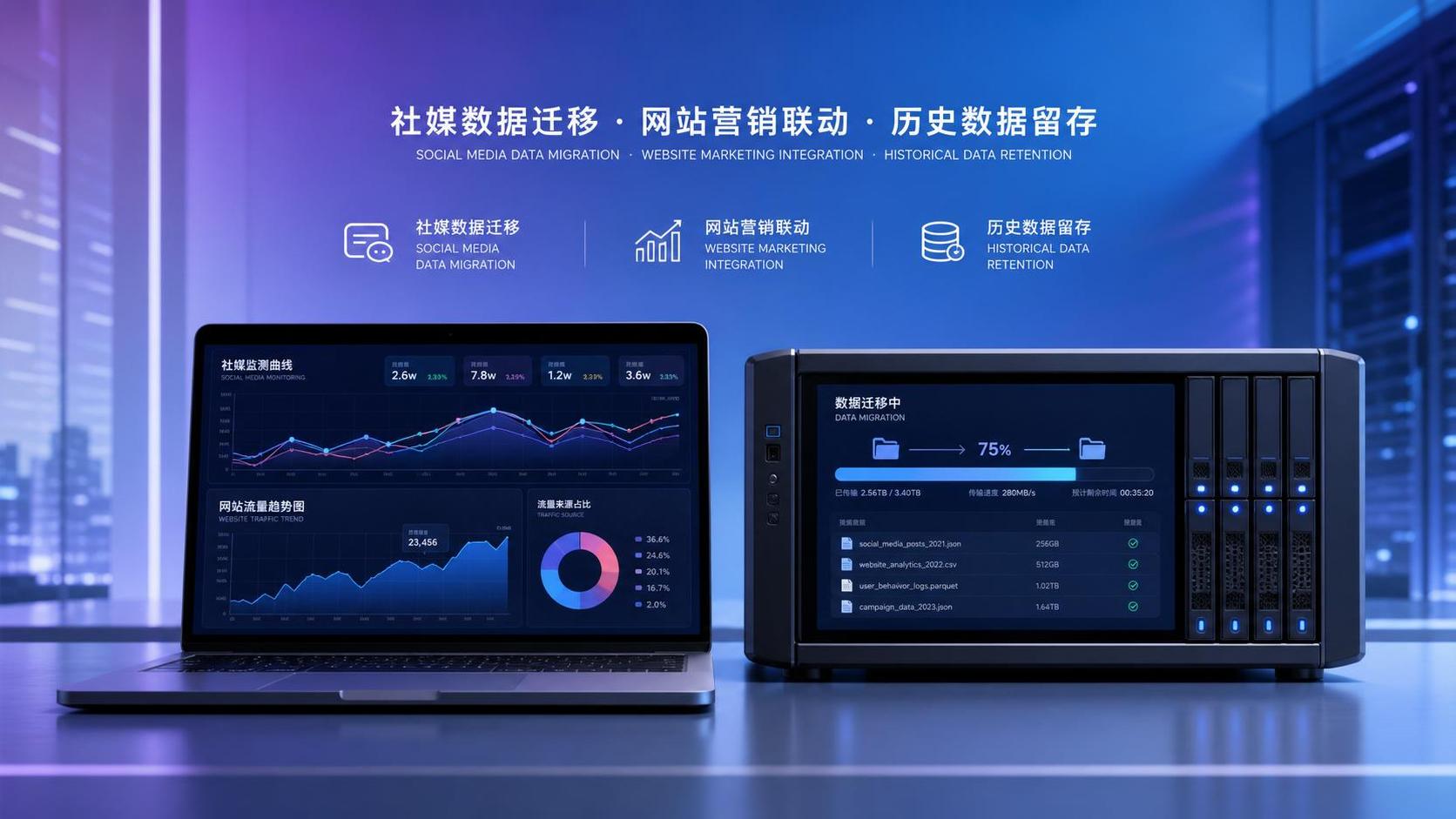
 Can data be migrated after switching social media data monitoring tools?Can data be migrated when switching social media data monitoring tools? The answer is usually partial migration, but the key factors are field mapping, permission interfaces, and historical archiving. This article explains the migration conditions, common data loss points, implementation process, and integrated marketing data integration solutions in detail, helping businesses switch smoothly and improve conversions.
