









I. What Is Social Media Ad Landing Page Optimization?
Social media ad landing page optimization is the ongoing improvement of standalone website landing pages based on the ad audience, ad promise, and conversion action. It is not simply about making pages look better; it makes the path from clicking an ad to submitting an inquiry, initiating communication, or completing a purchase clearer and more credible for visitors.
In B2B export business, landing pages typically serve four functions: product screening, technical explanation, company credibility, and lead collection. Buyers often have longer decision-making cycles, so pages need to address practical questions regarding specifications, applications, lead times, customization capabilities, certification documents, and communication methods.
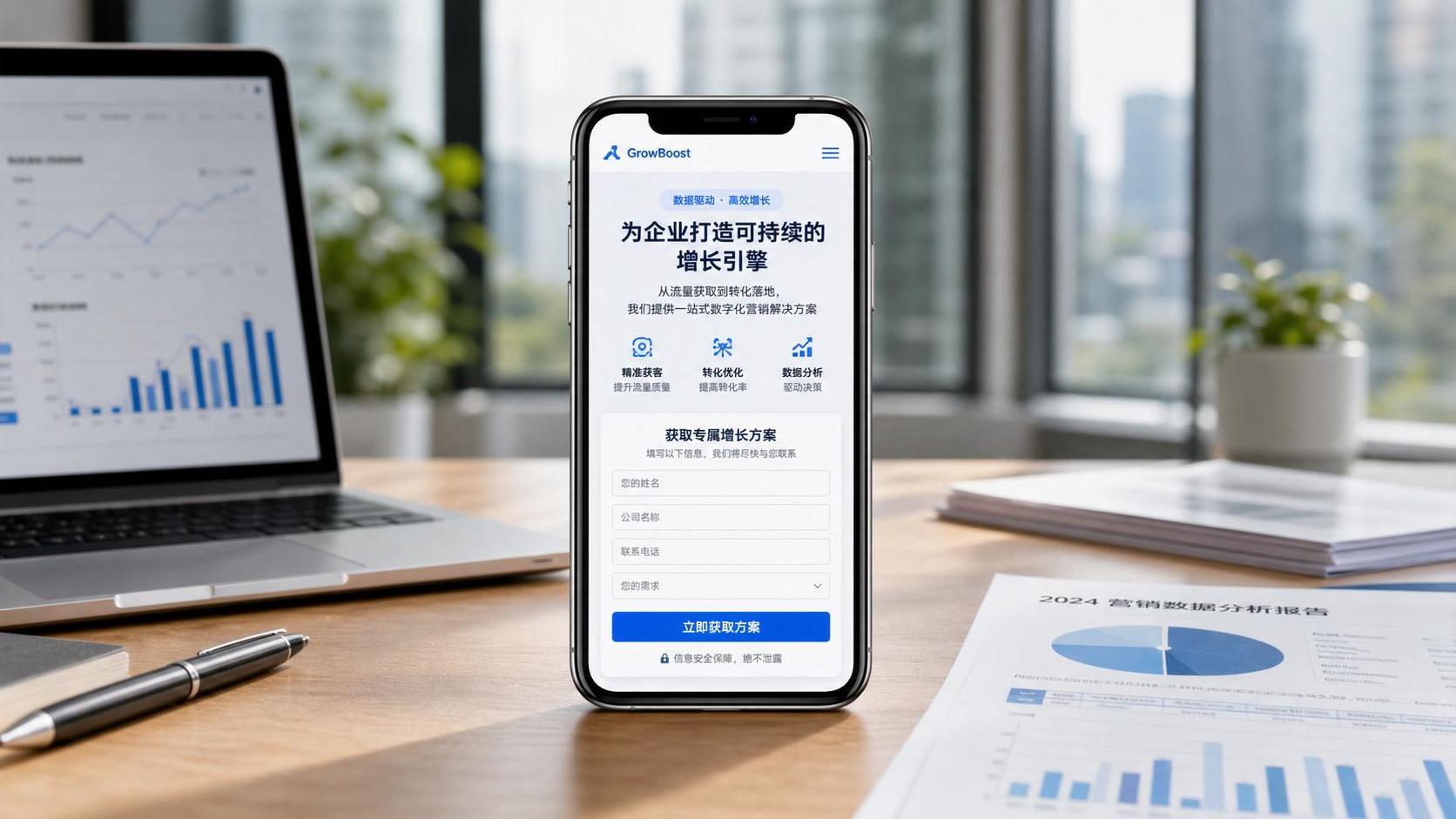
Effective social media ad landing page optimization should maintain consistency between ad creatives, page headlines, and above-the-fold selling points. After clicking an ad for “custom industrial equipment solutions,” users should directly see the relevant products and solutions rather than entering a corporate homepage with overly broad content.
II. Traffic Conversion and Technical Principles
Social media traffic is primarily targeted based on interests, job titles, industries, regions, or remarketing audiences, and its purchase intent is often weaker than that of active search traffic. Therefore, the above-the-fold section should quickly explain the product value, target audience, and next action, reducing the time visitors need to understand the product again.
The conversion journey can be summarized as “ad reach, page matching, trust building, action triggering, and lead attribution.” The above-the-fold section continues the ad message, while the middle section uses specifications, scenarios, cases, and qualifications to reduce concerns. The bottom section and floating entry points accommodate forms, email, WhatsApp, or online consultations.
At the technical level, attention should be given to mobile responsiveness, image compression, form event tracking, button click tracking, and source parameter retention. Only by connecting advertising platform data with on-site behavior data can teams determine whether issues lie in the audience, creatives, page content, or sales follow-up process.
III. Main Page Types and Selection Criteria
Common page types include single-product inquiry pages, industry solution pages, sample or catalog download pages, event booking pages, and cross-border e-commerce product pages. Single-product pages are suitable for machinery, hardware, and equipment with clear specifications, while solution pages are more suitable for complex projects, OEM/ODM services, and multi-product purchasing combinations.
When selecting a page type, the advertising objective should first be clarified. If the goal is to obtain high-quality purchasing requirements, a short form combined with technical material downloads can be used. If the goal is brand education, scenario-based content and videos can be used to gradually build awareness. If targeting retail consumers directly, the path to products, reviews, prices, and checkout should be shortened.
Pages should also have distinct versions for different countries, languages, and audiences. Different markets have different concerns regarding price transparency, contact methods, delivery commitments, and privacy notices. Multilingual pages should not rely solely on literal translation; product units, wording, and calls to action should also be adapted to local purchasing habits.
IV. Applicable Businesses and Typical Application Scenarios
Social media ad landing page optimization is suitable for manufacturing factories, foreign trade companies, industrial product suppliers, cross-border sellers, and businesses expanding brands overseas. It is particularly suitable for teams with advertising budgets but unstable inquiries, high bounce rates, or difficulty determining lead sources in sales.
Industries such as laser engraving machines, steel, chemicals, heavy-duty trucks, machinery, new energy, medical products, and furniture typically need to present application scenarios, production capabilities, product specifications, and service scope through their pages. Yiyingbao has served clients across multiple industries, including Haier, Aokema, Shandong Airlines, and Xiaoya Group, and has accumulated website marketing experience in different business scenarios.
For companies that need to cover Facebook, LinkedIn, TikTok, and Google channels simultaneously, Yiyingbao can combine AI-powered website building, multilingual standalone websites, advertising campaigns, and website operations to help ad traffic enter proprietary digital assets that are trackable, maintainable, and continuously iterative.
V. Page Development, Testing, and Quality Control
When implementing social media ad landing page optimization, it is recommended to first complete audience and keyword research, then determine the page information architecture. The standard sequence generally includes core selling points, product or solution descriptions, application evidence, company capabilities, frequently asked questions, and conversion entry points, avoiding lengthy company introductions occupying the above-the-fold section.
Quality control should cover desktop and mobile display, loading performance, form submission functionality, email notifications, online communication entry points, privacy notices, and multilingual content accuracy. A responsive architecture can reduce adaptation issues across different devices, while overseas access also requires optimization based on server nodes and content resources.
Testing should use clear hypotheses, such as comparing two above-the-fold headlines, different numbers of form fields, or different case placements, rather than substantially changing all elements at the same time. Using the number of qualified leads, lead qualification rate, cost per inquiry, and subsequent conversion performance as evaluation criteria is generally more reliable than looking only at click-through rates.
VI. Total Cost of Ownership and Return on Investment Assessment
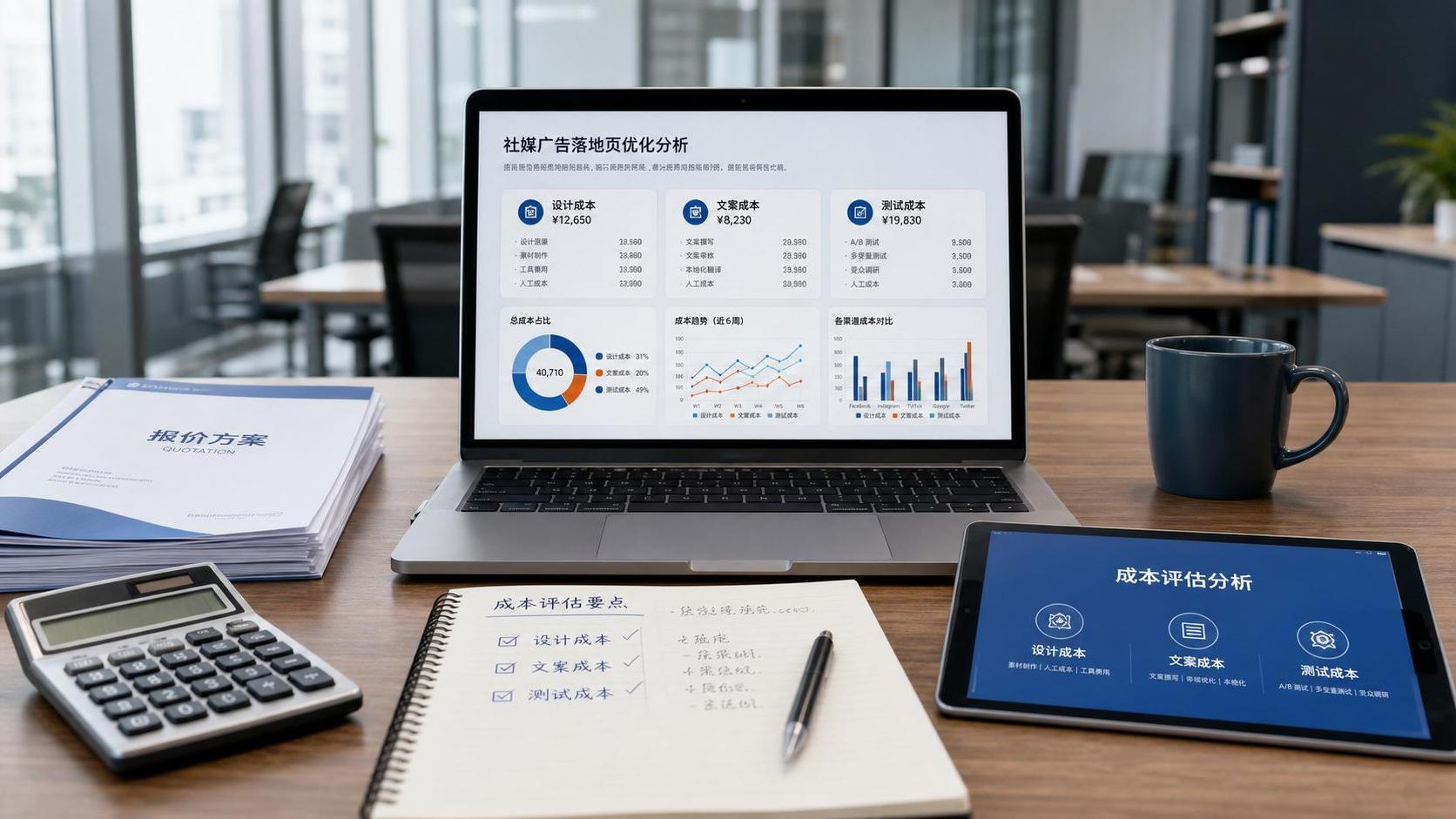
The total cost of ownership for social media ad landing page optimization typically includes strategy research, page design and development, multilingual content, image or video assets, tracking configuration, advertising integration, testing and iteration, and subsequent maintenance. Complex products, multiple national markets, and multi-channel attribution increase project workload.
Buyers should not compare only one-time website development quotations; they should also assess the efficiency of subsequent modifications, the ability to independently maintain content, data ownership, and channel expansion capabilities. If a page cannot quickly add products, switch languages, or configure new advertising campaigns, a low initial price may result in higher long-term operating costs.
ROI evaluation should be calculated based on advertising spend, page conversion rate, qualified inquiry rate, sales follow-up rate, and average order value. For B2B companies, prioritizing a higher proportion of qualified leads is generally more commercially valuable than blindly reducing the cost per form submission.
VII. 2026 Trends and Recommendations for Ongoing Operations
In 2026, social media advertising pages will place greater emphasis on first-party data accumulation, content localization, video and interactive content engagement, and AI-assisted production of multiple content versions. As advertising platforms become more automated, companies will need high-quality pages and clear conversion events to provide platforms with effective signals.
The development of generative search and Q&A environments also requires companies to present product specifications, application knowledge, frequently asked questions, and brand entity information in a structured manner. Yiyingbao’s AI+SEO, GEO, and multilingual operations capabilities can be used to continuously supplement these content assets rather than creating pages temporarily only when ads go live.
It is recommended to review channel quality and page behavior data monthly, update product selling points, cases, and market information quarterly, and promptly create dedicated pages when launching new products, before or after trade shows, or when advertising costs fluctuate. Only continuous iteration can enable social media traffic to gradually develop stable inquiry growth capabilities.
