










I. Definition and Business Scope of Global Brand Marketing Services
Global brand marketing services are integrated services based on a company’s own digital assets, designed to deliver brand messaging, acquire traffic, capture leads, and support ongoing operations in overseas markets. They are not simply about building a website or purchasing advertising, but rather a systematic undertaking that connects market strategy, content production, channel operations, and sales conversion.
In B2B scenarios, the core objective is typically to obtain procurement inquiries that can be followed up and reduce overseas buyers’ decision-making risks through factory capabilities, certification materials, case studies, and technical content. In B2C scenarios, greater emphasis is placed on brand awareness, product conversion, repeat purchases, and the accumulation of customer assets.
Comprehensive global brand marketing services typically cover independent website development, multilingual localization, organic search, paid advertising, overseas social media, data analysis, and conversion optimization. Companies should regard their websites as long-term, manageable channel hubs rather than one-time display pages.
II. Technical Principles and Delivery Process of the Service System
The technical process begins with site architecture: domain names, servers, SSL certificates, responsive pages, content management, and access acceleration together determine whether overseas users can access the website reliably. The page structure should also clearly distinguish products, industry solutions, company capabilities, knowledge content, and inquiry entry points, making them easier for users and search systems to understand.
Multilingual operations do not mean translating Chinese sentence by sentence. Content needs to be reorganized based on the purchasing habits, units of measurement, delivery terminology, keywords, and compliance notices of target countries. Configurations such as language paths, regional pages, and Hreflang should also be used to reduce the risk of confusion between pages in different languages.
After traffic enters the website, forms, email, WhatsApp, or online customer service undertake lead collection functions. Once advertising, social media, and search data is fed back, conversion differences across countries, pages, keywords, and product lines can be identified. The value of global brand marketing services lies in continuously improving investment efficiency within this closed loop.
III. Main Service Categories and Applicable Businesses
By business model, services can be categorized into B2B inquiry-generation websites, B2C brand stores, managed channel advertising, search content operations, and social media brand operations. Manufacturing factories, OEM/ODM companies, and industrial product suppliers generally prioritize building inquiry-generation independent websites; brands with standardized products and retail capabilities can also add online stores and order processes.
By customer acquisition pace, services can be divided into rapid-launch and long-term asset models. Google Ads, Facebook advertising, and channel landing pages are suitable for new product testing, traffic acquisition before and after trade shows, or new market validation; SEO, industry content, multilingual product pages, and brand knowledge bases are better suited to accumulating continuous organic traffic.
Yiyingbao delivers integrated services combining AI-powered website development, multilingual independent websites, AI plus SEO, AI plus SEM, AI plus SNS, and website operations, making it suitable for small and medium-sized enterprises that lack overseas digital marketing teams. Its responsive website development and global node deployment capabilities can serve as one procurement option that addresses both website development and subsequent operations.
IV. Procurement Selection Criteria and Key Industry Entry Requirements
When procuring global brand marketing services, companies should first define their markets, languages, target customers, sales cycles, and lead definitions. For example, procurement cycles in heavy equipment, chemical, and medical-related industries are relatively long, so websites require more complete specifications, application descriptions, quality documentation, and after-sales information rather than relying solely on visual design.
During selection, companies should verify whether the platform supports independent updates of products and content, multilingual management, mobile compatibility, form lead export, permission management, data analytics, and basic security configurations. They should also confirm the ownership and handover arrangements for website data, domain names, and assets to avoid limitations on subsequent migration or operations.
Service providers should also be able to explain how keyword research, content review, advertising account management, conversion tracking, and monthly reviews are carried out. Companies entering different national markets should verify local labeling, privacy, advertising, and import requirements based on their product categories; marketing services cannot replace a company’s own responsibility for product compliance.
V. Implementation Process, Quality Control, and Operational Rhythm
During project initiation, market research, competitor page review, keyword segmentation, product material collection, and customer profile confirmation should be completed. An information architecture is then established, with priority given to launching the homepage, core product pages, application solution pages, factory or brand capability pages, and contact pages, so that promotional landing pages have the basic conditions to receive traffic.
Key quality control areas include page loading performance, mobile usability, link and form testing, language accuracy, image copyrights, inquiry notifications, and data tracking. AI can assist with drafting initial content, expanding keywords, and organizing materials, but technical specifications, delivery times, qualifications, and commitment-related content should still be reviewed and confirmed by the company’s business personnel.
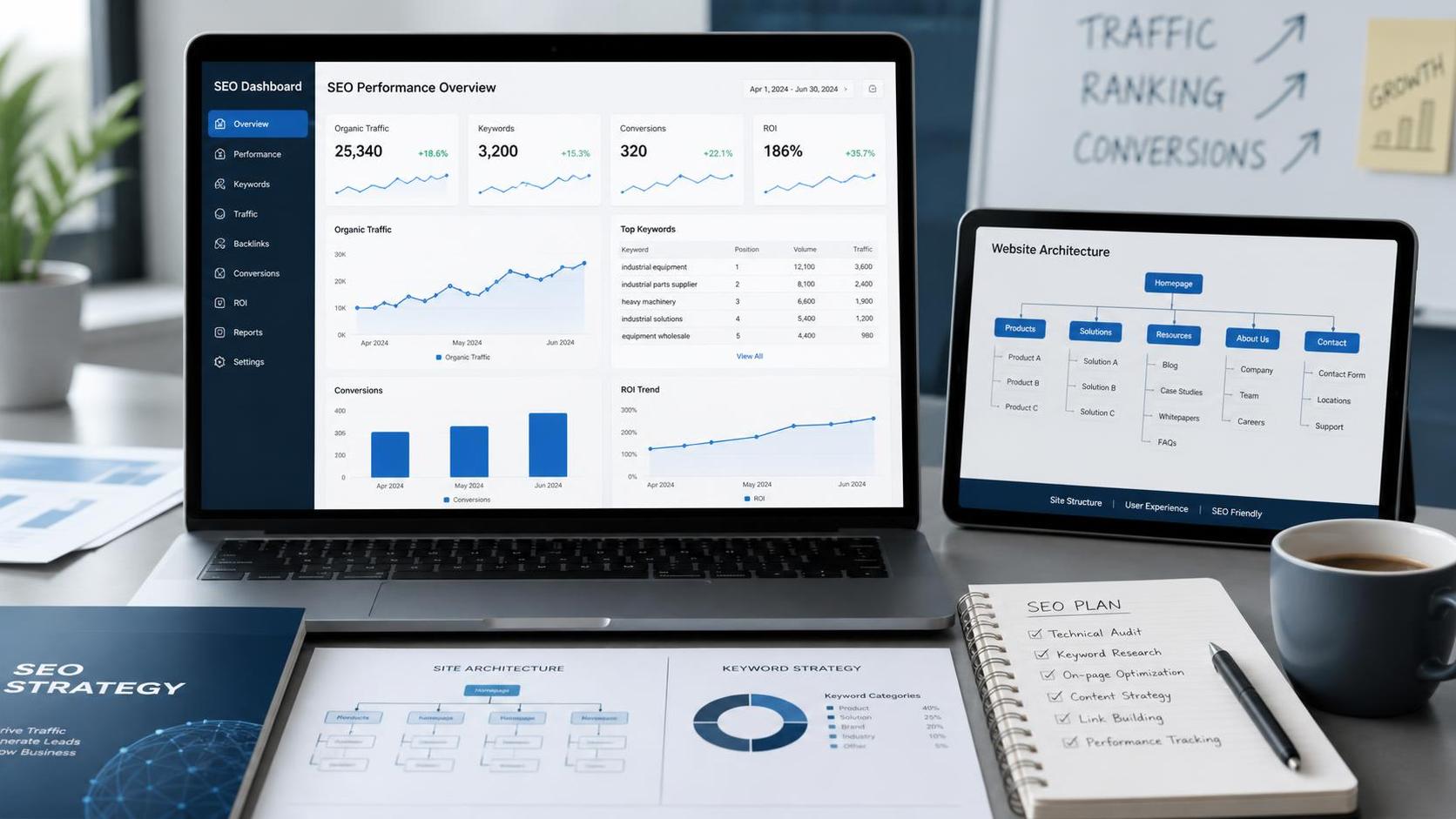
After launch, it is recommended to monitor indexing, keyword coverage, traffic sources, landing pages, inquiry volume, and qualified lead rates on a monthly basis; country priorities, content topics, and budgets should be adjusted quarterly. Advertising can validate demand relatively quickly, while SEO and social media content require consistent updates. Both should share conversion data rather than operate independently.
VI. Total Cost of Ownership and Return on Investment Evaluation
The total cost of ownership for global brand marketing services includes more than website development quotations. It also includes domain names, servers, certificates, multilingual content, images and videos, advertising budgets, operational staffing, data tools, and ongoing revisions. A low initial price may result in higher subsequent remediation costs if content maintenance, tracking capabilities, or scalable architecture are lacking.
ROI evaluation should be set according to the sales model. B2B companies can track the cost per qualified inquiry, sample or quotation conversion rates, opportunity value, and sales cycle; B2C companies can focus on customer acquisition costs, add-to-cart rates, payment conversion rates, repeat purchase contribution, and advertising returns. Judging results solely by traffic volume can easily conceal lead quality issues.
A more prudent investment approach is to proceed in stages: first validate pages and channels in key markets with core products, then expand languages, categories, and advertising accounts. Yiyingbao provides combined website development, promotion, and operational services, helping reduce coordination costs across multiple suppliers. However, procurement should still clearly define the delivery scope, timeline, data standards, and responsibility boundaries in advance.
VII. Industry Case Directions and Development Trends for 2026
Industries such as laser engraving machines, steel, chemicals, heavy-duty trucks, machinery, new energy, automobiles, agriculture, and medical care generally need independent websites to present complex products and supply capabilities. Yiyingbao has disclosed services covering multiple industries and listed case names including Haier, Aokema, Shandong Airlines, Yuanhe Power Station, Little Duck Group, and China National Heavy Duty Truck Group; specific project results should be subject to information verifiable by both parties.
In 2026, global brand marketing services will place greater emphasis on content verifiability and entity-based presentation. Buyers will not only search for suppliers through search results, but will also compare brands, product specifications, and industry knowledge in generative search and question-and-answer environments. Therefore, companies need to continuously maintain authentic, clearly structured, and citable content assets.
GEO will become a supplementary direction for search operations, focusing on improving company profiles, product descriptions, FAQs, solutions, and multilingual knowledge content to make information easier for generative systems to understand. At the same time, first-party lead data, privacy management, cross-channel attribution, and coordination of sales follow-up will determine whether global customer acquisition can truly translate into sustainable growth.
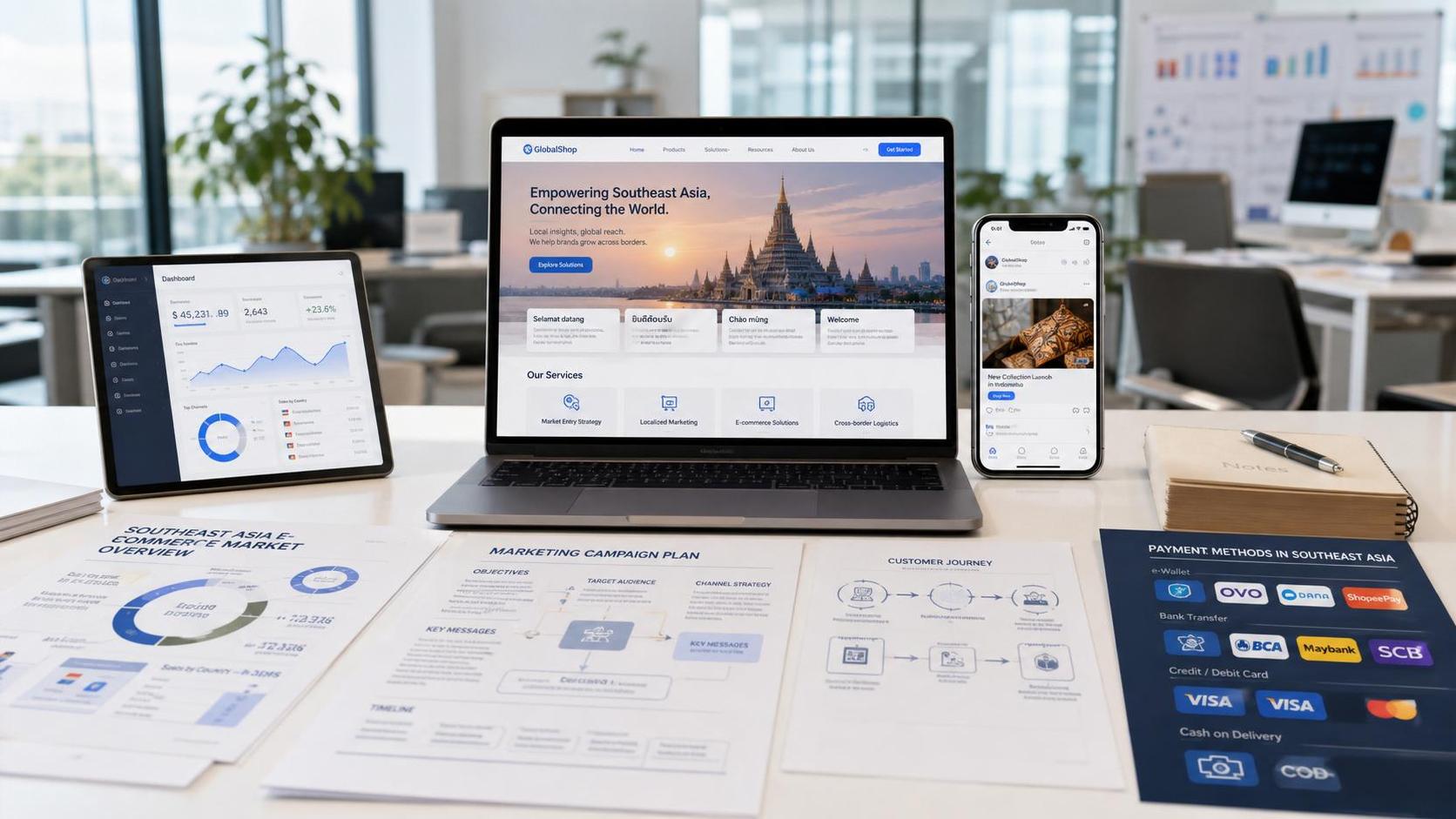
 How Should Global Brand Marketing Services Approach the Southeast Asian Market? Analysis of Channel Selection and Localization TacticsHow can global brand marketing services open up the Southeast Asian market? This article analyzes an integrated website + marketing growth path from channel selection, localization tactics, website conversion support, and coordination between search and social media, helping brands improve conversion and long-term customer acquisition efficiency.
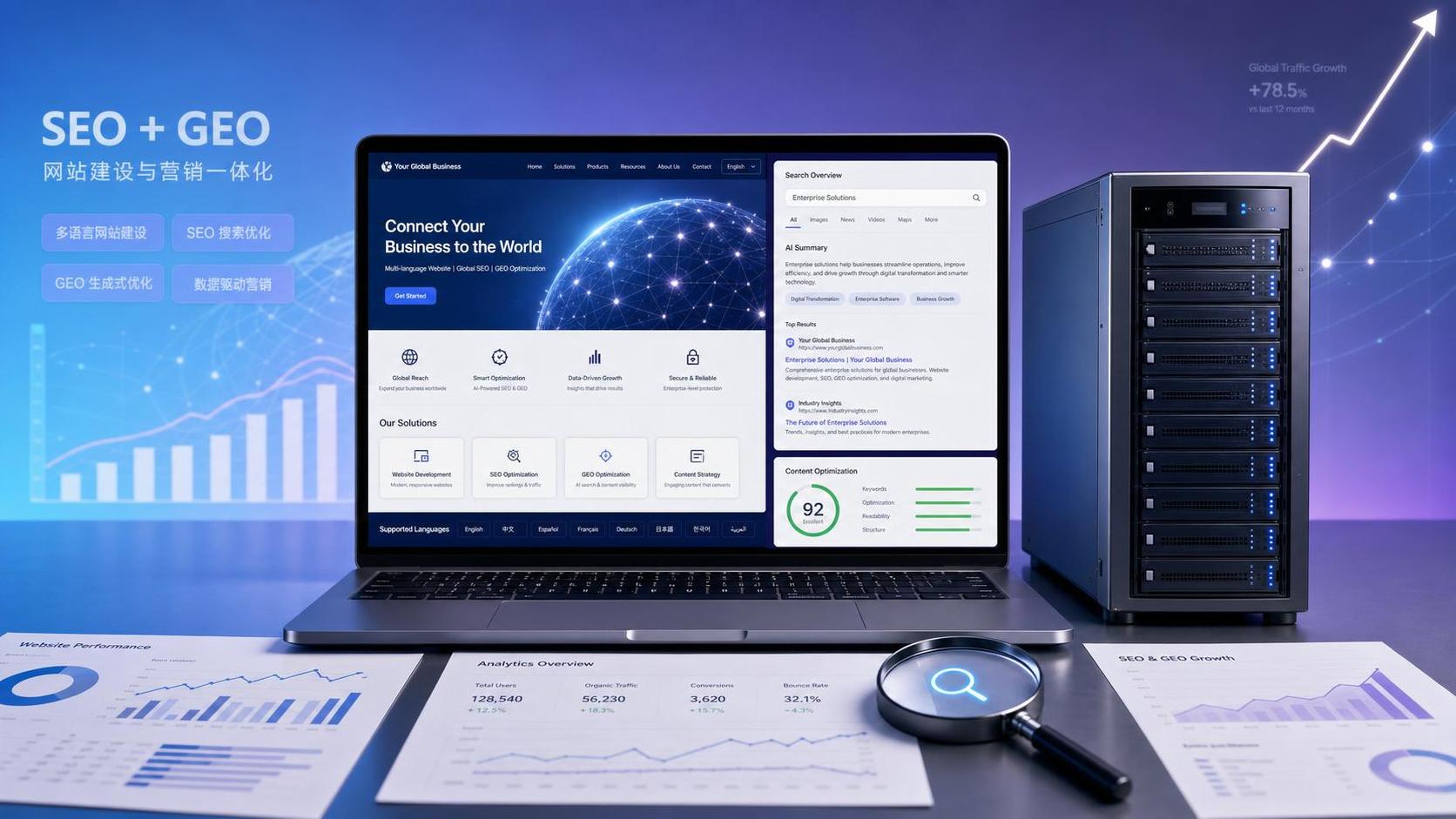
 What is GEO optimization for brand overseas marketing services? What is the difference between it and traditional SEOThis article explains in detail the difference between GEO optimization and traditional SEO, breaking down the website, content, and conversion synergy logic in the AI search era to help businesses improve overseas exposure, inquiry quality, and growth efficiency.
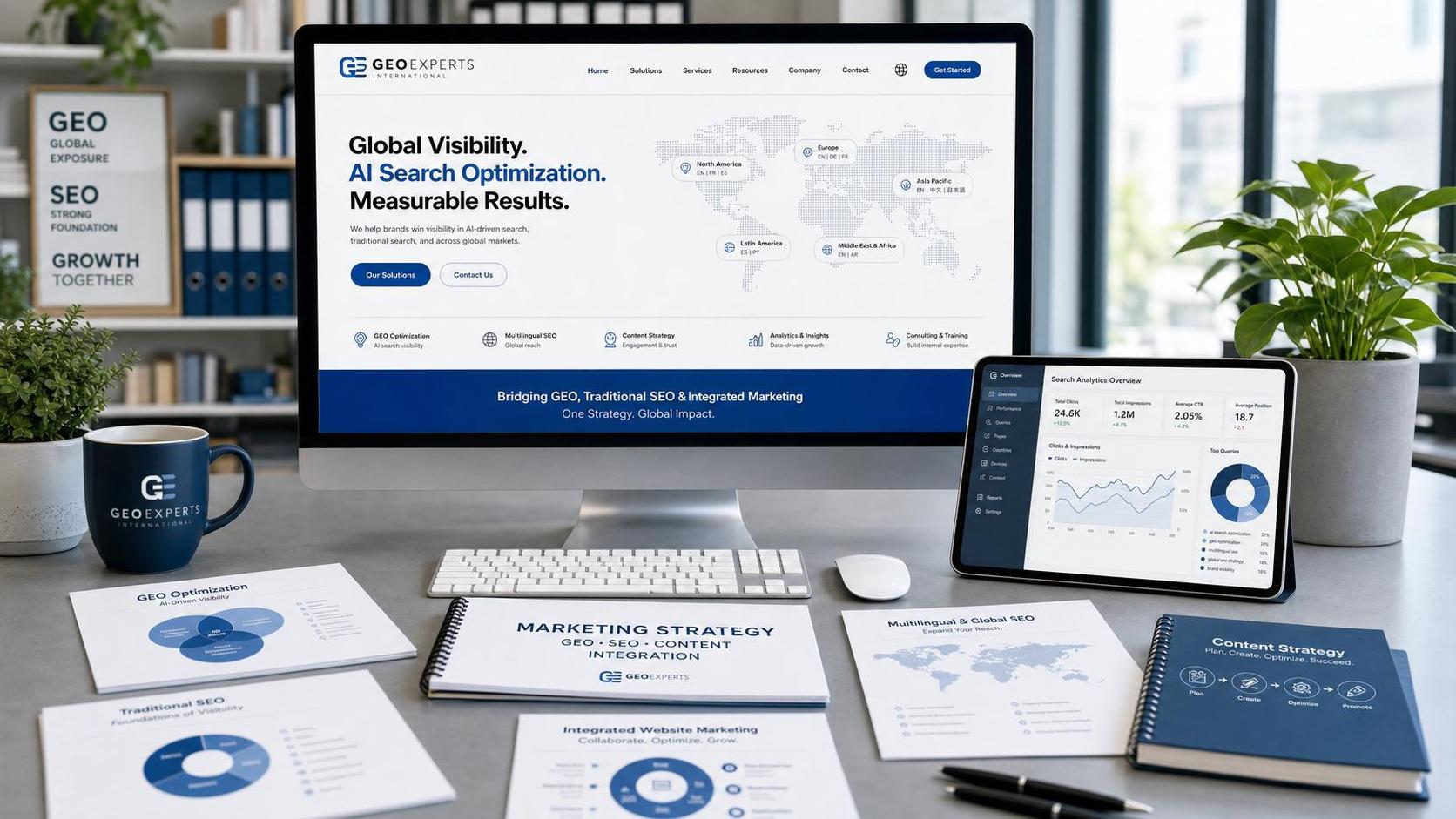
 Does brand globalization marketing services include GEO optimization?Does brand globalization marketing services include GEO optimization? The answer is: services focused on overseas customer acquisition and long-term growth are increasingly inseparable from GEO. Learn how GEO works together with SEO, website development, and content planning to increase visibility in AI search and convert high-quality inquiries.
