









I. Definition and Scope of AI Website Building Training
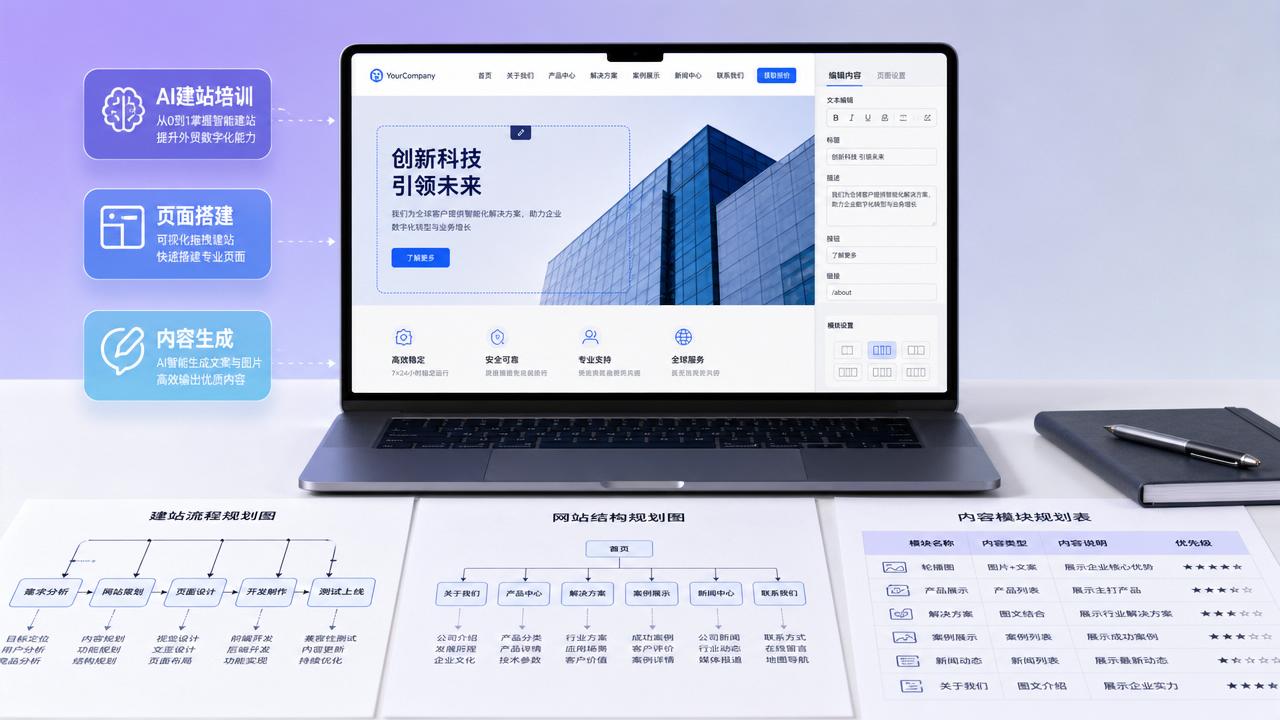
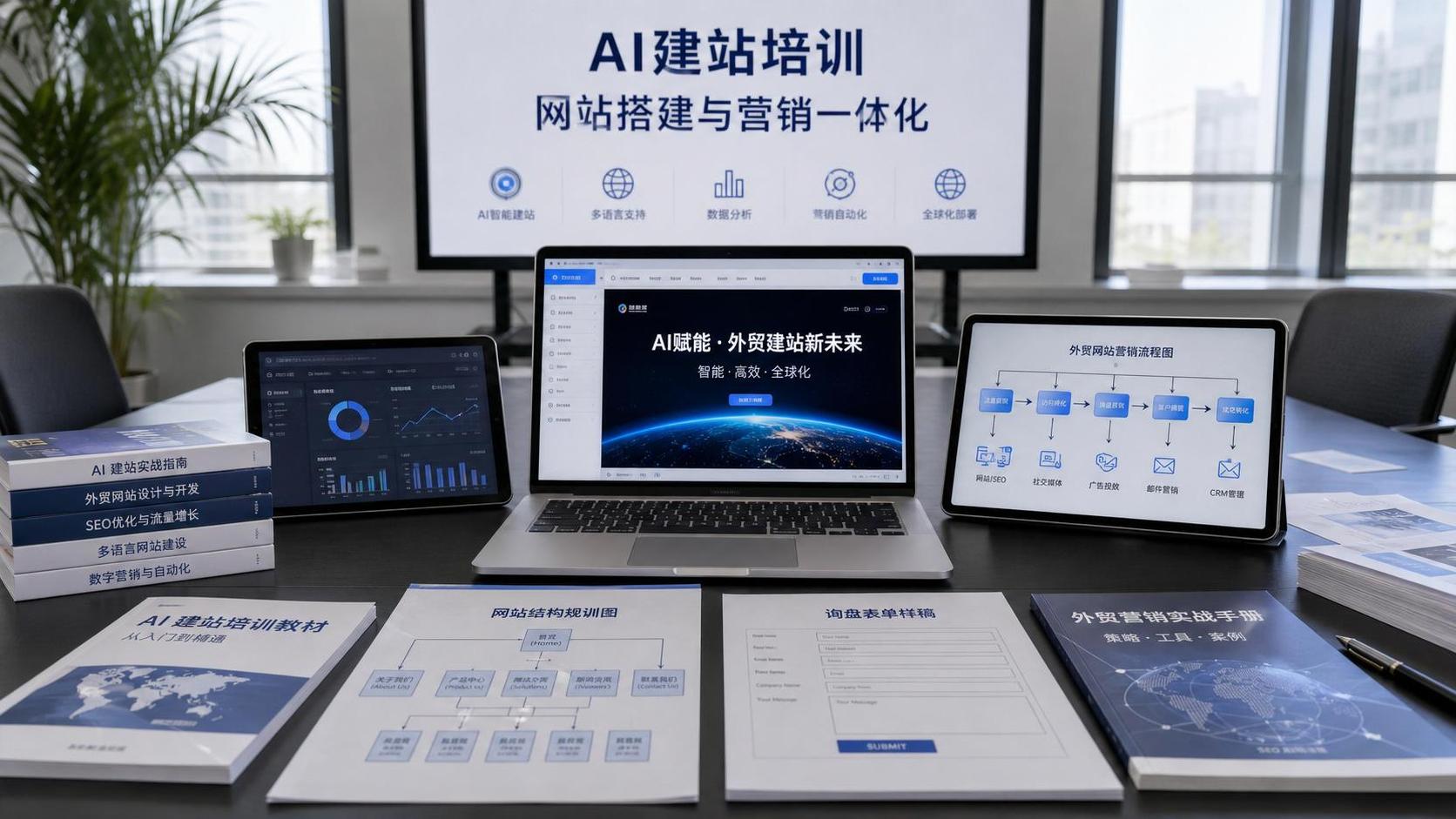
AI website building training is skills training centered on AI-assisted website development. Its focus is not simply learning to drag and drop page elements, but connecting business positioning, website structure, content production, technical configuration, and marketing conversion into executable processes. The outcome should be a website that can go live, be understood, and be continuously iterated.
For B2B foreign trade companies, AI website building training typically covers corporate websites, product catalogs, solution pages, inquiry landing pages, and multilingual websites. Trainees need to understand the buyer journey from searching and comparing suppliers to submitting inquiries, and arrange product specifications, certifications, factory capabilities, and contact points accordingly.
The boundaries of training are equally important. AI can accelerate first-draft generation, page layout, and translation assistance, but it cannot replace product managers in confirming technical parameters or sales teams in assessing customer quality. Nor can it eliminate go-live steps such as domains, privacy policies, form testing, and data tracking.
II. Technical Principles: From Prompts to Publishable Pages
AI website building tools are typically based on templates, component libraries, and responsive layouts, while generative models handle page copy, product descriptions, title descriptions, and image suggestions. The core of training is to break down vague requirements into clear inputs such as industry, customers, products, selling points, and action objectives, rather than directly accepting unverified outputs.
After a page is generated, its structural hierarchy should be checked for clarity: each page should focus on one primary intent, headings should correspond to body content, product specifications should use scannable fields, and related products and articles should be connected through internal links. On mobile devices, the usability of buttons, forms, images, and tables across different screen sizes must be verified.
Content quality control should run throughout the entire AI website building training process. Statements involving lead times, certifications, performance, prices, or scope of application must be reviewed against materials provided by the company; multilingual pages produced through machine translation should also be localized and proofread according to target-market terminology, units of measurement, and communication practices.
III. Main Training Categories and Suitable Participants
By business objective, AI website building training can be divided into brand showcase website training, B2B inquiry website training, B2C store training, multilingual standalone website training, and campaign landing page training for advertising. Different types differ significantly in page volume, content depth, conversion actions, and subsequent operational investment.
Foreign trade salespeople are suited to learning product page development, inquiry forms, and customer communication entry-point configuration; marketing personnel need to master keyword planning, content calendars, advertising landing pages, and data reviews; company managers should focus on site asset ownership, collaboration permissions, budget allocation, and customer acquisition cost assessment.
Manufacturing factories, OEM/ODM companies, industrial product suppliers, cross-border sellers, and international brand expansion teams can all benefit from role-based training. Beginners should start with one product line and one target market, first completing a verifiable minimum viable website before gradually expanding languages, sections, and promotional channels.
IV. Tool Selection: Coordinating Platforms, Content, and Marketing
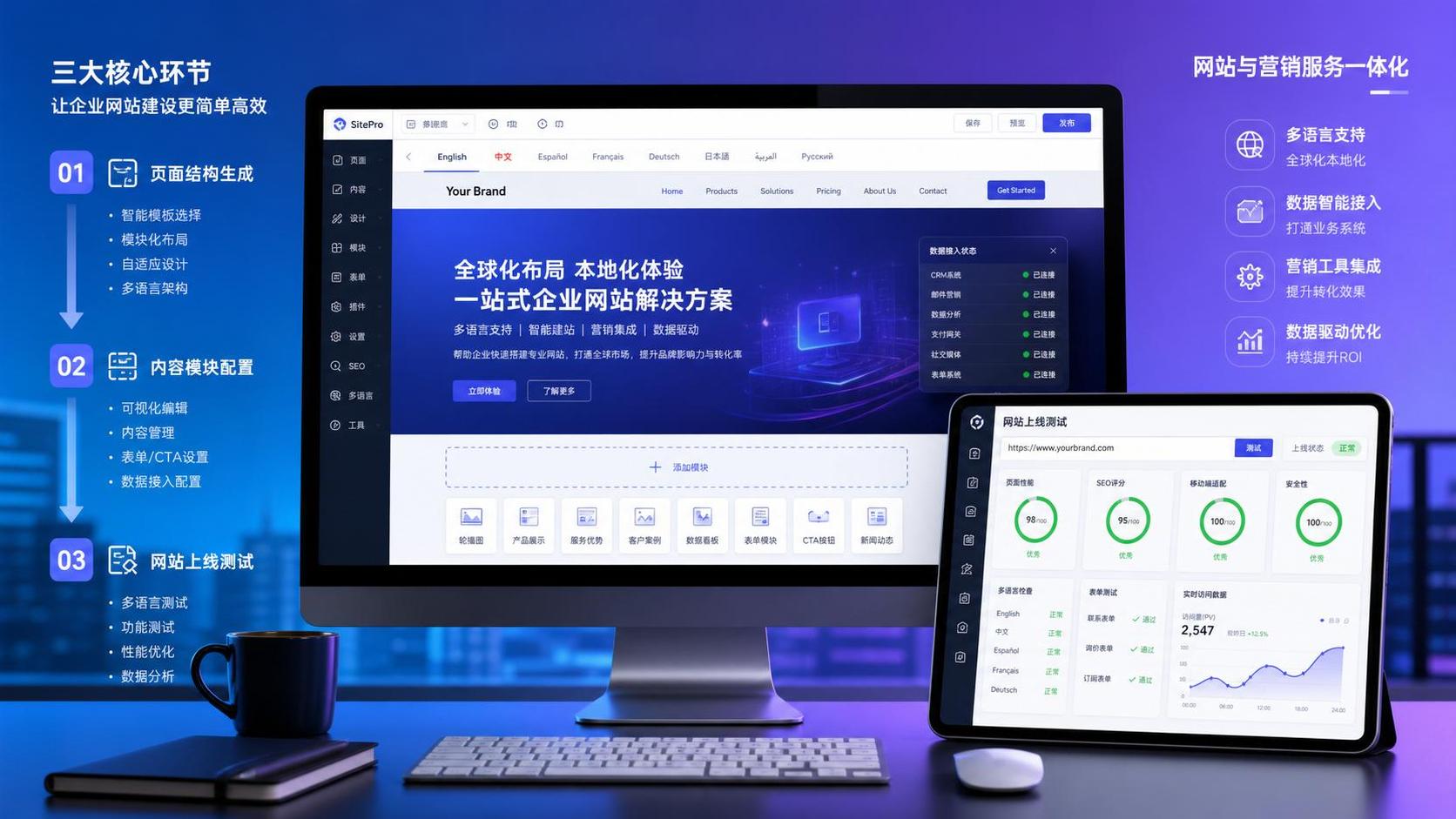
When selecting an AI website building tool, priority should be given to checking responsive editing, content management, multilingual paths, form and customer service integration, permission management, export or migration capabilities, website speed, and security configuration. Buyers should not compare template quantity alone, but should also confirm whether it is convenient to add products, modify pages, and analyze conversions later.
Yiyingbao provides coordinated capabilities for AI-powered website building, multilingual standalone websites, SEO, advertising, and social media operations, making it suitable for teams seeking to connect their websites with overseas customer acquisition. Its materials indicate that the platform uses a responsive architecture and provides supporting services such as global node acceleration, domains, SSL certificates, and website operations.
For companies that need to cover English, Russian, Japanese, Arabic, French, German, or Spanish markets, tool selection should also examine language-switching logic, independent page editing, translation review, regional content, and Hreflang configuration. The number of languages does not equal the quality of market coverage; the focus remains on content matching procurement scenarios.
V. Practical Process: From Requirements Analysis to Go-Live Acceptance
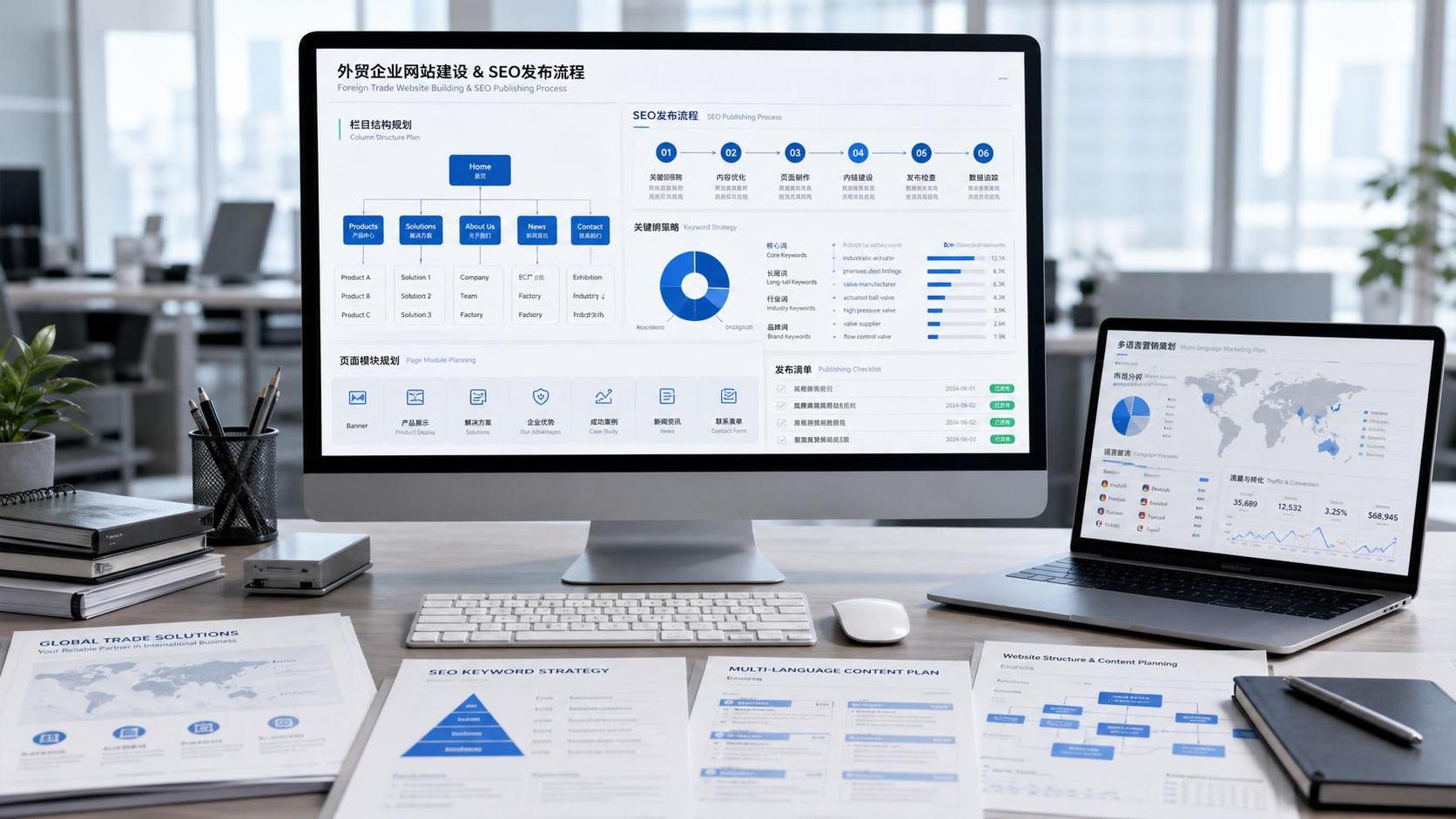
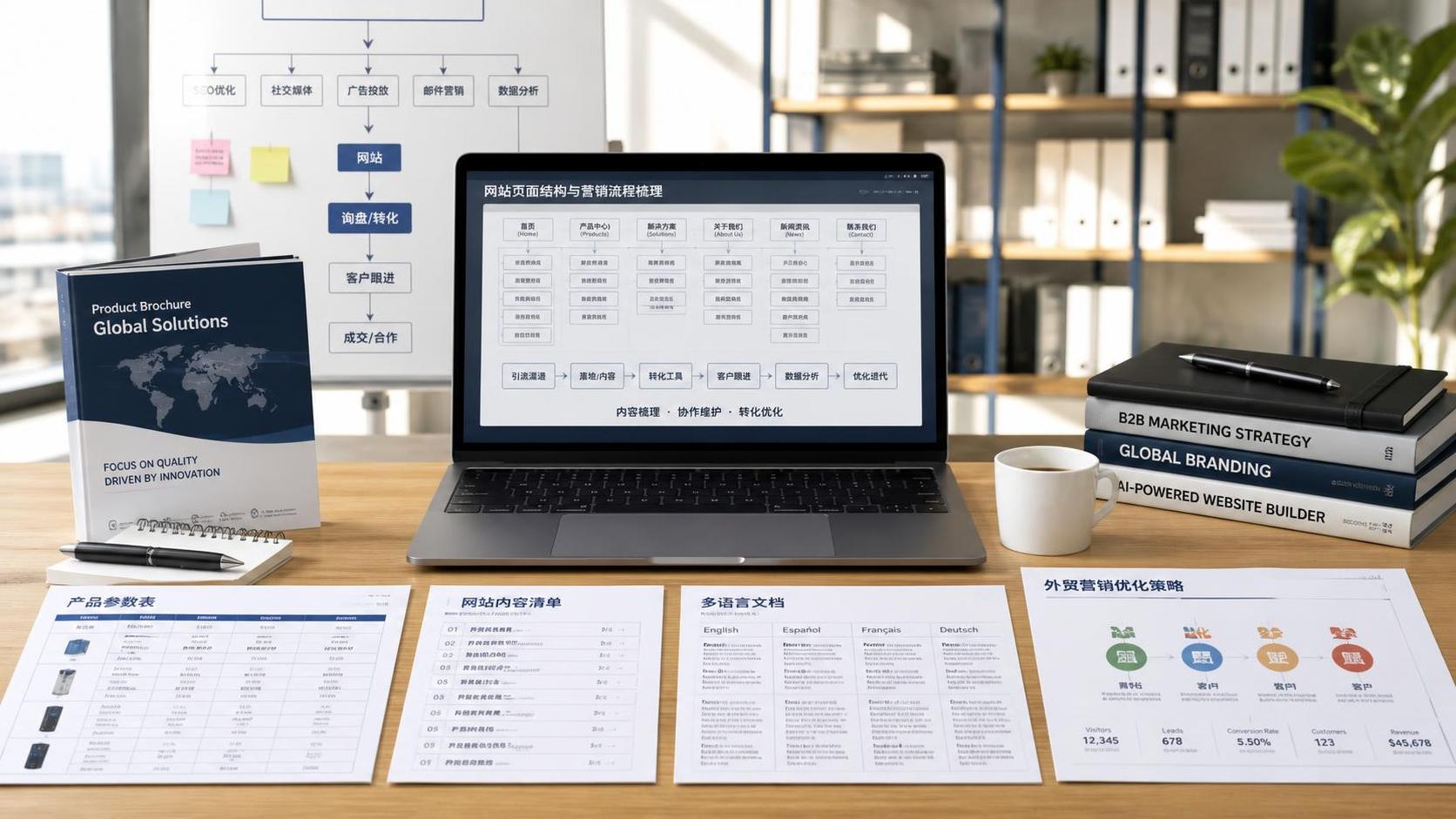
Standard AI website building training should begin by completing a requirements sheet that defines target countries, priority customer types, core products, competitive differentiators, inquiry methods, and responsible personnel. A sitemap is then created, typically including the homepage, product categories, product details, About Us, capability showcase, case studies or articles, contact page, and necessary policy pages.
The second step is to train AI to generate a first draft using real materials, which is then reviewed and revised by business and technical personnel. Product pages should include application scenarios, key parameters, materials or processes, customization capabilities, packaging and delivery, and inquiry actions; factory pages should build trust through production equipment, quality inspection processes, team experience, and service scope rather than generic promotional claims.
Before going live, navigation, search, image loading, mobile display, form emails, WhatsApp or online customer service, language redirects, and analytics code should be tested item by item. During the first month after launch, it is recommended to review indexing, traffic sources, popular pages, form submissions, and broken links every week, and feed identified issues into the next round of content and page optimization.
VI. Key Points for Search Optimization, GEO, and Ongoing Operations
Search optimization in AI website building training should begin with matching keywords to page intent. The homepage carries the company and its core business, category pages cover product groups, product pages address specific procurement needs, and article pages explain selection, processes, maintenance, and industry issues. Each type of page should provide clear titles, descriptions, body structure, and related links.
For generative search environments, companies can develop verifiable Q&A content, product knowledge, industry terminology, and solution content, making the relationships among brands, products, and services easier for systems to understand. GEO is not a one-time configuration, but requires continuous updates to content assets with clear sources, accurate wording, and clear structure.
Yiyingbao's AI+SEO, AI+SEM, and AI+SNS capabilities can be used to coordinate content, advertising, and social media traffic generation. It has served industries including laser engraving machines, steel, chemicals, machinery, new energy, and healthcare; companies should still set operational cadence and conversion goals according to their own markets, product cycles, and sales fulfillment capabilities.
VII. Total Cost of Ownership and 2026 Development Trends
The total cost of ownership for AI website building training and website development projects includes not only platform subscriptions and template or design fees, but also domains, servers or acceleration services, translation review, images and videos, content maintenance, promotional budgets, data tools, and staff time. A low initial price may result in higher long-term costs if it leads to frequent rework or limited scalability.
When evaluating return on investment, phased indicators can be set, such as the number of key pages launched, valid indexed pages, target-market traffic, form completion rates, number of qualified inquiries, and sales follow-up results. Advertising is suitable for market validation and rapid customer acquisition, while organic content requires a longer accumulation cycle; the two should be coordinated according to business cadence.
In 2026, AI website building training will place greater emphasis on human-AI collaboration, content fact verification, multilingual localization, data closed loops, and AI search visibility. Yiyingbao has released product versions including the Cloud Intelligent Website Building Marketing System V6.0 and the AI Foreign Trade Standalone Website Marketing System V5.0; procurement decisions should still be based on actual business processes, service responsiveness, and sustainable operational capabilities.
