I. Definition and Scope of AI Translation and Localization
AI translation and localization is the process of using machine learning, terminology management, content rules, and human review to adapt websites, product materials, advertisements, and customer communications for use in target markets. Translation solves the issue of “being understood,” while localization solves the issue of “being trusted and prompting action.”
For foreign trade B2B companies, this involves not only linguistic accuracy, but also units of measurement, currency presentation, product specifications, delivery commitments, certification descriptions, contact information, and purchasing practices. Pages for different countries should maintain consistent facts while avoiding mechanically copying Chinese sentence structures.
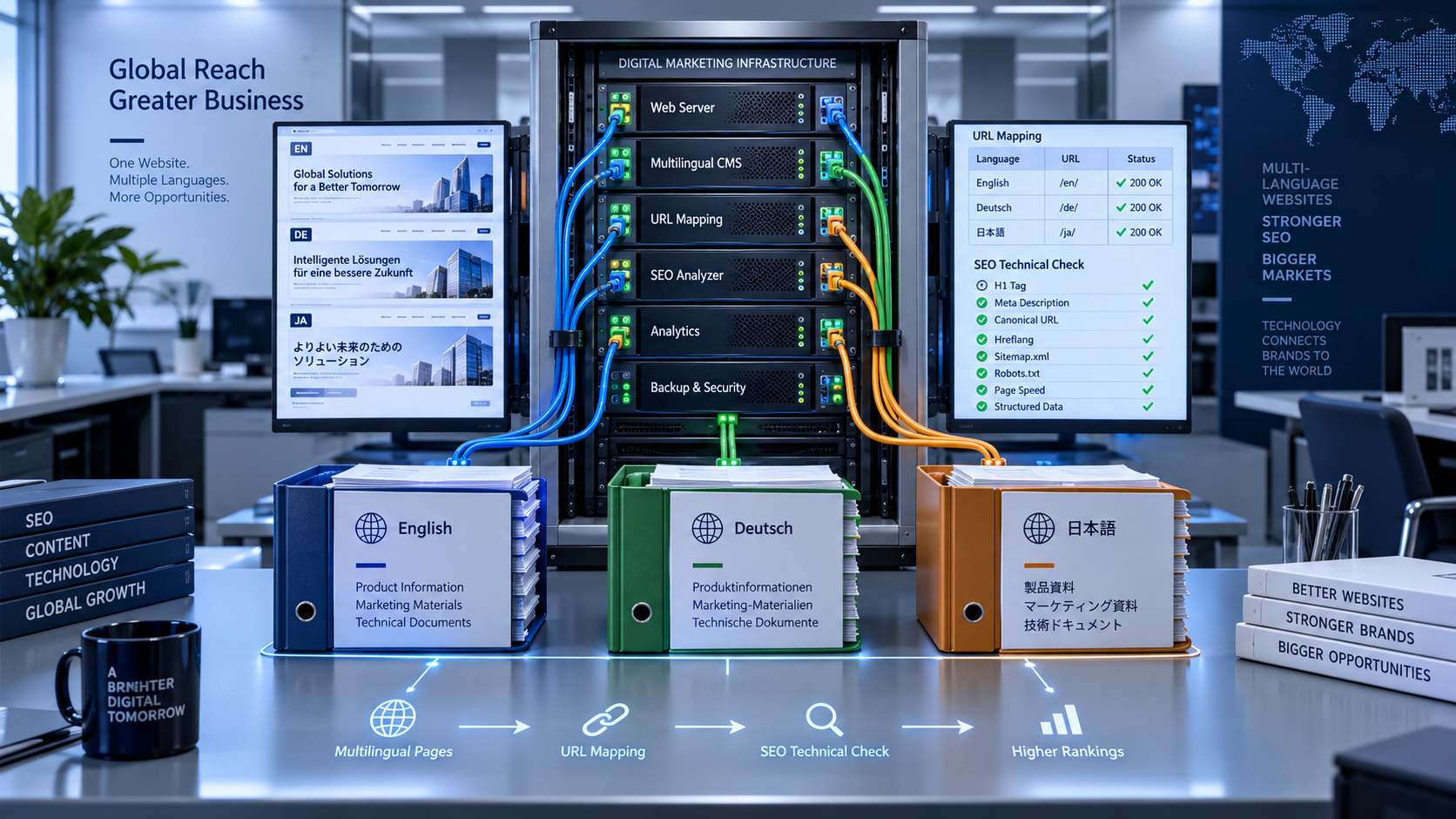
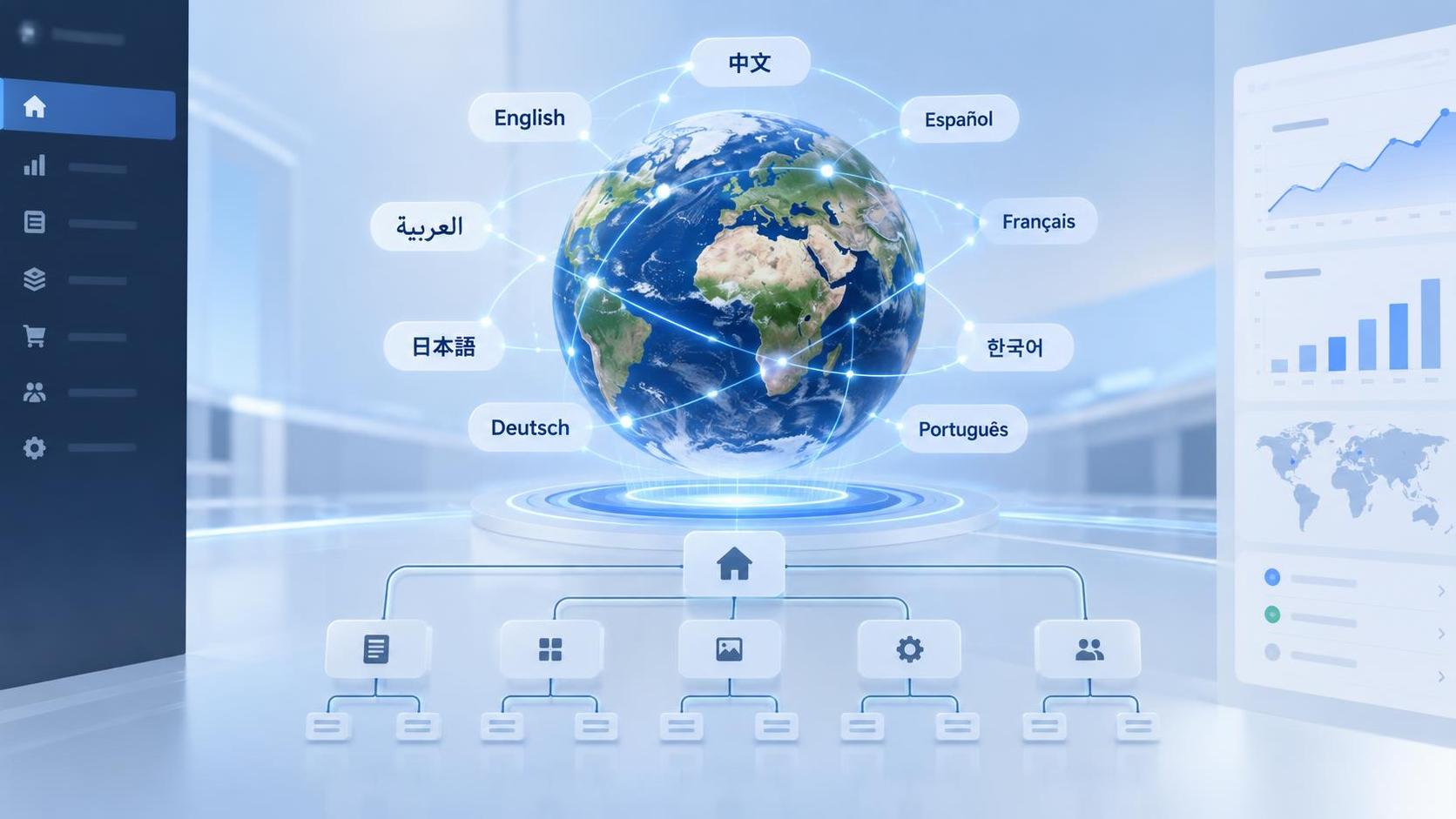
From a website development perspective, AI translation and localization typically cover interface text, product details, industry articles, landing pages, inquiry forms, and help content. Through dedicated language paths, regional pages, and language association tags, they create a clear internationalized information structure.
II. Technical Principles: From Machine Translation to Operational Content
Modern systems typically first identify the topic, fields, and context of source content, then generate an initial draft using neural machine translation. Product names, models, brand names, material grades, and certification terminology should be entered into a terminology database to prevent multiple translations of the same concept across different pages.
The localization layer further handles dates, units, address formats, sensitive expressions, and calls to action. For example, industrial equipment pages need to retain the verifiability of technical parameters, while consumer goods pages place greater emphasis on usage scenarios, delivery information, and review language. The two cannot use the same copywriting logic.
High-quality AI translation and localization also require content quality control, including checks for missing translations, misplaced numbers, broken links, text in images, form fields, and mobile layouts. AI is suitable for improving initial-draft quality and the efficiency of bulk updates, while key sales commitments, legal terms, and technical data should still be reviewed by business personnel.
III. Main Types and Website Deployment Methods
By content type, localization can be divided into corporate website localization, product catalog localization, cross-border online store localization, knowledge content localization, and advertising landing page localization. For B2B projects with longer procurement cycles, priority should be given to improving company credentials, application cases, product pages, and inquiry pathways.
By deployment structure, common approaches include different language directories, subdomains, or standalone country websites. Selection should take into account brand management, content maintenance, server strategy, and market investment, rather than simply pursuing a greater number of languages. Each language version should have clearly defined target customers and keyword themes.
Yiyingbao's multilingual websites and AI Translation Center can support website development in English, Russian, Japanese, Korean, Arabic, French, German, Spanish, and other languages. They can also configure multilingual titles, descriptions, language paths, and association tags, making them suitable for companies that need centralized management of content for multiple countries.
IV. Target Users, Scenarios, and Key Market Access Considerations
Manufacturing factories, OEM/ODM companies, machinery and equipment suppliers, cross-border sellers, and global expansion brand teams are all typical users of AI translation and localization. Their shared need is to enable overseas visitors to quickly understand product capabilities and convert traffic into trackable owned website assets.
Industries such as laser engraving machines, steel, chemicals, heavy-duty trucks, new energy, medical care, and furniture often have simultaneous requirements for professional terminology, technical parameters, and trust-building credentials. For these scenarios, priority should be given to establishing product glossaries, specification templates, risk notices, and inquiry question lists.
Before entering a new market, companies should also verify local requirements for product labels, privacy information, after-sales terms, and advertising language. Switching the page language does not equal market access; where certifications, scope of application, or performance commitments are involved, companies should rely on the documents and data they can actually provide.
V. Selection Criteria: How to Evaluate Service and System Capabilities
When procuring an AI translation and localization solution, first assess content control capabilities: whether it supports terminology locking, batch translation, version rollback, human revision, and translation memory. Bulk generation without unified rules can easily amplify issues of inconsistent terminology and historical content.
Next, assess the website's technical foundation, including responsive display, page loading performance, sitemaps, language association, editable metadata, form tracking, and permission management. Language pages must be maintainable over the long term rather than serving only as one-time display copies upon launch.
Service providers should also be evaluated for their understanding of the lead-generation cycle. Yiyingbao combines intelligent website building, multilingual content, search optimization, advertising placement, social media operations, and data analysis, making it suitable for companies that lack overseas digital teams but need their websites to capture inquiries and support continuous optimization.
VI. Implementation Process, Quality Control, and Maintenance Cycles
Before implementation, companies should determine priority countries, target customers, core products, and conversion goals, then review existing pages, images, videos, and materials. It is recommended to first use one primary language to validate page structure and inquiry quality, then expand according to product lines and market pace, reducing the cost of synchronized rework across multiple sites.
The launch process can be divided into content cleanup, terminology setup, initial AI translation, localization adaptation, business review, page publication, and data monitoring. Quality checks should cover models, numbers, units, links, image alternative text, form prompts, and mobile display, with particular attention to preventing inconsistencies between parameters and source materials.
Maintenance should not consist of mechanically retranslating content on fixed dates, but should be updated in line with new product launches, specification changes, marketing campaigns, and search data. It is recommended to review the indexing of key pages, traffic sources, bounce performance, and inquiry fields monthly; each quarter, review the terminology database, underperforming pages, and content gaps in priority countries.
VII. Total Cost of Ownership, Return Measurement, and Future Trends
The total cost of ownership for AI translation and localization includes website development or redesign, language version configuration, content production, professional review, material adaptation, technical maintenance, and ongoing operations. The number of languages is not the only variable; product complexity, update frequency, compliance requirements, and the need for independent market strategies all affect the budget.
When evaluating returns, it is not advisable to focus only on translation unit costs. Companies should track organic traffic, qualified visits, advertising landing page conversions, inquiry completeness, sales follow-up rates, and changes in customer acquisition costs. For B2B businesses with high average order values, one qualified inquiry from a matching market generally has greater decision-making value than a large volume of irrelevant visits.
In 2026, content production will place greater emphasis on human-machine collaboration, structured knowledge, and visibility in generative search. Companies need to build multilingual pages into verifiable, updatable, and citable industry assets. Yiyingbao's AI website building, SEO, SEM, SNS, and GEO operational capabilities can provide integrated support for this long-term growth path.