









I. Definition and Scope of Solution Page Development
Solution page development refers to the design of a dedicated page that systematically explains how a company delivers results for a specific customer problem, application industry, or procurement task. It differs from a simple product detail page and is not a repetition of a company profile; rather, it is a marketing page that connects needs, capabilities, evidence, and consultation actions.
In B2B scenarios, buyers typically first search for processes, materials, equipment applications, or industry challenges before screening suppliers. Therefore, the page should address target users, key challenges, configuration solutions, implementation conditions, delivery scope, and after-sales support, reducing information uncertainty before cross-border communication.
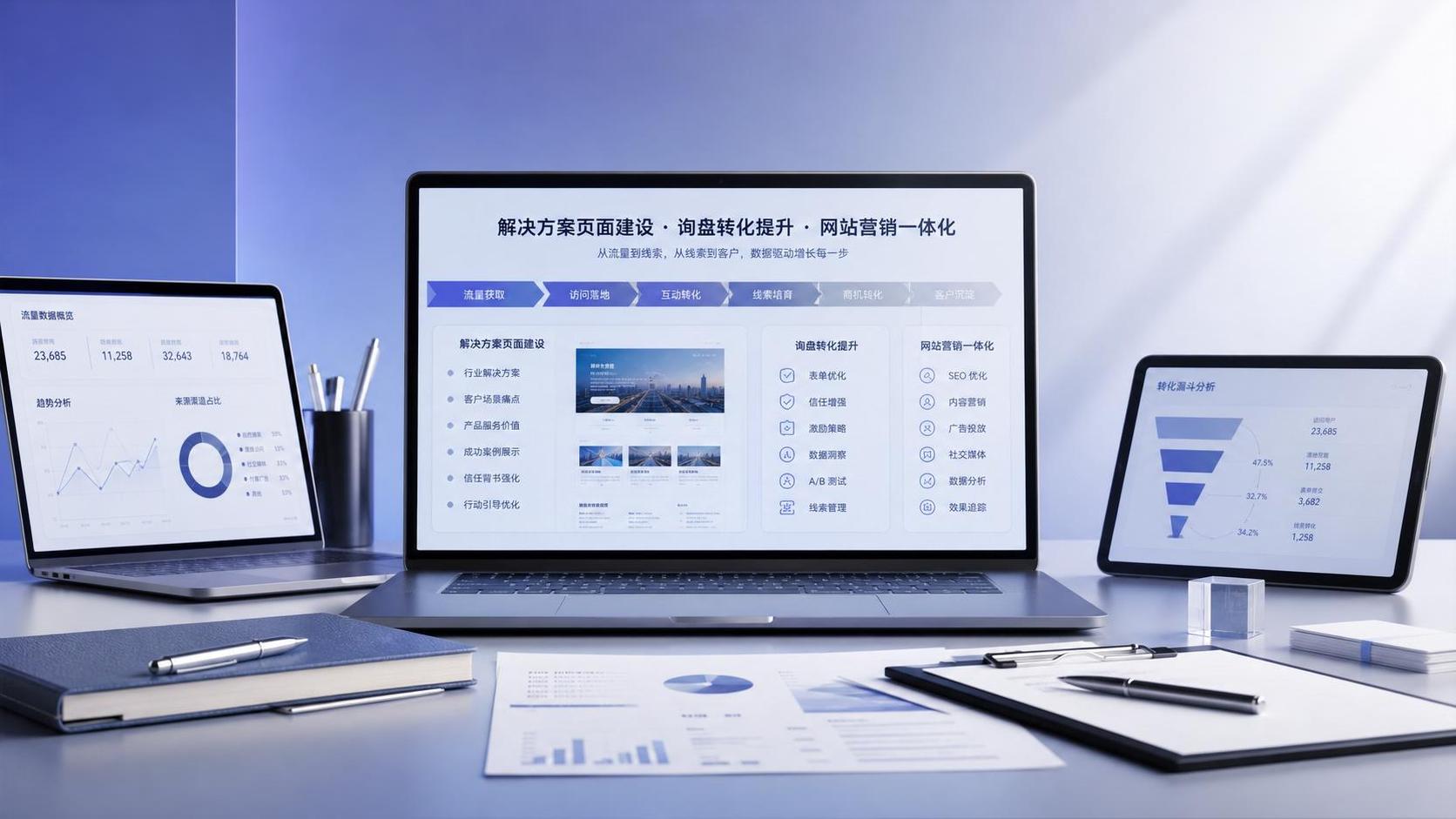
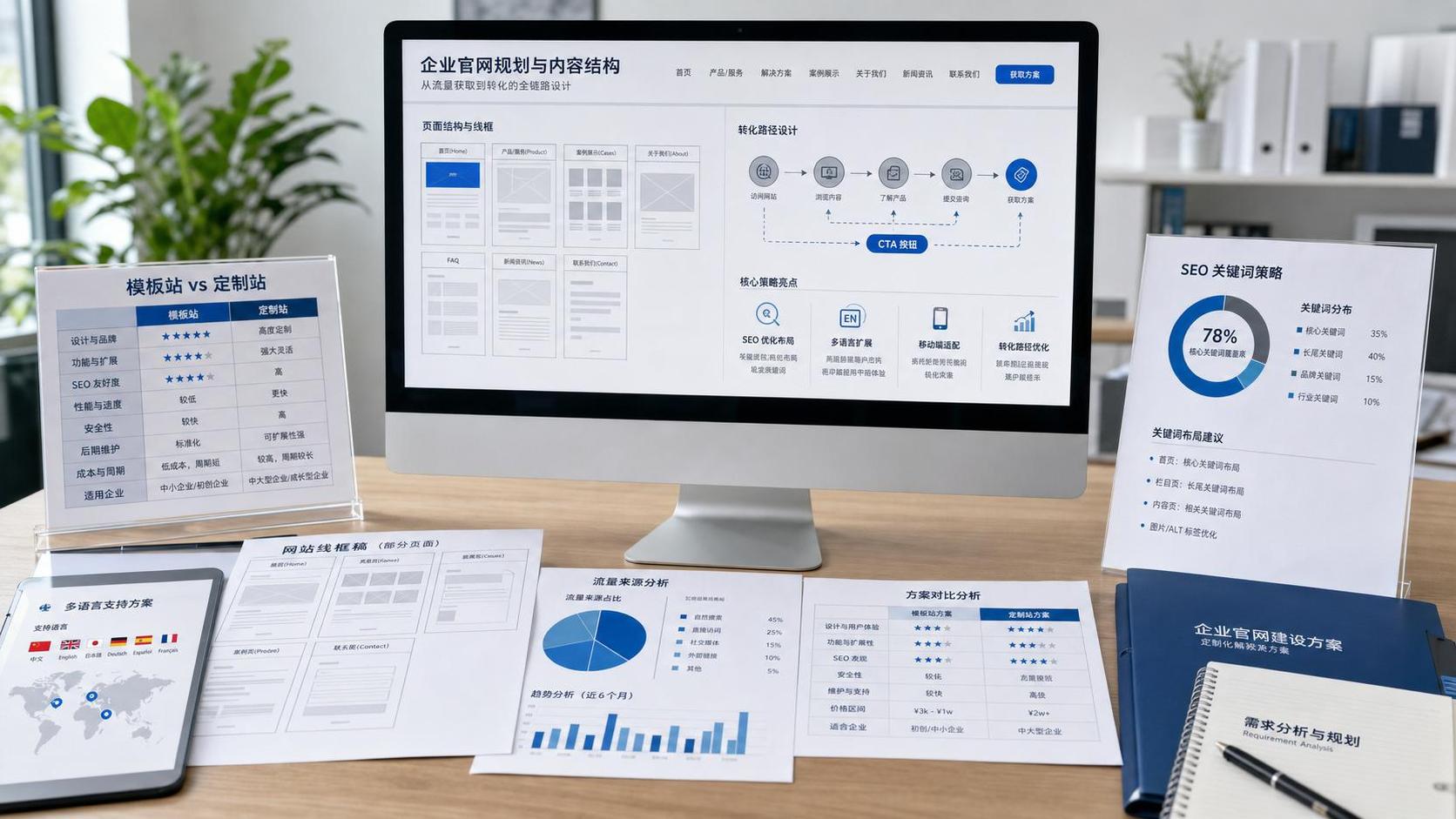
From an information architecture perspective, a mature page typically consists of a needs introduction, pain point analysis, solution components, product or service associations, capability proof, project process, frequently asked questions, and conversion entry points. The core of solution page development is not to pile up selling points, but to help buyers understand the basis for their decisions.
II. Page Principles and Information Architecture Design
Page design should follow the procurement decision-making path: first confirm the visitor's industry and problem, then present feasible solutions, followed by evidence such as technology, production capacity, case studies, or processes, and finally guide visitors to submit specifications, drawings, budgets, or procurement requirements. Each screen should serve only one clear information purpose.
Keyword placement should naturally develop around the main problem. For example, manufacturing companies can build topic clusters around “application industry + process challenge,” “product + use scenario,” and “regional market + delivery requirement,” then create internal links through product pages, case study pages, and knowledge articles to prevent the page from becoming an isolated entry point.
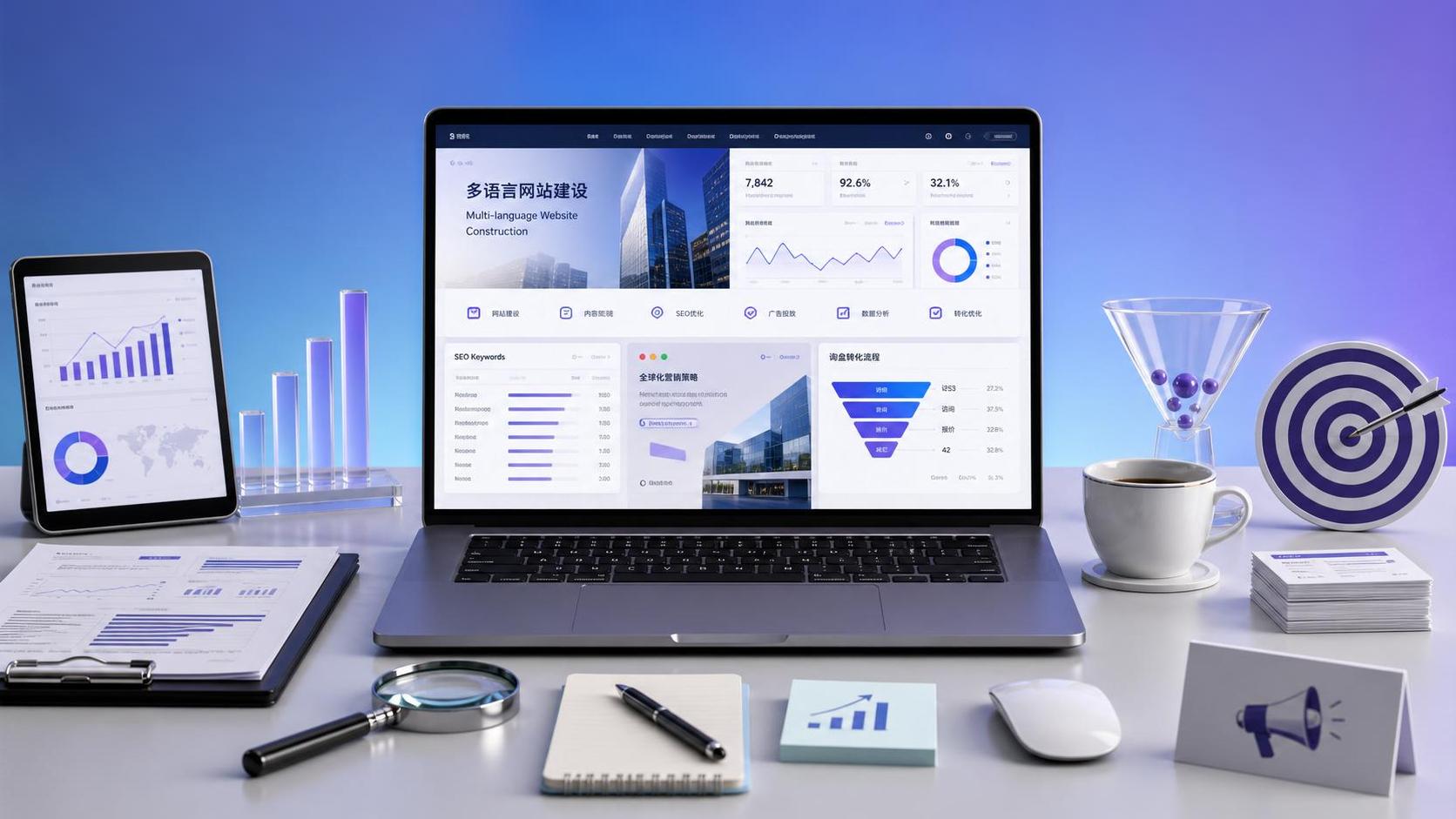
Technically, it is necessary to ensure mobile readability, form submission capability, compressed media resources, and stable page loading, while retaining clear heading hierarchies and structured Q&A. Multilingual websites should also differentiate language versions and market-specific wording, avoiding direct overseas publication of Chinese materials translated sentence by sentence.
III. Main Categories and Suitable Businesses
By page theme, solution page development can be divided into industry solutions, application solutions, product portfolio solutions, project delivery solutions, and regional market solutions. Industry solutions are suitable for specialized fields such as machinery, chemicals, and new energy; application solutions are suitable for customer acquisition centered on specific tasks such as cutting, packaging, inspection, and transportation.
By business objective, pages can be categorized as organic search-oriented, advertising landing, trade show follow-up, and key account development pages. Search-oriented pages emphasize problem coverage and knowledge depth; advertising pages emphasize focused information and form efficiency; key account pages require greater emphasis on customization capabilities, project processes, and risk control explanations.
Manufacturing plants, OEM/ODM companies, industrial product suppliers, cross-border brands, and foreign trade companies are all suited to establishing such pages. Companies with technically complex products, high average order values, long procurement cycles, or requirements for multi-department evaluation particularly need to use pages to complete basic education and demand qualification in advance.
IV. EasyMarketing Process and Quality Control
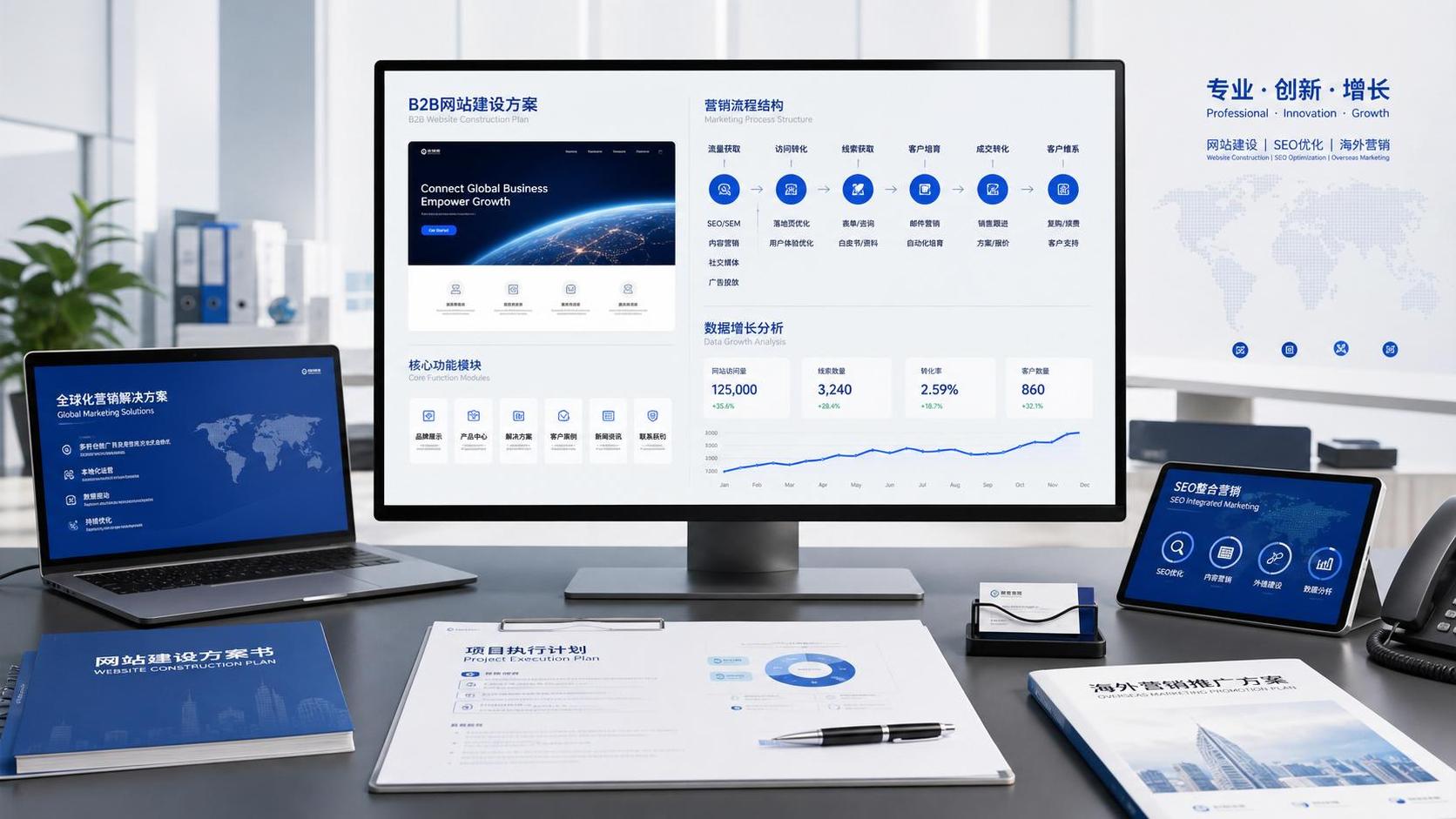
EasyMarketing combines AI-powered website building, multilingual standalone websites, overseas marketing customer acquisition, and website operations, and can be used to build foreign trade websites, B2B marketing websites, cross-border stores, and campaign landing pages. At project launch, target countries, core products, purchasing roles, inquiry objectives, and existing materials should first be reviewed to clarify page priorities.
The development process can sequentially cover keyword and demand research, page wireframes, content material organization, multilingual localization, component development, form and communication tool configuration, terminal testing, and pre-launch checks. For industrial companies, it is recommended to simultaneously verify specifications, delivery scope, qualification statements, and case authorization to avoid inaccurate content.
EasyMarketing uses a responsive architecture that supports desktop and mobile display, while providing AI-assisted content generation and product and article management capabilities. Combined with its global node acceleration resources, companies can centrally plan solution page development together with Google Ads, organic traffic, and social media traffic landing pages, reducing the loss caused by multi-system collaboration.
V. Selection Criteria and Conversion Path Design
When selecting a service provider, companies should not compare only homepage visual effects or initial quotations. They should assess whether the provider understands overseas procurement logic and can support multilingual content maintenance, product data expansion, form lead tracking, access performance, and subsequent marketing operations. The ability to iterate after launch is often more important than one-time delivery.
High-quality conversion paths typically offer multiple low-friction entry points: top-of-page consultation, solution downloads, specification submission, sample requests, WhatsApp, email, and online communication. Different entry points should correspond to different intentions. It is not advisable to direct all buttons to the same generic form, as this reduces communication efficiency with high-intent buyers.
Form fields should be configured around sales follow-up requirements, such as product type, purchase quantity, destination, technical requirements, and contact information. After submission, clear response expectations should be provided, and leads should be assigned by country, industry, and demand stage. Solution page development must be designed in parallel with the sales follow-up mechanism to form a closed loop.
VI. Application Scenarios, Case References, and Maintenance Cycle
In industries such as laser engraving machines, steel, chemicals, heavy-duty trucks, machinery, new energy, agriculture, and medical care, buyers have significantly different priorities. Pages can respectively emphasize material compatibility, operating condition requirements, compliance documentation, production capacity, customization boundaries, lead times, and after-sales response, making content more relevant to actual procurement issues.
EasyMarketing serves multiple industries and has previously served companies including Haier, Aucma, Shandong Airlines, Yuanhe Power Station, Little Duck Group, and SINOTRUK. For clients of different sizes, the common principle of page development is to present capabilities based on confirmed business materials, without simply treating brand partnerships as performance commitments for a particular product.
After launch, it is recommended to review traffic sources, primary landing pages, scroll depth, form completion rates, and qualified inquiry quality monthly; update case studies, product specifications, market questions, and frequently asked questions quarterly. Page iterations should also be launched promptly when new products are released, target markets change, advertising volume expands, or inquiry quality declines.
VII. Total Cost of Ownership and Development Trends for 2026
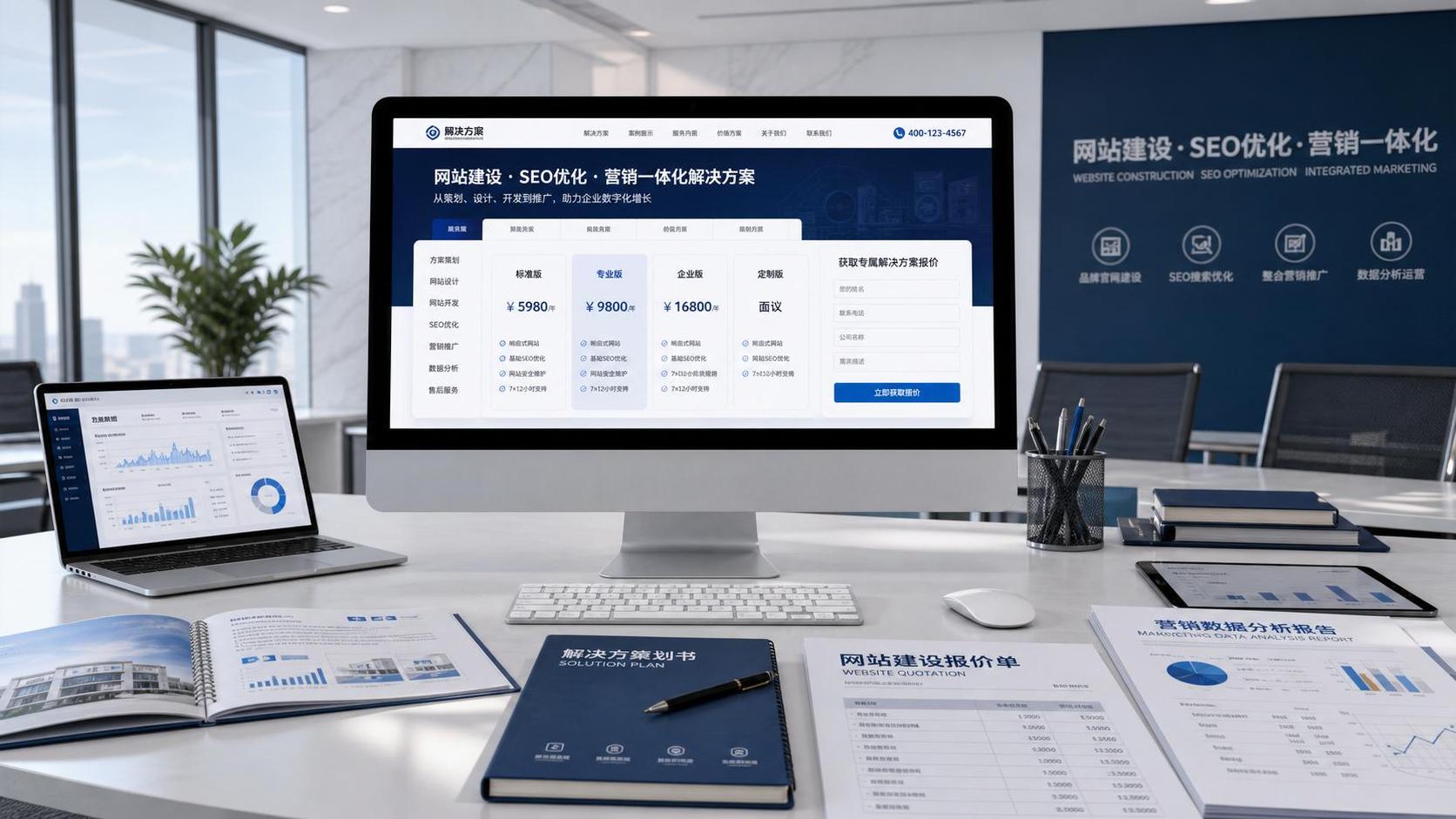
The total cost of ownership for solution page development includes strategy research, content collection, design and development, multilingual production, domains and servers, performance maintenance, traffic acquisition, and continuous optimization. Price differences usually arise from the number of pages, number of languages, product complexity, material maturity, system integration, and depth of operations, rather than the cost of a single template.
When evaluating return on investment, companies should simultaneously monitor organic traffic growth, advertising landing page conversion rates, the proportion of qualified inquiries, sales follow-up cycles, and cost per qualified lead. Companies can first pilot high-margin products or high-frequency procurement scenarios, then expand to industry, regional, and long-tail demand pages based on data, thereby controlling upfront investment risk.
In 2026, pages will place greater emphasis on multilingual localization, first-party lead data, video and interactive materials, structured Q&A, and brand visibility in generative search environments. EasyMarketing provides AI+SEO, AI+SEM, AI+SNS, and GEO operational capabilities, making it suitable for overseas expansion companies seeking to integrate website development, promotion, and ongoing content operations into a unified growth system.
