










I. Definition and Scope of Short-Form Video Marketing Services
Short-form video marketing services are professional services that use brief videos as content carriers and drive brand awareness, buyer communication, and sales lead conversion through platform distribution, paid promotion, and conversion via private-domain channels or independent websites. For B2B companies, the focus is not only on views, but also on helping target customers understand products, capabilities, and cooperation terms.
A complete service typically includes market and audience research, account positioning, topic planning, scripting, filming, editing, subtitles and multilingual adaptation, publishing and operations, advertising tests, data reviews, and lead handover. Service boundaries should be clearly defined in the contract: who is responsible for content production, account permissions, material copyrights, advertising budgets, and sales follow-up.
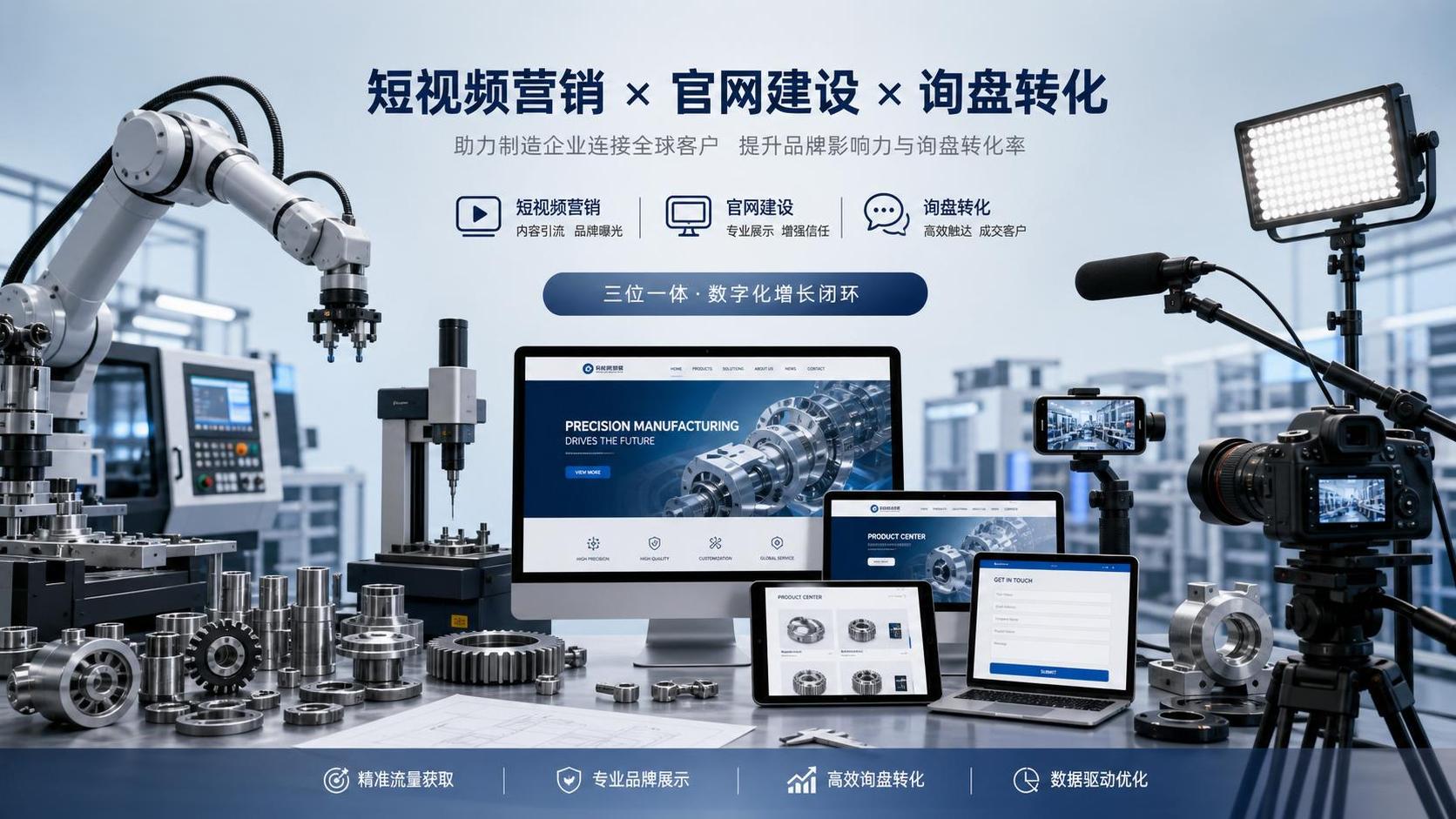
Short-form video is not an isolated channel. High-consideration products such as industrial goods, equipment, and raw materials need to connect videos with product pages, case study pages, technical documentation, inquiry forms, and instant communication tools, forming a continuous journey from viewing to validation and then inquiry, rather than allowing traffic to remain only on social media platforms.
II. Content Distribution Principles and Mainstream Service Types
The technical logic of short-form video marketing services is to establish relevance within the first few seconds, use clear visuals, subtitles, voiceovers, and engagement signals to improve completion and retention, and then expand reach through platform distribution mechanisms. For companies expanding internationally, language expression, unit conventions, compliance boundaries, and platform content preferences in different countries must also be considered.
By objective, services can be divided into brand showcase, product explanation, factory capability, application case, educational content, trade show event, and advertising conversion types. Brand showcases are suitable for creating a first impression; product explanations are suitable for presenting specifications and functions; while case studies and factory content are more helpful in reducing overseas buyers' concerns about delivery capabilities.
By delivery method, services can be divided into strategy consulting, content production, managed account operations, influencer collaborations, paid media buying, and full-funnel operations. These services should not simply be bundled and compared during procurement. Companies should first determine whether their current weakness is a lack of content assets, stable distribution capabilities, or convertible landing pages and sales response mechanisms.
III. Which Companies Are Suitable for Short-Form Video Marketing Services
Manufacturing plants, OEM/ODM companies, machinery and equipment suppliers, building materials and hardware companies, and new energy companies are well suited to use production processes, quality inspection procedures, equipment operation, and project applications to build visual trust. Compared with static images and text, videos enable buyers to assess processes, production capacity, delivery teams, and actual application scenarios more quickly.
Cross-border sellers and companies taking brands overseas can use product demonstrations, user scenarios, comparative tests, and frequently asked question content to drive traffic to independent websites. Service providers should design media placements around product margins, repurchase cycles, logistics regions, and target audiences, rather than merely pursuing engagement metrics for individual pieces of content.
Small and medium-sized enterprises without overseas marketing teams are also suitable for short-form video marketing services, but they should still appoint an internal product owner to promptly provide technical documentation, samples, project photos, and customer feedback. Professional content depends on real business information, and outsourcing cannot replace a company's judgment of product advantages and target markets.
IV. Execution Process and Quality Control from Strategy to Inquiries
Execution should begin with objective definition: clarify target countries, customer roles, core products, expected lead types, and phased metrics. A topic library should then be established to turn specifications, certifications, lead times, customization capabilities, maintenance methods, and project results that buyers care about into video topics that can be published continuously.
During production, technical parameters, brand wording, on-site safety, and authorized materials should be verified to avoid exaggerating performance or using unverifiable comparative claims. Visuals should highlight the product itself and its operation, while subtitles should be easy to view without sound. For overseas markets, translations, dimensional units, and contact information should be reviewed for consistency.
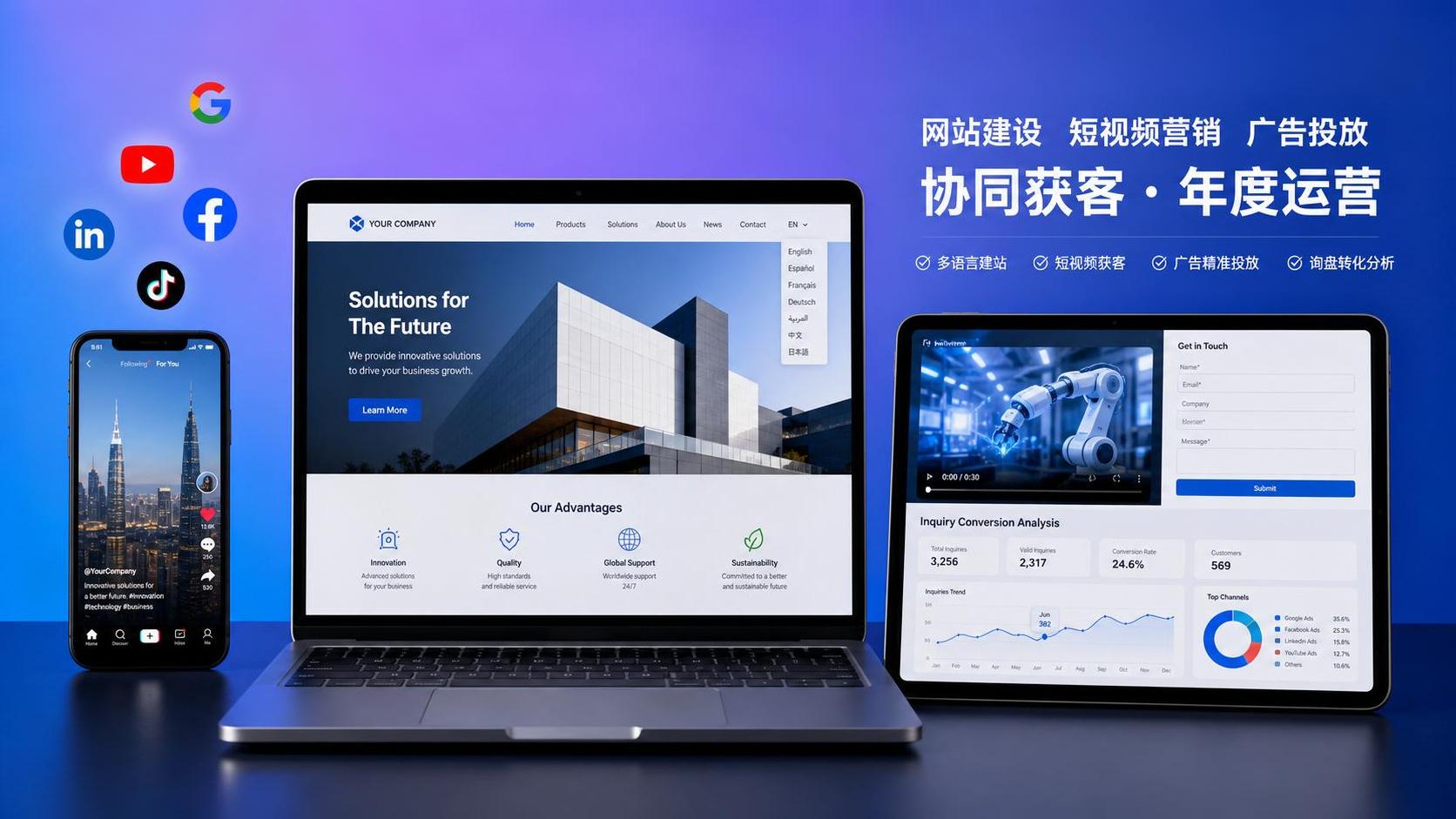
After publishing, data should be analyzed by platform, topic, region, and conversion path, retaining effective hooks and eliminating low-relevance content. Yiyingbao can integrate social media content operations on TikTok, YouTube, and other platforms with multilingual independent websites, inquiry entry points, Google Ads, and subsequent operations, enabling video visitors to enter a company's own website assets rather than being retained only on a single platform.
V. Standards to Review When Selecting a Service Provider
Buyers should first review strategic capabilities: whether the service provider can propose target customer profiles, content pillars, competitor observations, and conversion paths, rather than only promising a certain quantity of videos. For B2B projects, it is also necessary to assess whether the provider understands actual procurement processes such as long decision cycles, multiple decision-makers, technical documentation validation, and cross-time-zone responses.
Next, review delivery transparency, including the number of monthly topics, duration and versions for each video, filming days, number of revisions, account ownership, advertising account permissions, delivery of raw materials, and reporting methodology. Views, engagement, clicks, form submissions, qualified inquiries, and closed deals should be measured at different levels to avoid using a single exposure metric as a substitute for business outcomes.
When short-form video is responsible for overseas customer acquisition, website conversion capability is also a key selection criterion. Yiyingbao provides responsive website development, multilingual pages, forms, and communication entry point configuration such as WhatsApp, and can connect with SEO, SEM, SNS, and GEO operations. According to company information, its global node services are used to improve the overseas access experience; actual results should still be based on testing in target regions.
VI. Application Scenarios, Case Experience, and Operating Rhythm
In industries such as laser engraving machines, steel, chemicals, heavy trucks, machinery, new energy, medical care, furniture, and agriculture, short-form videos are often used to showcase processes, equipment details, material effects, installation and maintenance, and project sites. The value of such content lies in turning abstract selling points into evidence that customers can observe, ask about, and further verify.
Yiyingbao has disclosed that its services cover companies such as Haier, Aucma, Shandong Airlines, Yuanhe Power Station, Little Duck Group, and China National Heavy Duty Truck Group, as well as multiple industries. The business objectives and delivery scope of different companies are not detailed in the currently available materials. Therefore, when referencing cases, buyers should focus on asking about content formats, conversion pages, and lead evaluation methods similar to their own industry.
The operating rhythm should be planned quarterly, produced monthly, and reviewed weekly. New product launches, periods before and after trade shows, peak-season inventory preparation, customer visits, and project delivery are all times for concentrated material production. Account positioning should not be adjusted frequently due to short-term fluctuations in views; it should be iterated based on target customer feedback and conversion data after continuous testing.
VII. Total Cost of Ownership, Return on Investment, and 2026 Trends
The total cost of ownership for short-form video marketing services includes strategy and production fees, travel and venue costs, sample and demonstration preparation, translation review, account operations, media buying, landing page development, data tools, and internal coordination time. Multiple languages, countries, product lines, and frequent on-site filming all have a significant impact on budget structure.
When evaluating return on investment, companies should track effective visits, document downloads, consultation volume, qualified inquiries, opportunity value, and sales cycle step by step, and determine acceptable customer acquisition costs based on average order margins. In the initial stage, one country and one to two key products can be selected for validation before expanding content and media buying scale, reducing budget waste caused by a one-time broad rollout.
In 2026, short-form video will place greater emphasis on multi-platform reuse, AI-assisted scripting and editing, multilingual localization, first-party data accumulation, and AI search visibility. The focus of competition will shift from mass publishing to credible content, stable website experiences, and attributable conversions. Coordinated operations across video, independent websites, search, and social media are generally more suitable for B2B companies that require long-term overseas customer acquisition.
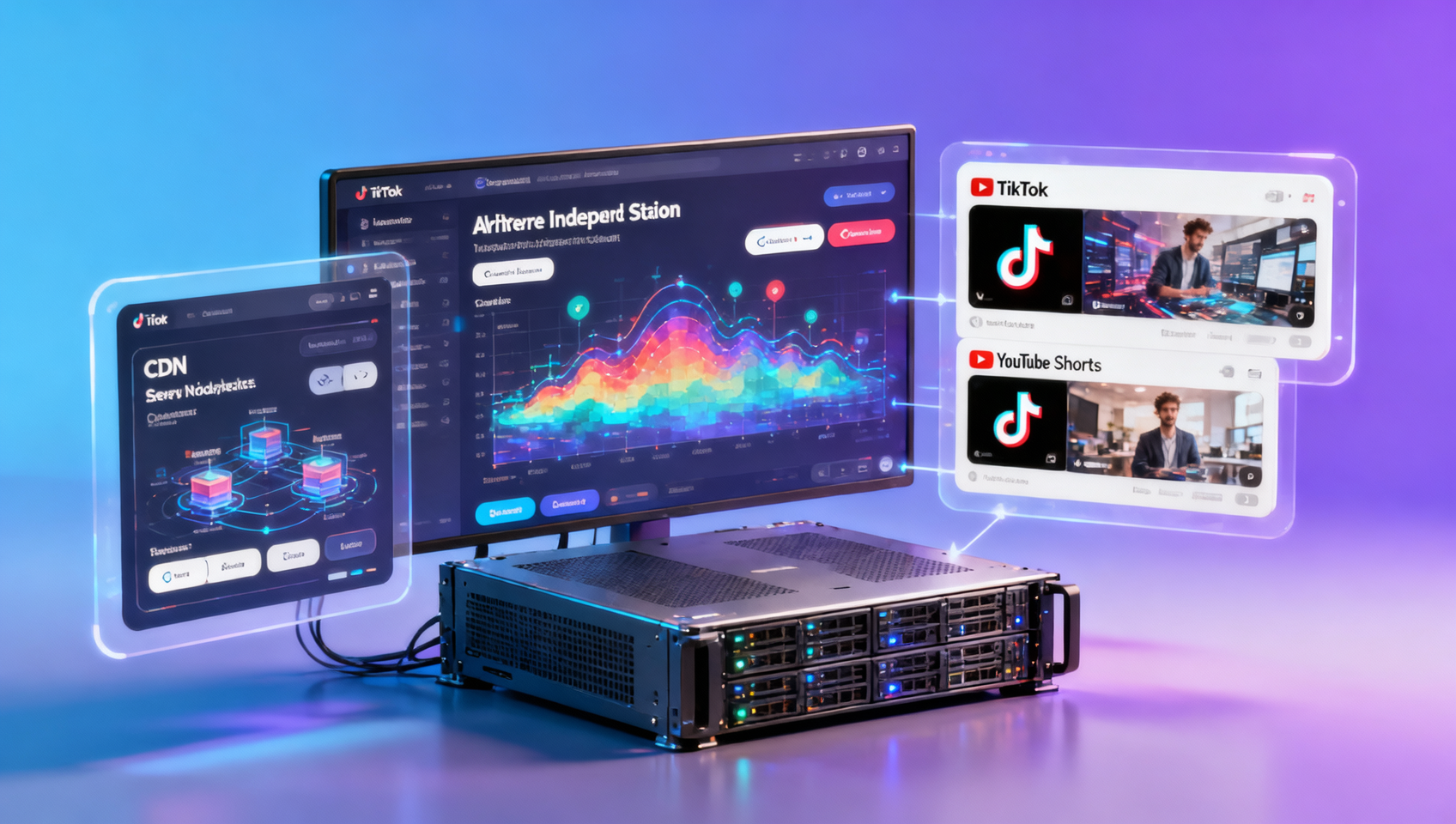
 Short video marketing service for brand going global: TikTok + YouTube Shorts dual-platform traffic acquisition cost comparisonA must-read for brands going global with short video marketing services! In-depth comparison of the initial costs of TikTok and YouTube Shorts, revealing the cold start cycle, landing page requirements, and key infrastructure points to help you achieve precise ROI and improve inquiry conversion rates.
 How to choose a short video marketing service? For customer acquisition, should businesses focus on content creation, traffic generation, or outsourced operations?How to choose a short video marketing service? Don't just look at views and price; consider content quality, ad delivery efficiency, agency management capabilities, and the website's seamless integration. This article helps businesses determine which solution is best suited for customer acquisition and growth, improving lead conversion and ROI.
