









I. Industry Definition: Scope of Considerations for Arabic Website Development
Considerations for Arabic website development refer to the interface direction, language localization, technical performance, content compliance, and marketing conversion requirements that businesses need to address when providing Arabic-speaking users with websites that are readable, accessible, understandable, and conversion-oriented. They apply to corporate websites, product catalog sites, inquiry landing pages, and cross-border e-commerce stores.
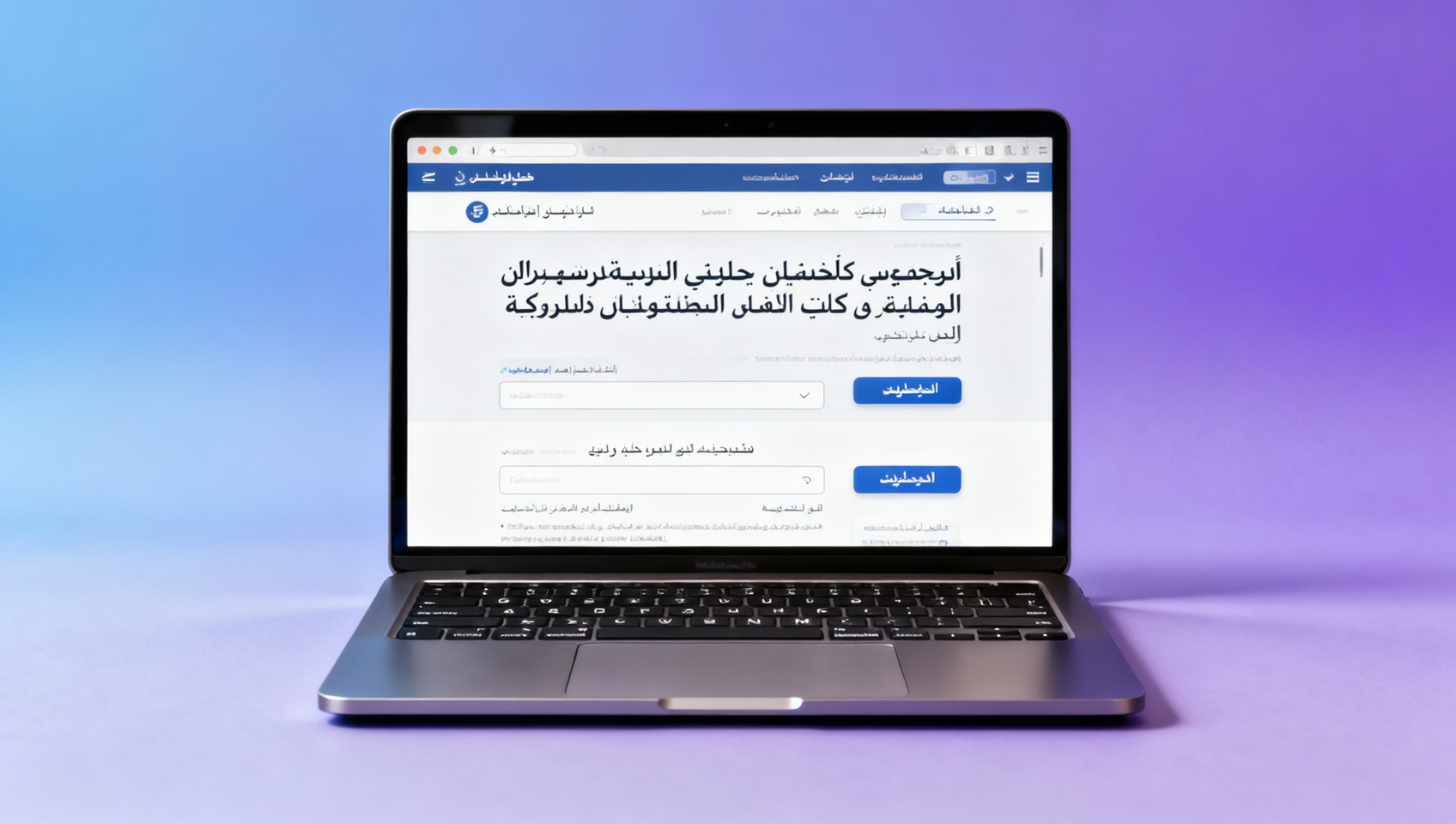
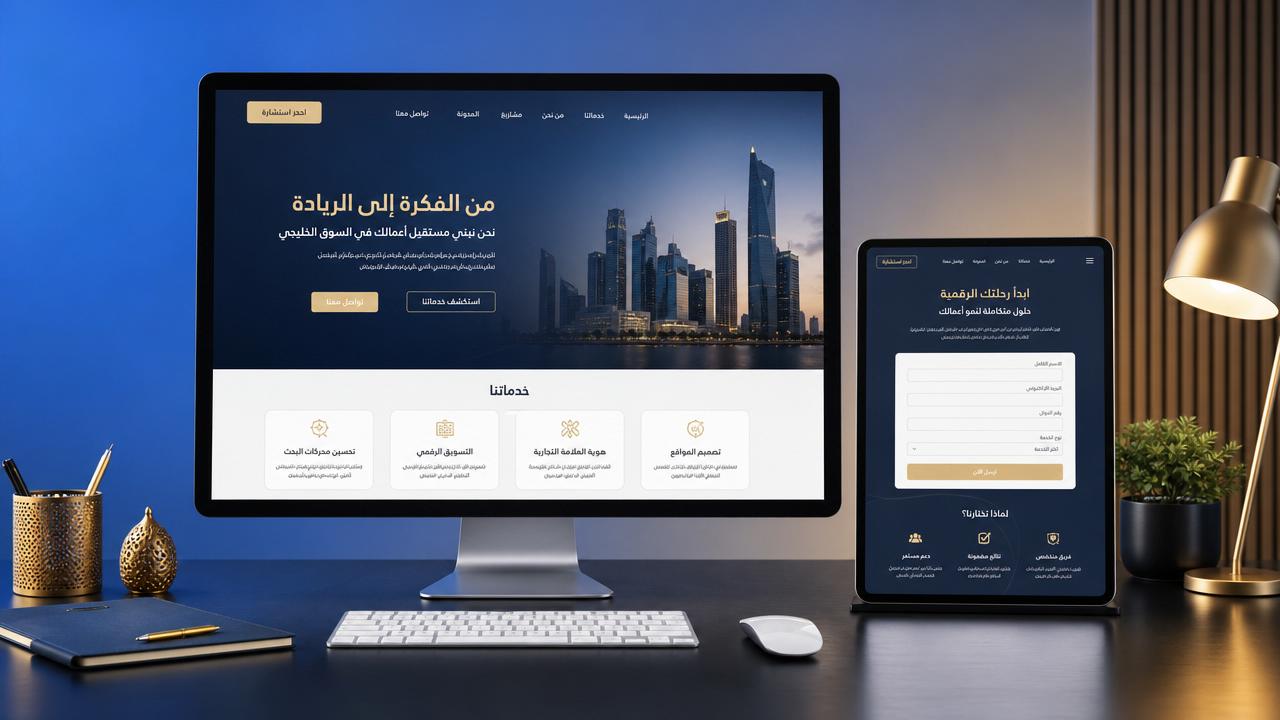
The core technical characteristic of Arabic is right-to-left reading. A page should not only right-align body text, but also ensure that navigation order, icon direction, breadcrumbs, filters, form labels, carousel switching, and pop-up interaction logic align with reading habits, avoiding merely translating text while retaining left-to-right interactions.
The Middle East and North Africa are not a single market. Modern Standard Arabic is suitable for formal business communication across regions, but product terminology, payment preferences, delivery commitments, and contact methods should still be adjusted according to the target country. Websites targeting buyers in particular need to clearly specify specifications, minimum order quantities, lead times, certifications, and after-sales service boundaries.
II. Technical Principles: RTL Layout and Multilingual Architecture
A reliable RTL implementation should set language and direction attributes at the document level and use logical properties to control margins, padding, positioning, and alignment, rather than manually flipping every component. This reduces misalignment when Arabic, English, and numbers are mixed, while also facilitating subsequent component updates and version maintenance.
Fonts must support Arabic letter joining, contextual forms, punctuation, and number display. Font weights and line heights should be tested separately for headings, body text, tables, and buttons. Product models, dimensions, email addresses, URLs, currencies, and telephone numbers often appear as left-to-right characters, so bidirectional text isolation rules should be configured to prevent browsers from misinterpreting their order.
A multilingual architecture should use dedicated language paths or subdirectories and establish reciprocal links between corresponding pages. Each language should have its own titles, descriptions, image alt text, and structured content; machine-translated pages should not be copied and published in bulk. Server nodes, caching, and image compression also directly affect the mobile browsing experience in the Gulf region.
III. Main Types and Suitable Users
The first type is the B2B inquiry website, suitable for exporters in machinery, chemicals, building materials, auto parts, new energy, and similar industries. Key pages include industry solutions, product parameters, factory capabilities, quality control, project cases, and inquiry forms. The goal is to reduce information uncertainty when buyers evaluate suppliers.
The second type is a brand presentation and channel recruitment site, suitable for companies that already have regional agents and wish to establish local trust. Such sites should strengthen brand history, service networks, training support, authorization procedures, and media materials, while providing Arabic and English switching to facilitate collaborative reference by decision-makers in different roles.
The third type is a cross-border online store or a catalog-plus-inquiry model, suitable for highly standardized consumer goods and accessories. In addition to RTL product listings, the direction and copy of prices, variants, addresses, discount codes, shopping carts, payment instructions, and order notifications should also be verified. For high-value or complex products, a quotation workflow may be prioritized.
IV. Content Compliance and Market Access Communication
Content localization is not equivalent to sentence-by-sentence replacement. Businesses should avoid images, metaphors, and promotional language that may cause misunderstandings related to religion, politics, culture, or gender expression. For sensitive categories such as food, medical products, cosmetics, and financial services, local legal advisors or channel partners should also verify labels, declarations, and advertising statements.
Privacy policies, contact information, return and exchange policies, delivery coverage, and payment instructions should be presented in clear Arabic. When collecting telephone numbers, email addresses, or form information, the purpose of use should be stated and the number of fields controlled. Pages targeting B2B procurement can add document downloads, appointment scheduling, and instant messaging entry points, but response times must be clearly specified.
Yingbao's multilingual website development and marketing services can incorporate Arabic websites, responsive pages, inquiry entry points, and basic internationalization settings into a unified management system. Its materials indicate that the platform supports multi-device adaptation, global node deployment, and content management, making it suitable for foreign trade enterprises without dedicated technical teams to advance website development and subsequent operations in a unified manner.
V. Selection Criteria: From Page Functions to Conversion Capabilities
When evaluating suppliers, first determine whether they genuinely support RTL components rather than simply displaying Arabic text. They should be asked to demonstrate the actual performance of navigation, search, filters, form validation, mobile menus, store checkout, and backend editing, and mixed-layout tests should be conducted using long product names, English model numbers, and Arabic numerals.
Next, verify the content workflow: who is responsible for terminology glossaries, initial translation, human review, pre-launch proofreading, and version updates. Industrial products should standardize terminology for materials, processes, standards, units, and lead times to avoid contradictory descriptions of the same product across different pages. Embedded text in images should also have Arabic versions prepared.
Finally, assess marketing connectivity capabilities, including the foundations for page indexing, data analytics, form lead distribution, advertising landing pages, social media redirects, and content update efficiency. Yingbao provides capabilities such as AI-assisted content, multilingual pages, Google promotion, and social media operations, while businesses should still retain approval mechanisms for keywords, budgets, and brand messaging.
VI. Implementation, Acceptance, and Ongoing Operations Methods
Implementation can proceed in six steps: market research, keyword and section planning, Arabic content creation, RTL front-end development, functional integration testing, and post-launch monitoring. Before launch, native-language reviewers should check each page on desktop devices and mainstream mobile screen sizes, paying particular attention to truncated text, icon orientation, form prompts, and link redirects.
Acceptance should not focus solely on visual designs. Page speed, site search, inquiry email delivery, instant messaging redirects, attachment downloads, 404 pages, language switching, and loading under different network conditions should all be tested. For advertising landing pages, it should also be confirmed that conversion events are recorded correctly in order to distinguish traffic volume from valid inquiries.
During operations, it is recommended to check index coverage, key page visits, search terms, form sources, and low-quality pages monthly, and update product information, case studies, and frequently asked questions quarterly. Yingbao has served industries including machinery, new energy, healthcare, and agriculture, and is suitable for treating website development, content, promotion, and data review as continuous work rather than a one-time delivery.
VII. Total Cost of Ownership and Trends for 2026
The total cost of ownership of an Arabic website usually consists of strategy and visual design, RTL development, multilingual content, servers and security, third-party functions, daily maintenance, and customer acquisition investment. Low-cost templates may reduce initial expenses but can increase hidden costs in directional adaptation, content quality, performance, and subsequent revisions. Procurement comparisons should therefore be made over a three-year period.
ROI should not be measured only by the number of inquiries; it should also consider the proportion of qualified buyers, sales follow-up speed, cost per lead, share of organic traffic, and return visit rate. It is advisable to first select one country or one product line to validate content and conversion paths, then expand regional pages, advertising budgets, and the depth of localization based on data, avoiding a simultaneous broad rollout that leads to an unfocused operation.
Considerations for Arabic website development in 2026 will place greater emphasis on mobile-first design, conversational search, structured Q&A, coordination between video and social media, and sustainably updated brand knowledge content. Businesses need to ensure that their websites can both answer procurement questions and serve as trustworthy conversion points for advertising, search, and social media traffic, thereby building overseas digital assets that can be operated over the long term.
